
Rising electricity costs and the expansion of energy-intensive data centers in the mid-Atlantic region led a bipartisan group of governors to meet at the White House and agree on a joint action plan to ensure data centers contribute fairly. The proposal also suggests extending a wholesale price cap to protect consumers from further increases.
The announcement, criticized by the Trump administration, represents a nonbinding deal urging PJM Interconnection, the grid operator, to adopt these measures. Environmental advocates express concern that the plan may favor natural gas plants over renewable energy resources awaiting PJM’s grid connection.
Thirteen governors, Energy Secretary Chris Wright, and Interior Secretary Doug Burgum signed a statement of principles calling for a two-year extension of the price cap PJM implemented last year to ensure sufficient power plant capacity. Notably, Mayor Muriel Bowser of the District of Columbia did not participate. It was unclear how many governors attended the White House meeting, and President Trump was not scheduled to participate.
The statement urged PJM to expedite new power plant construction by conducting an “emergency” special auction by September, assigning the costs to data centers. “Today’s data centers are unique due to their size and the risks they pose to resource adequacy,” it stated.
The proposal includes offering 15-year “revenue certainty” to new plant builders, potentially disrupting PJM’s market, traditionally driven by market forces. PJM’s decision will be pivotal in implementing the plan. The grid operator discussed the issue in a scheduled meeting and announced steps aligned with the proposal, including a “backstop generation procurement” to meet short-term power needs.
PJM plans a “holistic review” of market incentives, acknowledging insufficient resource investment under short-term contracts. It seeks more stakeholder feedback before deciding on extending the wholesale price cap.
PJM manages electricity for 67 million customers across 13 states and D.C. Electricity rates have surged nationwide, with mid-Atlantic states among the hardest hit, experiencing significant increases from January to October 2025, according to the Energy Information Administration.
Electricity prices were a major election issue, leading to the election of Democratic governors in New Jersey and Virginia committed to controlling prices.
The Trump administration blamed the price hikes on its predecessors and Democratic states. “Regions aligned with the Biden administration’s energy agenda are paying the price,” said a Department of Energy fact sheet.
Despite the administration’s stance, the three states with the highest price increases—Oklahoma, Wyoming, and North Dakota—are fossil fuel-reliant and supported Trump. The administration’s anti-renewable energy policies are exacerbating PJM’s challenges, as noted in a legal brief. PJM highlighted the negative impact of blocking offshore wind projects on power reliability.
Clean energy advocates criticized the omission of renewable energy in the joint statement, suggesting it overlooks a major solution to the region’s electricity challenges. “Clean energy is the fastest and cheapest way to meet data center demand,” said Julia Kortrey of Evergreen Action.
David Masur of PennEnvironment doubted the agreement’s effectiveness in reducing energy bills. Even if data centers build their own power plants, they will still strain an already stressed grid dealing with rising demand and climate-related costs.
Holding data centers accountable is a positive step, said Elowyn Corby of Vote Solar, but emphasized that “details matter,” especially concerning PJM’s role and the non-binding nature of the agreement.
There are concerns that the emergency process could favor more natural gas plants over renewable projects awaiting approval. Increasing reliance on natural gas could raise electricity costs, as gas prices are predicted to soar, partly due to rising U.S. liquified natural gas exports.
Claire Lang-Ree of the Natural Resources Defense Council stressed the importance of not displacing existing renewable energy projects in PJM’s queue, which support state clean energy goals.
The Trump administration’s support for data center growth, despite the pressure it places on energy infrastructure, has drawn criticism. In July, Trump praised $90 billion in AI investments in Pennsylvania, describing it as a “triumphant day.”
Pennsylvania Gov. Josh Shapiro, who initiated litigation against PJM, agreed to participate in the White House event only if extending the price cap was part of the plan. Shapiro previously warned that Pennsylvania might exit PJM without significant reforms, which could affect other states in the grid.
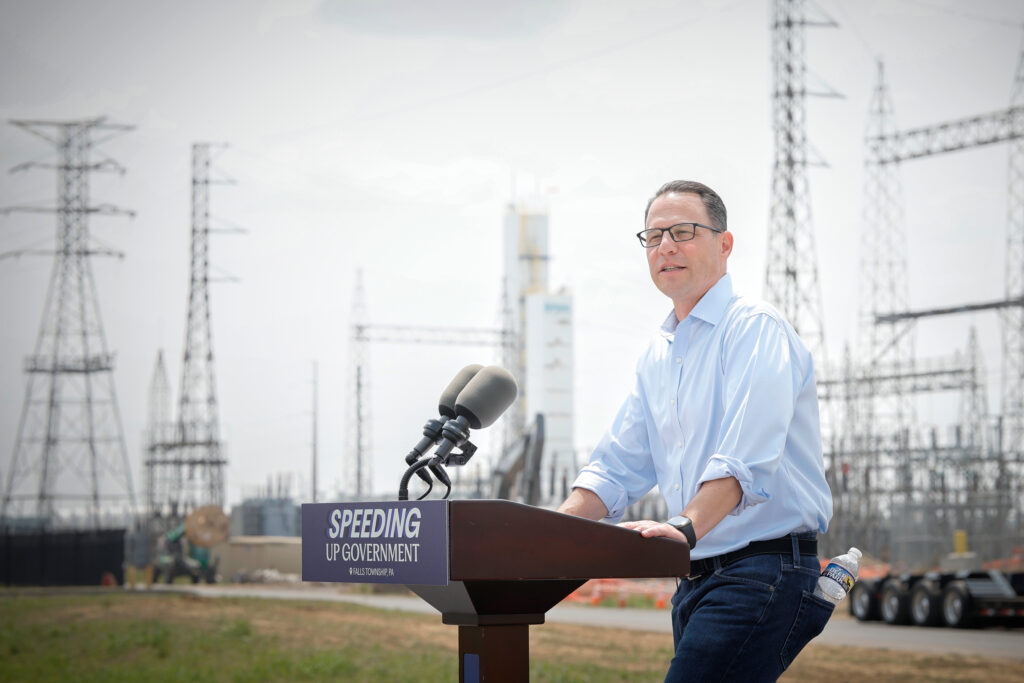
Shapiro has advocated for reforms including state influence on PJM’s board, streamlined project approvals, and capacity market changes. He warned that Pennsylvania might pursue alternative options if PJM resists change.
Shapiro’s complaint against PJM led to a settlement reducing the capacity auction price cap by 35 percent, expected to save consumers over $21 billion in two years.
Shapiro’s administration cites the price cap extension as a significant win. With affordability a pivotal election issue, Shapiro launched his reelection campaign emphasizing corporate accountability for rising electric bills.
Some Pennsylvanians have criticized Shapiro’s support for data center expansion, arguing it contradicts his focus on affordable energy. AI-driven electricity demand spikes contribute to soaring prices.
Political figures face challenges balancing demands from energy companies, tech firms, unions, and angry consumers. “Managing these competing demands may prove difficult,” said Masur.
Officials held a rally in Pittsburgh criticizing the Trump administration for high energy costs, with U.S. Rep. Summer Lee citing a “coordinated assault” on clean energy investments.
Masur emphasized the importance of addressing PJM’s backlog of electricity projects, warning of looming challenges. “If we could put a man on the moon, PJM should be able to expedite project approvals,” he said. Corby agreed, calling for “structural reforms at PJM.”
Original Story at insideclimatenews.org