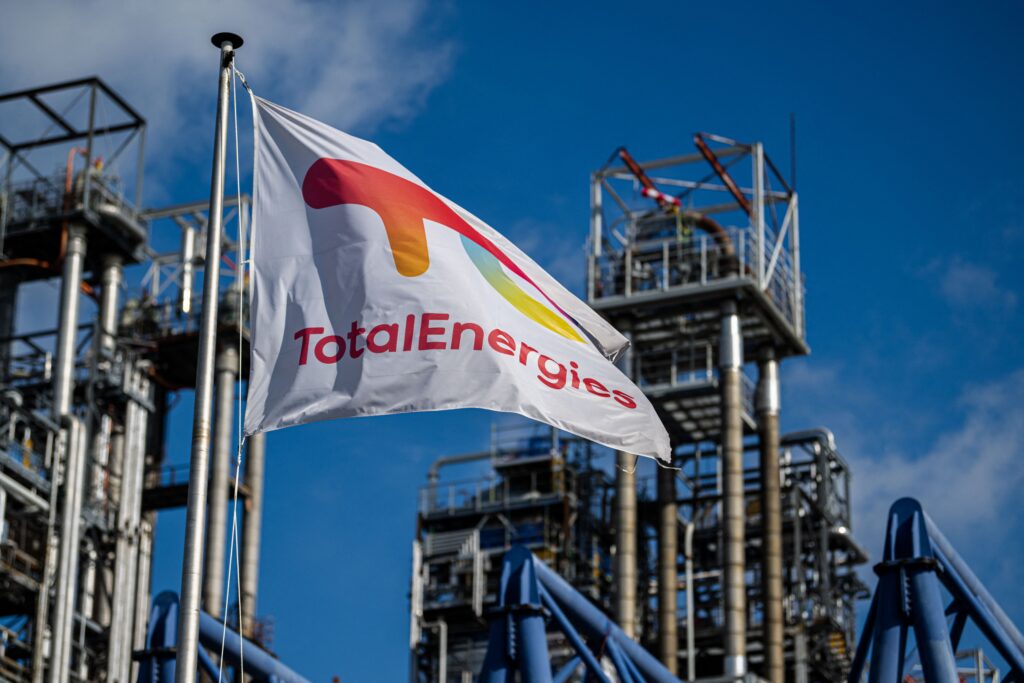
A French court on Thursday ruled that TotalEnergies must account for the full scope of greenhouse gas emissions across its supply chain, including from the use of its products by customers.
The court found that not accounting for these indirect “Scope 3” emissions, which are a substantial part of its greenhouse gas output, violates France’s duty of vigilance law.
This decision is the first instance of a French multinational being held liable under the 2017 law for not meeting climate-related obligations, a result welcomed by climate advocates.
“This decision is crucial for climate accountability of multinational companies in France,” said Théa Bounfour, senior environmental legal officer at Sherpa. “It sends a clear message that fossil fuel companies are responsible for all their emissions, including those from customer use.”
TotalEnergies has been ordered by the Paris Judicial Court to revise its vigilance plan within six months to include impacts from Scope 3 emissions, which account for over 90% of its total carbon emissions. French law mandates corporate vigilance plans to identify and mitigate risks to human rights and the environment.
In a statement, TotalEnergies acknowledged the court’s request and plans to update its vigilance plan using its sustainability report. The company aims to reduce the carbon intensity of its energy products by 25% by 2030 compared to 2015, following an 18% reduction by 2025.
The court will review TotalEnergies’ revised plan next January. Plaintiffs indicate the court may require more specific measures to address climate risks, although no such orders were issued in this ruling, which TotalEnergies welcomed.
This ruling coincides with a record-breaking heat wave in Western Europe, linked to fossil fuel-driven climate change. France experienced its hottest days on record, with much of the country under a red alert.
“Europe’s heatwave highlights the accountability of fossil fuel companies for emissions,” said Clara Gonzales, co-program director at the European Center for Constitutional and Human Rights. “TotalEnergies can no longer deny liability for product-related emissions.”
In January, the court will assess TotalEnergies’ plan, which might lead to more stringent requirements if needed. This case, initiated in 2020 by French civil society organizations, including Notre Affaire à Tous and Sherpa, challenged the company’s climate response and its continued expansion in oil and gas.
Plaintiffs demanded TotalEnergies align its operations with a 1.5-degree Celsius warming pathway, which would necessitate halting fossil fuel expansion. Despite this, TotalEnergies plans to increase production by 3% annually, linked to over half of the remaining carbon budget for a 1.5-degree target.
The court’s decision, following a February trial, did not fully meet plaintiffs’ expectations but held TotalEnergies accountable for not fulfilling climate vigilance obligations.
The court rejected the argument that Scope 3 emissions are beyond TotalEnergies’ control, stating the company can influence them through investment and energy portfolio decisions. Excluding these emissions from the vigilance plan makes it incomplete, the court noted.
Besides the duty of vigilance law, plaintiffs cited Article 1252 of the French civil code to prevent ecological damage. The court delayed ruling on this until the new vigilance plan is assessed by January 21.
Plaintiffs suggest TotalEnergies might be required later to implement specific fossil fuel-related measures to prevent atmospheric damage. With a carbon footprint of about 376 million metric tons of CO2 equivalent, TotalEnergies’ emissions match those of entire nations like France, they note.
“Corporate climate accountability is gaining recognition,” said Matthias Petel, a researcher in climate law. “This decision confirms Europe’s trend of holding fossil fuel companies accountable for climate risks.”
Johnny White, a lawyer with ClientEarth, remarked: “Boardrooms should note: courts will intervene, and litigation risks are growing.”
Original Story at insideclimatenews.org