France’s Green Initiatives Struggle Against Rising Temperatures
In the heart of Paris, a heatwave has done the unthinkable: brought the city to a standstill. With temperatures soaring beyond 104 degrees Fahrenheit, schools, museums, and public transportation systems shut down, leaving residents grappling with sweltering conditions in their homes. Despite its reputation for environmental foresight, France finds itself caught in a paradox where its green policies have left it vulnerable to the very climate changes it sought to mitigate.
The Policy Paradox
France has long championed environmental restraint, focusing on energy efficiency and architectural preservation. Building codes emphasize insulation and energy-saving measures, making air conditioning a contentious issue due to its energy demands and contribution to emissions. Public transport, including many Parisian subways and trains, lacks air conditioning, reflecting a national debate framing AC as “an individual solution but a collective failure.”
Infrastructural Shortfalls
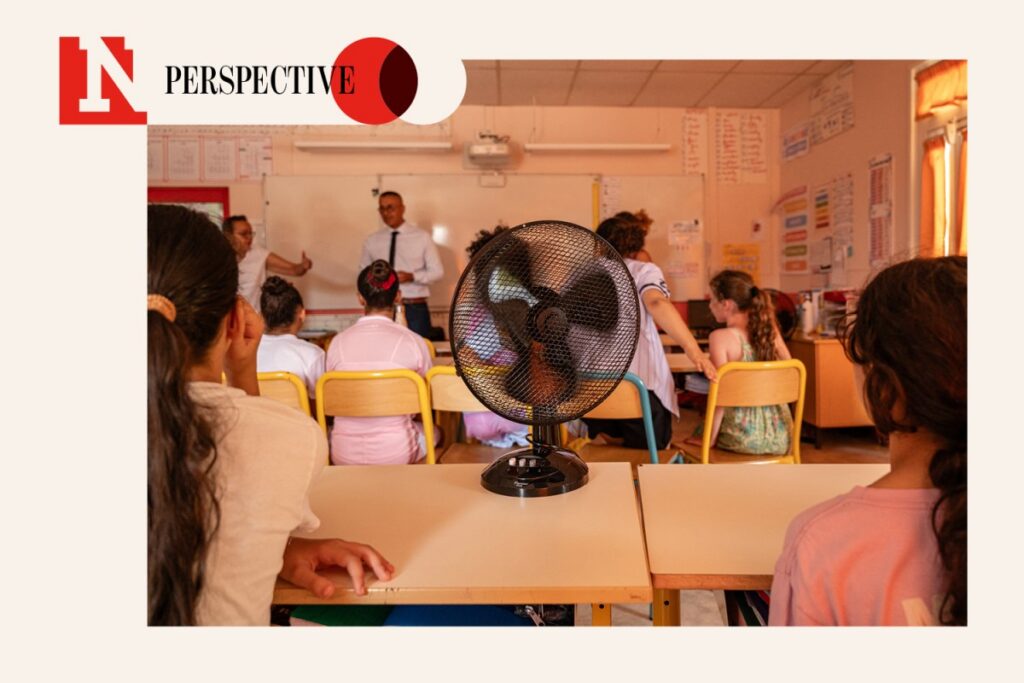
With only 7 percent of households equipped with air conditioning, and a mere quarter having any cooling systems at all, France faces a stark infrastructure gap. This becomes critical during heatwaves when schools and hospitals are overwhelmed, and transport systems falter under the pressure of extreme temperatures.
Housing Challenges
The architecture of French homes, designed for harsh winters with thick insulation and limited airflow, exacerbates the problem. These homes, described by experts as “thermal boilers,” trap heat during summer, often making them hotter inside than outside. Additionally, about 40 percent of homes lack shutters, a basic passive cooling feature.
Paris: A Hotspot
Paris, with its dense urban layout and lack of green spaces, is a prime example of the “urban heat island” effect, where heat is absorbed by concrete and emitted slowly, keeping temperatures high. This has led to increased heat-related mortality, with the city facing some of the highest risks among European capitals as noted in The Lancet.
Socio-Economic Disparities
The 2003 heatwave, which resulted in over 14,000 deaths, highlighted the vulnerability of low-income areas with inadequate housing and fewer cooling options. Despite improved alert systems and emergency responses, heat still claims an estimated 5,400 lives annually in France, disproportionately affecting poorer communities.
Energy Dilemmas
As the demand for air conditioning grows, concerns over the strain on the national energy grid and potential carbon footprint increase. Policymakers face a dilemma: expand cooling infrastructure and risk energy shortages or delay and leave populations exposed to rising temperatures.
Policy and Climate Reality
France’s environmental policies were crafted for a climate where extreme heat was less common. However, with heatwaves becoming more frequent and intense, the nation must bridge the “adaptation gap”—a disparity between infrastructure readiness and climate realities.
Political and Environmental Crossroads
The debate over how to adapt is intensifying. Calls for increased investment in cooling for public buildings are rising, while others advocate for urban greening and retrofitting. This reflects a deeper philosophical divide: should immediate resilience or long-term sustainability take precedence?
Learning from France’s Experience
France’s situation serves as a warning to other nations pursuing aggressive climate policies. Its focus on emissions reduction inadvertently left it ill-prepared for the inevitable impacts of climate change, highlighting the need for a balanced approach that integrates both mitigation and adaptation strategies.
Original Story at www.newsweek.com