In a remarkable development for the future of clean energy, researchers in the UK have uncovered new insights into the formation of synthetic materials. By identifying previously unexplored “in-between states” during the heating of molecular precursors, scientists have revealed innovative properties of these transitional phases, potentially revolutionizing clean energy technologies.
The study, published in Nature Communications, was spearheaded by researchers from the University of Warwick and the University of Birmingham. Their work sheds light on the intermediate phases encountered when heating molecules to synthesize traditional materials, a process that might hold the key to new clean energy solutions.
This discovery could significantly enhance applications ranging from solar-powered hydrogen production to efficient lithium storage, offering a substantial boost to clean energy research in the context of global climate change.
Unveiling the Intermediate Phases
“When materials are made by heating, scientists usually focus on the final product, the ‘B’ that results from ‘A’,” said co-author Dr. Sebastian Pike, Department of Chemistry, University of Warwick. “But this study shows that there are many fascinating stages in between ‘A’ and ‘B,’ and these hidden steps could be just as important.”
Through innovative experimentation, the UK team started with single-source precursors, which contain all necessary elements to form a new material. By closely monitoring the minor transitions from precursor to the final product, they identified significant properties of these transitional states.
Using advanced techniques such as X-ray diffraction and solid-state NMR spectroscopy, the researchers were able to observe and control these intermediate phases, challenging the conventional focus on only the end products of synthesis.
“We didn’t know exactly what we would find going in, but we were confident there would be something interesting and unknown in the intermediate phases,” Dr. Pike added. “We were thrilled to discover that some of these could have practical uses, even from the very first experiments.”
Potential for Energy Innovation
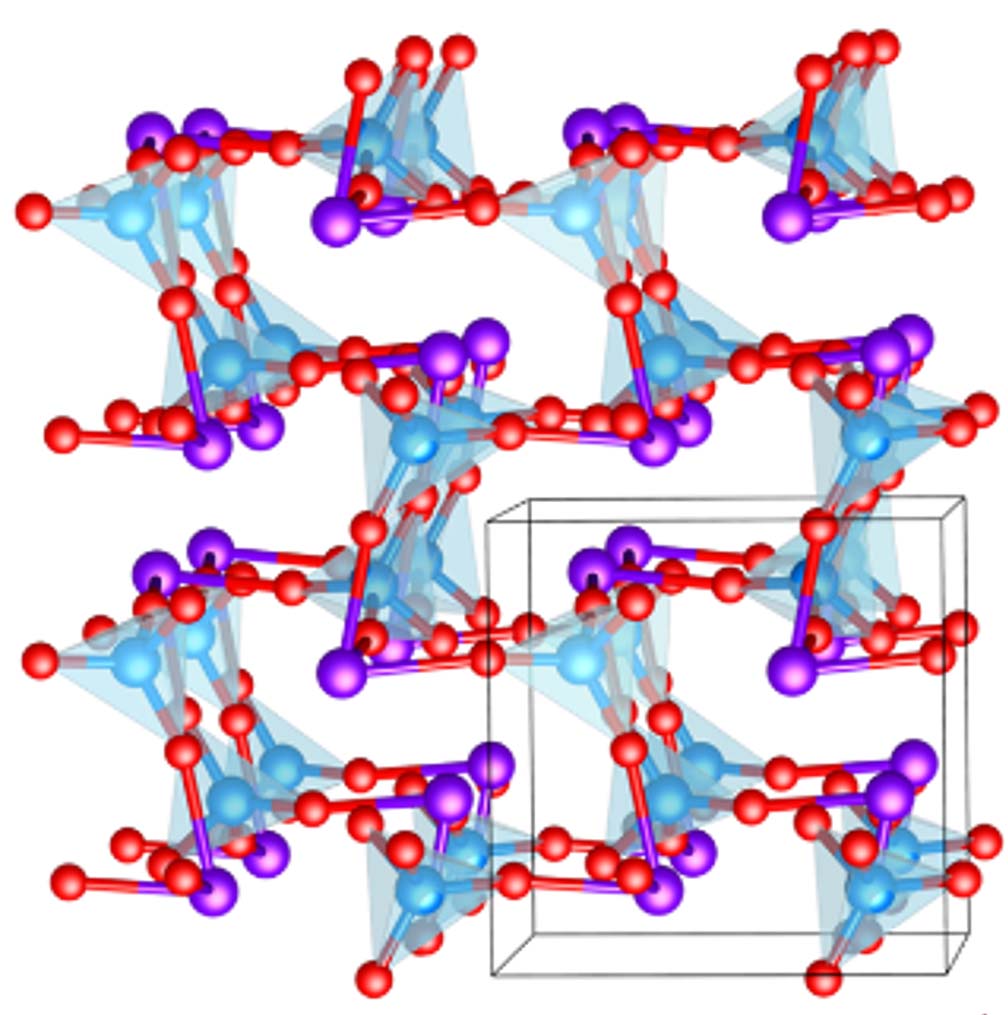
A significant outcome of these findings was the identification of β-BiVO₄, a new form of bismuth vanadate with unique properties.
Bismuth vanadate, known for its effective sunlight absorption and ability to generate hydrogen fuel by splitting water, owes its efficiency to an optimal band gap. Interestingly, β-BiVO₄ boasts an even larger band gap, enhancing its efficiency in applications like solar fuel generation and electronics.
Another intermediate state demonstrated remarkable lithium storage potential, suggesting applications in advanced battery technologies.
“There is a global scientific drive towards clean energy solutions,” Dr. Pike told The Debrief. “As inorganic chemists, we will contribute new materials and synthetic methodologies to contribute to this grand challenge.”
Toward Practical Applications
The exploration of these intermediate phases marks an initial step towards new possibilities in clean energy innovation. Although the researchers have only produced small quantities of β-BiVO₄ in the lab, scaling up for commercial use remains a challenge that needs addressing.
“Transforming molecular precursors into materials such as beta-BiVO4 is relatively straightforward,” Dr. Pike said, “but the challenge lies in preparing the multi-metallic molecular precursors in a cost-effective way—this emphasises the important role of molecular inorganic chemistry for future materials.”
The team is hopeful that their findings will spark further advancements in materials science, as their study only scratched the surface of potential precursor materials. Beyond clean energy, these sunlight-absorbing materials could be pivotal in developing antibacterial surfaces, pollution extraction technologies, and self-cleaning surfaces.
The research paper, “Amorphous Intermediates and Discovery of a Kinetic Polymorph of BiVO4 from Heating V+Bi+Zn Single-Source Precursors,” was published in Nature Communications on April 30, 2026.
Original Story at thedebrief.org