As artificial intelligence technology advances, the power demands of its infrastructure are climbing to unprecedented heights. Nvidia and the Open Compute Project project that by the time we reach the Feynman generation, expected around 2028 to 2029, a single AI rack could consume approximately 1 MW of peak power. These racks, while running large language models, have the ability to shift their power draw from 1 MW to 300 kW in milliseconds, presenting unique challenges for power infrastructure.
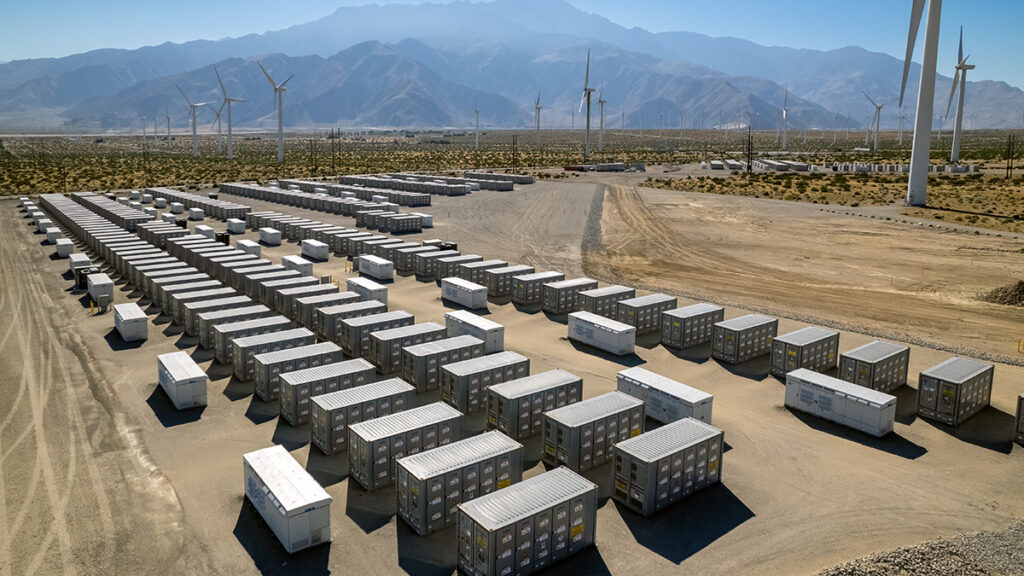
To handle these power fluctuations effectively and economically, energy storage solutions are gaining prominence. In the United States, utility-scale battery energy storage system (BESS) capacity has grown at an impressive annual rate of 70% over the past three years, nearing 52 GW by mid-2026, as reported by the U.S. Energy Information Administration. The International Energy Agency forecasts that global electricity consumption attributed to data centers will more than double by 2030, reaching around 945 TWh.
Energy Storage as a Stabilizer
Initially introduced nearly two decades ago, energy storage systems played a pivotal role in maintaining grid stability through ancillary services such as frequency regulation. As renewable energy sources like wind and solar have proliferated, the demand for longer-duration batteries has increased. Today, AI data centers are inducing grid instabilities reminiscent of large-scale load changes, necessitating a return to these quick-responding energy storage solutions.
The Evolving Role of Backup Batteries
Traditionally, data center batteries acted as a last-resort power source during outages. However, due to the dynamic energy demands of AI processes, these batteries are now integral to the power infrastructure, functioning as a buffer to absorb energy spikes and troughs. By strategically placing batteries near energy loads, facilities can achieve a more stable power input, potentially reducing energy requirements by 20% to 40%.
Layered Storage Solutions
Data centers incorporate energy storage at multiple levels, each tailored to specific needs. Near the racks, high-rate lithium iron phosphate (LFP) batteries, possibly combined with other technologies like sodium-ion, are favored. Behind the meter, lithium-ion or sodium-ion batteries are used to bridge energy needs, often in response to utility curtailments. In front of the meter, long-duration storage like lithium or flow batteries ensures site power security, especially when relying on intermittent renewable energy sources.
Key Factors in Storage Deployment
Three crucial considerations determine storage deployment: chemistry, logistics, and cell manufacturing. LFP is widely used for its versatility, while sodium-ion offers a cost-effective alternative. Logistics favor transportable battery designs, with the industry gravitating towards 20-foot containers. Cell manufacturing remains challenging in the U.S., with domestic production becoming increasingly important due to tax incentives.
Future Prospects for Energy Storage
Looking ahead, the energy storage landscape for data centers is set to diversify. A variety of battery technologies, including flow batteries for extended duration, sodium-ion for high-temperature applications, and compact LFP systems, will address a range of operational needs. As storage solutions continue to evolve, they will play a crucial role not only in supporting renewable energy integration but also in meeting the fast-response demands of modern grids.
By Jozsef Kocsis, Vice President of Global Business Units at Jabil
Original Story at pv-magazine-usa.com