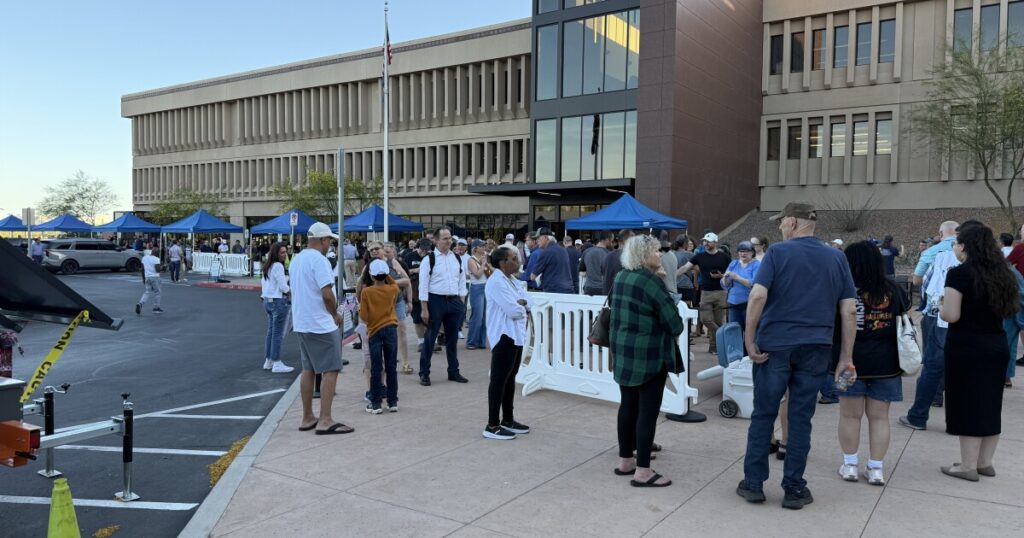
In a significant development for Arizona’s utility governance, a heated election for the Salt River Project (SRP) board witnessed an unprecedented surge in voter turnout. Despite extensive efforts by Turning Point USA’s political wing, which invested heavily in promoting industry-favored candidates, the result tilted towards candidates advocating for clean energy policies.
The SRP elections, which took place on Tuesday, have traditionally been low-profile due to their unique voting system, which restricts voting rights to landowners within the SRP territory. Votes are weighted by the amount of land owned, disproportionately empowering large landowners over the average homeowner. However, this year saw a remarkable turnout with over 36,000 ballots cast, a substantial rise from the typical 7,500 in previous elections, according to an SRP spokesperson.
Turning Point Action, an extension of Turning Point USA founded by Charlie Kirk, launched a comprehensive campaign to rally support for its slate of pro-industry candidates, many of whom had long-standing roles on SRP’s boards. Meanwhile, a coalition named the SRP Clean Energy team, supported by environmental and renewable energy advocates, campaigned vigorously for change.
The Election Outcome
Despite the aggressive campaign by Turning Point Action, the unofficial results reported on Wednesday night did not favor their candidates entirely. Instead, the clean-energy candidates have claimed victory, securing five seats on the SRP power board. This gives them an 8-6 majority, which they plan to leverage for advancing renewable energy initiatives like solar and battery storage.
“I can say that the board members have just kind of been followers of management, so whatever management wanted, they got it,” said Sandra Kennedy, a member of the clean energy slate. “I think it’s a new day.” Although Kennedy lost the race for District president to Turning Point-backed Chris Dobson, she retained her board seat won in 2024. Barry Paceley, another candidate endorsed by Turning Point, triumphed in the vice president race against clean-energy candidate Casey Clowes, who also kept her board position.
Turning Point Action did not comment on the election results but celebrated a “huge victory” on social media. Tyler Bowyer, an executive at Turning Point, remarked, “Democrats had told donors this was the inevitable year they would win President and Vice President of SRP and control the agenda. They failed massively with a huge turnout.”
However, Kennedy contended that the board majority is more crucial than winning leadership positions, as the president only casts votes in case of ties. “With us having eight members on the board and them having six, I’m not sure when his tie will actually come into effect,” she noted.
Furthermore, critics argue that the acreage-based voting system continues to disadvantage ordinary SRP customers, as it historically benefits large landowners. Vianey Olivarría from Chispa Arizona PAC stated, “Clean energy voters turned out in force to demand accountability and lower energy bills from SRP.”
The Aftermath
Turning Point USA, known for its influence in state and national politics, has increasingly turned its focus to local races in Arizona. However, the results of the SRP election suggest a setback for the organization, which reportedly infused millions of dollars into the campaign. A separate group, Arizonans for Responsible Growth, spent $160,000 supporting the same candidates, while Chispa AZ PAC invested approximately $150,000 in the clean-energy slate.
Despite their efforts, Turning Point-endorsed candidates faced unexpected challenges, as the clean energy team successfully flipped two board seats previously held by Turning Point supporters. The outcome indicates a shift in voter priorities towards more sustainable energy policies within the SRP.
Original Story at www.kjzz.org