Challenges Mount for Acequia Systems Amid Climate Change and Flooding
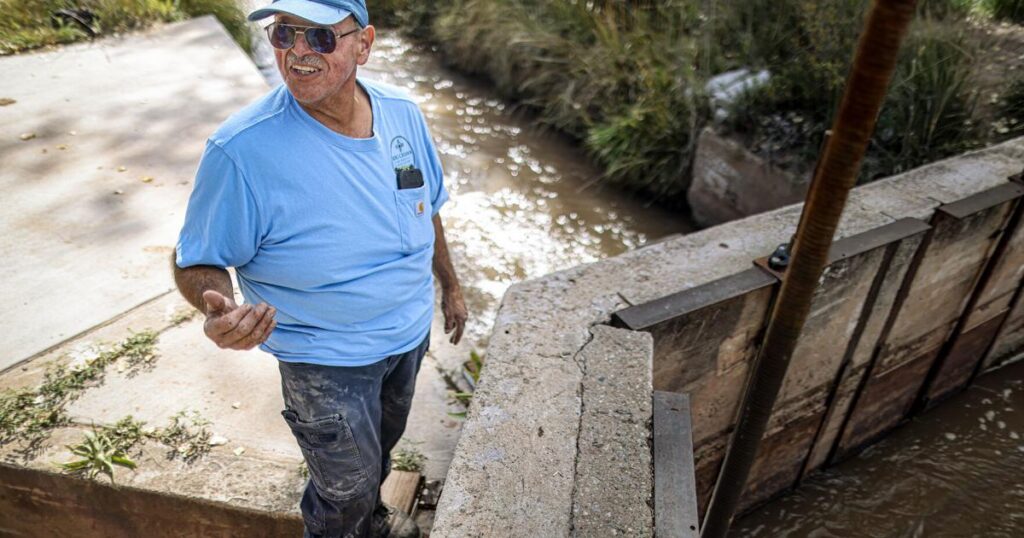
Deep within the Rio Chama bosque, Rick Martinez, treasurer of the Rio de Chama Acequia Association, demonstrated the significant sediment buildup near his acequia’s main headgate, a result of late September flooding. This issue highlights the increasing difficulties faced by acequia leaders in maintaining irrigation systems in Rio Arriba County.
Even as water continues to flow through the Los Salazares Community Ditch, the aftermath of recent floods has left acequia officials with the costly task of removing sediment from the river diversion area in Hernández. The cleanup efforts are expected to demand tens of thousands of dollars.
State of Emergency Declared
The Rio Arriba County commissioners declared a state of emergency following the late September floods that damaged acequias in the region. This declaration aims to acknowledge the challenges faced by these ancient irrigation systems and potentially unlock state and federal disaster funding.
According to the resolution, “damage to acequia infrastructure may threaten the continued delivery of irrigation water, agricultural operations, and the economic welfare of affected communities.” This move is supported by the state Department of Homeland Security and Emergency Management, which has encouraged the county to pursue disaster funding.
Financial Strain on Acequia Communities
Rick Martinez expressed frustration over the increasing financial burden on acequia members, stating, “The biggest issue is having to come to our membership year after year and saying, ‘We’re going to need more money from you. We got to do this, we got to do that.’”
In response to the 2026 floods, New Mexico is seeking federal disaster assistance. Officials recently conducted damage assessments in Rio Arriba County, with a focus on locations like the Los Salazares Community Ditch.
Impact of Climate Change
Martinez, along with other acequia leaders, has noted the increased difficulty and expense in preparing the ditches for spring irrigation. “Climate has changed a lot,” said Miguel Vigil, mayordomo of the Salazar community ditch. “We’re at God’s mercy. We have to accept what He sends, but sometimes it’s difficult. Like I say, without any help, we wouldn’t be able to afford it.”
Stephanie Mladinich, a doctoral student at the University of New Mexico, has studied the impacts of flooding and sedimentation on acequias. She explained that recent weather patterns have resulted in more intense rains and increased sedimentation, further complicating the maintenance of these vital waterways.
Federal and State Assistance
With the ongoing challenges, acequia leaders emphasize the need for federal and state funding. “It’s either that or we’re not going to be able to irrigate anymore,” Vigil stated, highlighting the economic strain on local communities.
Recent heavy rainfall has exacerbated the situation, causing widespread flooding and sediment buildup not only in Hernández but also in other areas such as Pojoaque, Chimayó, Santa Cruz, Ojo Caliente, and La Madera.
Governor Michelle Lujan Grisham’s spokesperson, Leah March, confirmed the availability of up to $3.75 million in emergency funds through the Department of Homeland Security and Emergency Management, emphasizing that “the state will keep standing with families and communities … for as long as the recovery takes.”
Long-term Concerns
Sam Garcia, president of the Rio de Chama Acequia Association, pointed out that upstream drought conditions and depleted vegetation have contributed to sediment issues. “There’s no vegetation, so we get these heavy rainfalls, and that brings all the sediment down the arroyos and down into us,” Garcia noted.
Martinez and other acequia leaders continue to document the damages to secure future funding. “None of these arroyos are being maintained,” he lamented. “It’s just a compounding issue year after year.”
Original Story at www.santafenewmexican.com