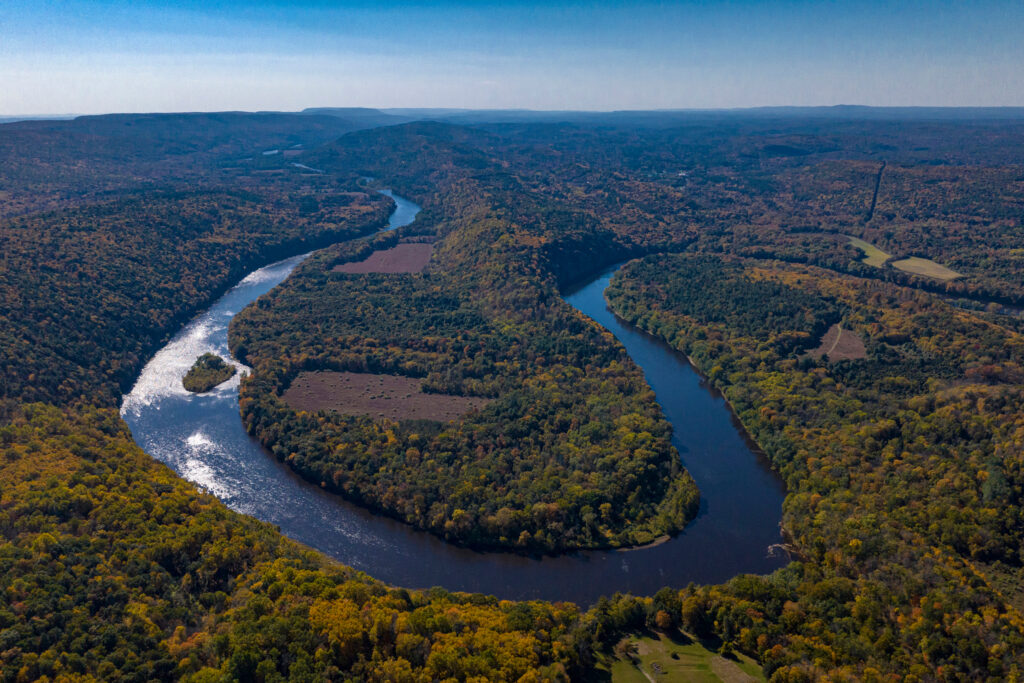
A Republican-led initiative to end the Delaware River Basin’s fracking ban was halted on Tuesday. An amendment to the Water Resources Development Act was not presented to a congressional committee, leaving the existing restriction intact.
The amendment, proposed by U.S. Rep. Scott Perry from Pennsylvania, aimed to remove the Delaware River Basin Commission’s authority to regulate hydraulic fracturing in the 330-mile-long watershed. This area supplies drinking water to millions of people.
The proposal also sought to prevent fracking bans by the Susquehanna River Basin Commission in Pennsylvania and the Potomac River Basin Compact in the Washington, D.C. area. Perry’s office did not comment on the matter.
The Delaware River Basin Commission noted that regulations for the three commissions would remain unchanged, and the House will vote on the WRDA without altering the fracking ban.
Beth Brown, a spokeswoman for the commission, stated, “Our understanding is the House intends to consider WRDA 2026 under a suspension of rules, meaning no further amendments would be offered, preserving the status quo in the three Mid-Atlantic river basins.”
Tracy Carluccio of the Delaware Riverkeeper Network expressed that the absence of Perry’s amendment was beneficial for water quality, though she expects future challenges.
Delaware Riverkeeper’s Maya van Rossum praised the withdrawal as an “amazing success” due to environmental groups urging Congress to reject the amendment.
Van Rossum highlighted the ban’s importance, stating it was based on sound science and aimed at protecting communities from fracking’s detrimental impacts.
The amendment would have reversed a fracking ban officially in place since 2021 and informally since 2010. The commission, representing Pennsylvania, New York, New Jersey, Delaware, and the federal government, concluded that fracking posed “significant, immediate and long-term” risks to water quality, potentially affecting 15 million people’s drinking water. Cities like New York and Philadelphia depend on this water supply.
Studies outside the basin have found fracking adversely impacts water resources. Perry has previously attempted to challenge the ban, introducing the DRILL Now Act in 2025, which sought to limit the commission’s regulatory authority.
The ban is a key regulation resulting from over a decade of advocacy and public comment, with supporters arguing it is crucial for public health and environmental protection.

Before the committee’s decision, the commission warned that the proposal threatened decades of water-quality improvements.
The Marcellus Shale Coalition supports the amendment, claiming the ban is illegal and damages landowners. MSC President Jim Welty stated the ban causes “irreparable harm” and urged Congress to address this issue.
Steve Miano, an environmental lawyer, argued that the proposed amendment could conflict with the DRBC’s federally authorized “Compact” to ensure water quality.
Delaware Riverkeeper Network highlighted the amendment’s threat, arguing it would strip the DRBC of its regulatory power.

Josh Fox, an environmental activist, warned that ending the ban could lead to widespread water contamination, affecting areas far from Pennsylvania drilling sites. He criticized Pennsylvania’s regulation of fracking, noting a 2020 grand jury report that highlighted regulatory failures.
Original Story at insideclimatenews.org