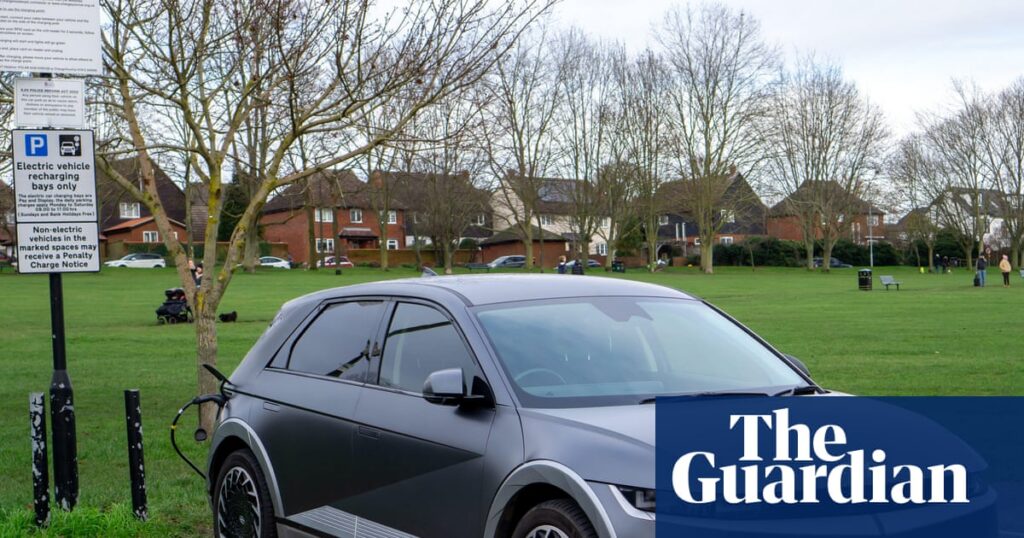
As electric vehicles become more commonplace, drivers are encountering unexpected challenges, including fines for activities they assumed were straightforward. A pressing question now is: Does charging an electric car equate to parking? For some, the answer has been an expensive “yes,” as a number of motorists recently discovered.
Charging Points and Parking Fines
Several drivers have reported being fined while charging their electric vehicles (EVs) due to unclear signage regarding parking tariffs and store operating hours at charging points. Some have even encountered situations where chargers were advertised as available despite breaching terms and conditions of the car parks.
Kevin Laban, an EV owner, was surprised to receive a £70 parking charge notice (PCN) after charging his car in a supermarket car park that was closed. Laban used the Pod Point app to locate a charger in an Aldi car park in Weymouth, unaware that the landowner considered charging to be parking, which was not permitted outside store hours.
“Pod Point advertises the charger as open to the public, while the car park’s cameras are set to immediately fine anyone who enters to use it,” Laban commented. “If the landowner does not want people charging outside store hours, the chargers must be deactivated, or the EV apps must sync with the parking restrictions.”
After Laban raised the issue, Aldi chose to cancel the PCN. They maintained that their car park terms and conditions are clearly displayed.
Landowner Responsibility and Inconsistencies
Pod Point stated that it is the responsibility of landowners to post the necessary notices about parking charges and restrictions, both on-site and in their app. While some sites detail these terms prominently for EV drivers, others do not.
Another driver, Clive Sanders*, faced a similar predicament in a Devon car park, receiving a £100 PCN from Smart Parking after only paying for the charging fee. “There was no indication on the InstaVolt charger that I needed to pay the parking tariff as well as the charging fee,” Sanders noted.
InstaVolt responded by saying that car park rules are established by landowners and that they do provide warnings that parking restrictions apply. They offered Sanders a £50 credit for his inconvenience after the issue was investigated.
A representative from InstaVolt stated, “Parking terms vary from site to site and may refer to time limits rather than charges, so to tell drivers that ‘parking charges apply when charging’ would not accurately reflect the range of conditions that exist across our network.” They acknowledged that the distinction between charging fees and site-specific parking terms might not be immediately apparent to new EV users.
The Role of EV Charging and Parking Regulations
Smart Parking emphasized the importance of drivers checking the terms and conditions before using car parks. “There is no free parking and motorists must pay for the duration they stay,” a spokesperson explained.
Anthony Stone*, another EV driver, was fined £100 after using a charger at a Holiday Inn car park without registering his license plate at the hotel. “How many contracts should a driver be expected to enter to charge a vehicle?” he questioned, highlighting the complexity of charging arrangements.
The RAC motoring group noted that PCNs for charging are becoming a growing issue for EV drivers. “Signage needs to be clearer, so drivers realize straight away whether they need to pay for parking, how long they can stay to charge, and the hours of operation,” said Simon Williams, RAC’s head of policy.
The Ministry of Housing, Communities and Local Government stated that tariffs for using EV chargers must be clearly displayed and announced plans to publish a new code to improve standards for private parking later this year.
* Names have been changed
Original Story at www.theguardian.com