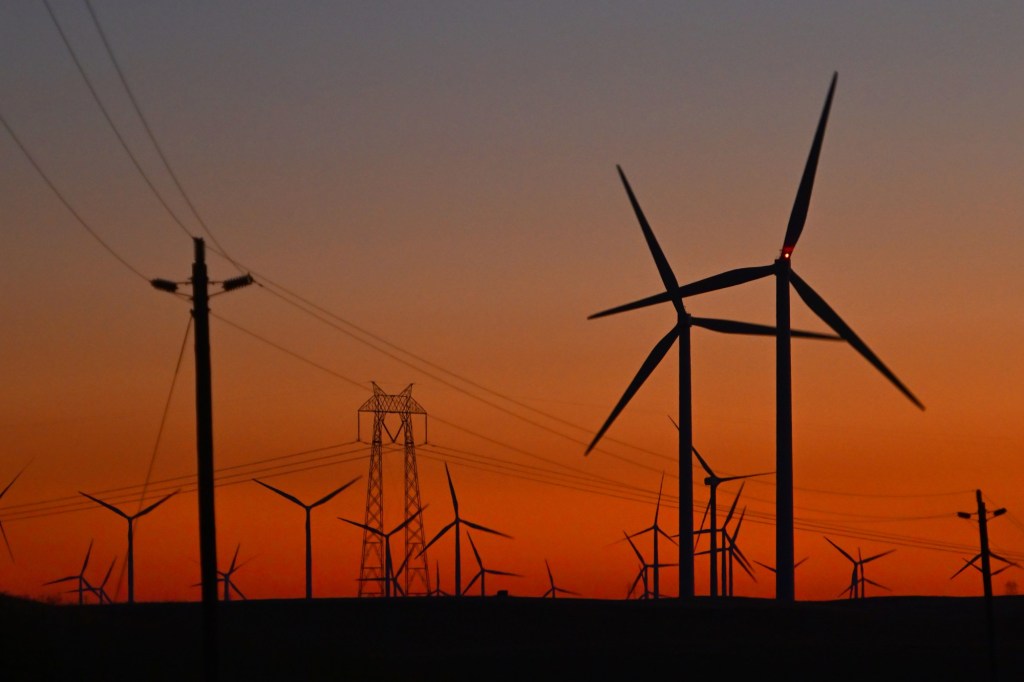
California Achieves New Milestone in Clean Energy Production
In an era marked by the urgent need for sustainable energy solutions, California has set a new benchmark by achieving a record 67% of its retail electricity supply from carbon-free sources in 2023. This achievement, highlighted in recent data from the California Energy Commission, underscores the state’s commitment to renewable energy.
This figure marks an increase from 61% in 2022 and surpasses the previous record of 64% set in 2019. The state’s ambitious target, established under a law signed by former Governor Jerry Brown in 2018, mandates a shift to 100% renewable and carbon-free electricity by 2045, including sources such as solar, wind, geothermal, large hydropower, biomass, and nuclear energy.
“This is a major milestone on our journey to a 100% clean energy future,” commented David Hochschild, chairman of the California Energy Commission. “Two-thirds clean energy was considered mythology even 10 years ago. Alternative energy is the now wrong word to use for renewables. And we are just getting started. The momentum is profound.”
However, the path to renewable energy has faced challenges. Recent legislative changes signed by President Donald Trump removed several tax breaks and incentives for renewable energy, initially introduced by President Biden. Trump justified these moves by stating, “Ending the massive cost of taxpayer handouts to unreliable energy sources is vital to energy dominance, national security, economic growth and the fiscal health of the nation.”
In contrast, Governor Gavin Newsom criticized these federal actions, emphasizing that while the federal government steps back from innovation, California progresses with its clean energy initiatives. “The world’s fourth-largest economy is running on two-thirds clean power – the largest economy on the planet to achieve this milestone,” Newsom stated.
Despite this progress, California faces high electricity costs, with prices nearly double the national average. The state recorded an average retail electricity price of 31.77 cents per kilowatt-hour in April, as per the U.S. Department of Energy. Only Hawaii and Connecticut reported higher costs.
Critics like Steve Hilton, a Republican gubernatorial candidate for 2026, have raised concerns over these high costs, arguing that they overshadow the clean energy achievements and contribute to economic challenges.
Polling data indicates strong public support for clean energy, with 66% of California voters endorsing the state’s 100% clean energy mandate by 2045, according to a survey by the Public Policy Institute of California.
One of the significant hurdles in the clean energy transition is the intermittency of renewable sources like solar and wind. To mitigate this, California has significantly ramped up battery storage capacity, growing from 1,474 megawatts in 2020 to 15,763 megawatts currently, based on California Energy Commission figures.
Despite safety concerns following a fire at a major battery storage plant, California continues to lead in battery storage expansion, recently approving the world’s largest solar battery project in Fresno County, known as the Darden Energy Project.
Hochschild assures that advancements in battery technology and stringent safety standards are in place to safeguard these initiatives. He emphasized, “I don’t believe there are safer battery standards anywhere in the world for what we require here.”
Original Story at www.marinij.com