Una May Gordon, Jamaica’s former principal director of climate change, highlighted the “catastrophic loss and damage” experienced by her country due to Hurricane Melissa at the United Nations climate summit in Brazil last week.
Gordon emphasized the need for accountability from major greenhouse gas-emitting countries, demanding an end to their impunity.
Advocates for climate justice have long pushed for this accountability, supported by both science and, increasingly, the law.
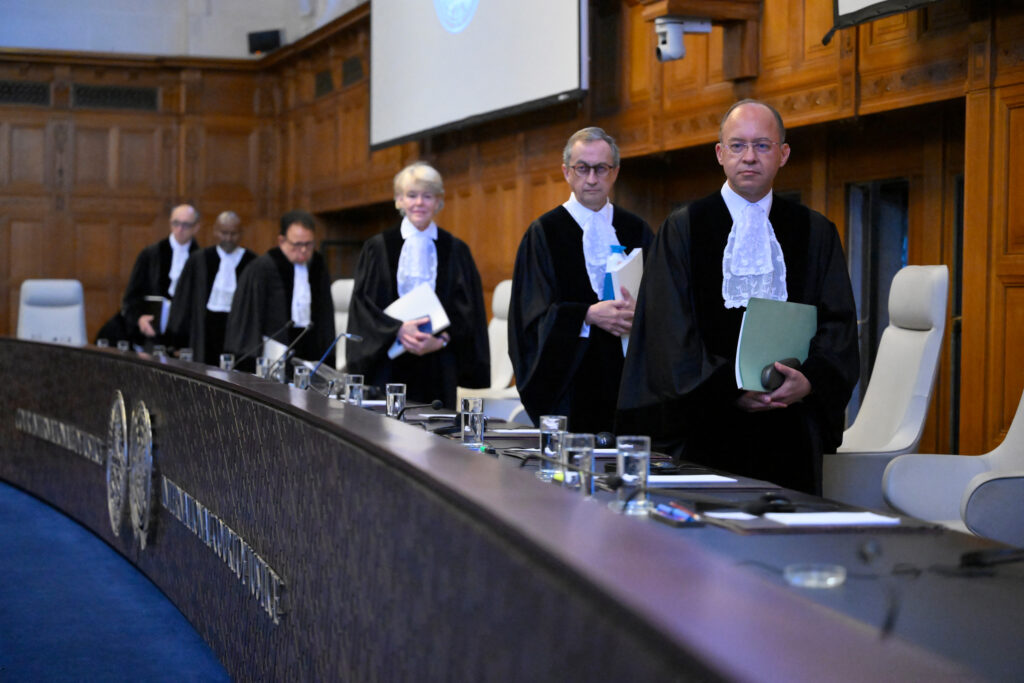
This year’s U.N. climate talks in Belém mark the first time they occur following a significant International Court of Justice ruling, which clarifies international legal obligations for addressing the climate crisis. The ruling transforms what were considered political choices into enforceable duties.
The court’s unanimous advisory opinion in July stated that addressing the climate crisis is mandatory under various international laws and that U.N. member states can be held accountable for failing to meet their obligations.
Countries like Vanuatu, which spearheaded the initiative to seek the advisory opinion, hope this legal precedent will drive more ambitious climate action and greater accountability in global diplomacy.
Vanuatu’s climate minister, Ralph Regenvanu, expressed optimism that the advisory opinion would influence the ongoing negotiations in Belém.
While many major emitters are attending the conference, the United States is absent for the first time since the inception of the Conference of the Parties (COP) in 1992.
During Donald Trump’s presidency, the U.S. still participated in the talks despite its status as the largest historical carbon emitter. Some observers, such as former UNFCCC executive secretary Christiana Figueres, suggest the U.S. absence might be beneficial given its climate denial stance.
However, climate law experts stress that the U.S. remains accountable for its impacts, regardless of its presence at the COP.
Nikki Reisch, director of the climate and energy program at the Center for International Environmental Law, noted that the ICJ’s ruling makes it clear that all countries, including the U.S., have a duty to prevent climate harm and protect human rights, regardless of their treaty status.
A State Department spokesperson defended the Trump administration’s withdrawal from the Paris Agreement, labeling it a financial burden on the U.S.
While advisory opinions are not technically binding, they are seen as authoritative interpretations of the law. The International Court of Justice’s opinions carry significant weight within the U.N.
“Withdrawing from the Paris Agreement does not absolve the U.S. of its climate obligations.”
— Nikki Reisch, Center for International Environmental Law
Margaretha Wewerinke-Singh, who advised Vanuatu during the ICJ proceedings, asserted that the U.S., as a U.N. member, is expected to heed the court’s advice.
This opinion follows another notable Inter-American Court of Human Rights ruling recognizing the right to a healthy climate.
The International Tribunal for the Law of the Sea also issued an opinion in May 2024 affirming states’ legal duties to reduce greenhouse gas emissions.
The Trump administration, however, is amplifying fossil fuel reliance while weakening environmental policies. Recent reports indicated the EPA’s plans to repeal its greenhouse gas endangerment finding around the time of the ICJ’s advisory opinion.
Experts argue that U.S. actions violate science and multiple treaties. Maria Antonia Tigre from Columbia University’s Sabin Center for Climate Change Law stated that the U.S., as a major emitter, is likely breaching its international obligations.
Reisch contended that the U.S. continues to breach its legal duties by promoting fossil fuel expansion and failing to address historical climate responsibilities.
The ICJ’s advisory opinion suggests countries sustaining the fossil fuel industry may be committing internationally wrongful acts, potentially implicating the U.S. as the top oil and gas producer.
Reisch highlighted the administration’s reported plans to expand offshore oil and gas production, including off the California coast, as examples of disregard for legal responsibilities.
Paul Rink, from Seton Hall Law School, emphasized the potential for U.S. violations of international law regarding climate change.
Direct enforcement via international mechanisms is limited since the U.S. has not accepted the ICJ’s jurisdiction broadly. It also withdrew from compulsory jurisdiction in 1986, following a ruling against it.
In September, lawyers for youth plaintiffs in the Juliana v. United States climate case filed a petition with the Inter-American Commission on Human Rights accusing the U.S. of violating international human rights law.
Though the commission’s recommendations are not legally binding, they can effectively hold governments accountable.
U.S. litigants could use the ICJ’s opinion to bolster arguments against the Trump administration’s fossil fuel policies, though courts are not required to follow it.
Jean Su from the Center for Biological Diversity highlighted using the opinion to advocate for ambitious climate action at state levels.
“An NGO in a state where fossil fuels are being produced for export to the U.S. could try to persuade the state’s domestic courts that this violates international law.”
— Michael Gerrard, Sabin Center for Climate Change Law
Gerrard noted the potential for the opinion to increase liability risks for fossil fuel companies, particularly outside the U.S.
Todd Howland, from Vermont Law School, suggested the possibility of numerous lawsuits globally against fossil fuel companies, citing international advisory opinions.
Original Story at insideclimatenews.org