While some major fossil fuel producers advocate for expanded oil and gas use, which is linked to warfare, economic shocks, and ecological damage, over 50 countries at the first Conference on Transitioning Away From Fossil Fuels developed plans to shift toward renewable energy systems aimed at stability and abundance.
At the conference’s end, France, where fossil fuels power about 60% of the world’s seventh-largest economy, unveiled a pilot roadmap to phase out coal by 2030, oil by 2045, and gas by 2050, while electrifying heating and transport. Colombia’s draft roadmap to reduce fossil fuels by 2050 projects $280 billion in economic benefits.
The countries at the event in Santa Marta, Colombia, generate about one-third of global economic activity. They agreed to align trade and finance policies with transition plans, potentially accelerating decarbonization to prevent excessive greenhouse gases.
The conference serves as a parallel climate diplomacy track to the United Nations Framework Convention on Climate Change, progressing faster and with broader cooperation, according to Ralph Regenvanu, Vanuatu’s minister for climate change adaptation.
“It’s heartening to see the Global North and South discussing transitioning away from fossil fuels,” he stated.
Participants and observers described the meeting as addressing fossil fuels themselves as a root cause of crises such as conflict and economic instability. Previous UNFCCC climate talks often downplayed these connections.
The Netherlands and Colombia convened the conference during the closing days of COP30 in Belém, Brazil, after frustration grew over some countries blocking discussions on phasing out fossil fuels. A follow-up meeting is planned for early 2027 in Tuvalu.
Organizers emphasized the importance of a special science panel, citing media ecosystems overwhelmed with climate misinformation. Discussions also highlighted a shift in understanding energy, shaped by lived experiences.
Avoiding Past Mistakes
Historically, fossil fuels were seen as progress, celebrated in ads and culture. Today, that system drives instability and climate degradation, making the transition urgent. For conference attendees, the question is not whether to change, but how to avoid past mistakes. Younger advocates see renewable energy as the standard, not an aspiration, challenging the fossil fuel industry’s narrative.
“War is one of the largest contributors to the climate crisis,” said Faotu Jeng from Clean Earth Gambia, noting military emissions aren’t fully accounted for under the Paris Agreement.
In 2015, militarized nations like the United States resisted including military emissions in climate accords, but these emissions are significant. Researchers estimate global militaries account for about 5% of emissions, threatening climate goals as weapons spending rises.
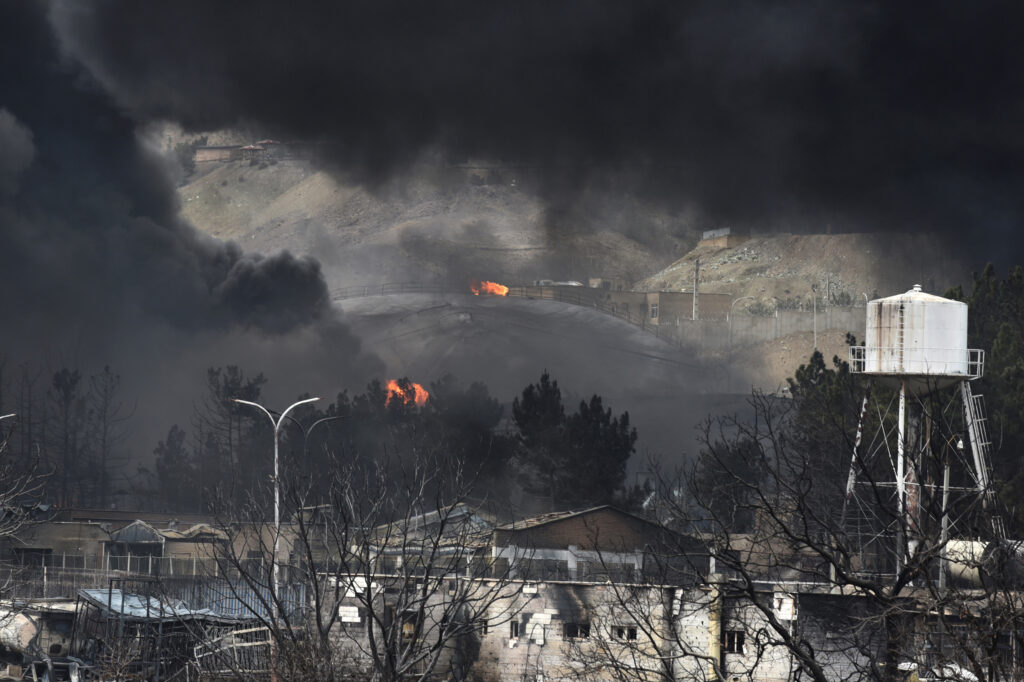
Recent conflicts have spiked emissions due to military operations and destruction, with Russia’s invasion of Ukraine alone generating over 300 million tons of carbon emissions. The U.S. and Israeli attack on Iran produced a 5 million-ton footprint in weeks, comparable to emissions from several low-emission countries.
The Santa Marta conference recognized the real-world links between fossil fuels, conflict, and instability. Somali peace and development leader Ilwad Elman highlighted how climate, war, and economic disruption are interconnected pressures.
Elman explained that impacts like drought affect family livelihoods, leading to displacement and resource competition. “You don’t debate whether something is climate or conflict,” she said. “You feel it as pressure, pressure on land, water, movements, and people.”
Mary Robinson, former President of Ireland and a founding member of The Elders, emphasized that transitions must be “grounded in justice” and called for coalitions to drive these changes urgently.
Original Story at insideclimatenews.org