Revolutionary Road: Charging as You Drive
Imagine a future where your electric vehicle powers up seamlessly as you drive. This isn’t science fiction; it’s the groundbreaking reality being developed by researchers at Utah State University’s ASPIRE Engineering Research Center. This cutting-edge technology aims to revolutionize the way we think about electric vehicles and charging infrastructure.
The concept is straightforward yet innovative: roads embedded with technology that wirelessly charges vehicles in motion. “Here at this facility, is focused on this wireless charging, both in terms of a stationary wireless and then also what’s called dynamic wireless,” explained James Campbell, Chief Strategy Officer at ASPIRE Research Center.
The mechanism involves electromagnets placed beneath the road surface. These magnets provide vehicles with an energy boost as they pass over, effectively propelling them forward. “As the vehicle drives by, (it) quickly gets a zap, so to speak, and that can help propel the vehicle to keep going,” Campbell said. “It can propel it for about a quarter mile. Then you need another charge, then another quarter mile.”
At Utah State, a test track is actively used to experiment with this new technology. One exciting development is a wireless charging dock capable of fully charging an electric semi-truck in just 30 minutes. “We’ve been developing here at Utah State University a one megawatt charger. That’s one of the largest wireless chargers in the world — equivalent to about a thousand homes,” Campbell noted. This system allows vehicles to charge without plugging in, akin to placing a smartphone on a wireless charging pad.
As engineers work on this project, they are reimagining the very concept of roadways. “Roadways in the future could become something much, much more than just asphalt that we drive on to get from A to B,” said Tyler Munk, an ASPIRE civil engineer. The technology involves placing rubber transmitter pads six inches under the asphalt to charge vehicles above.
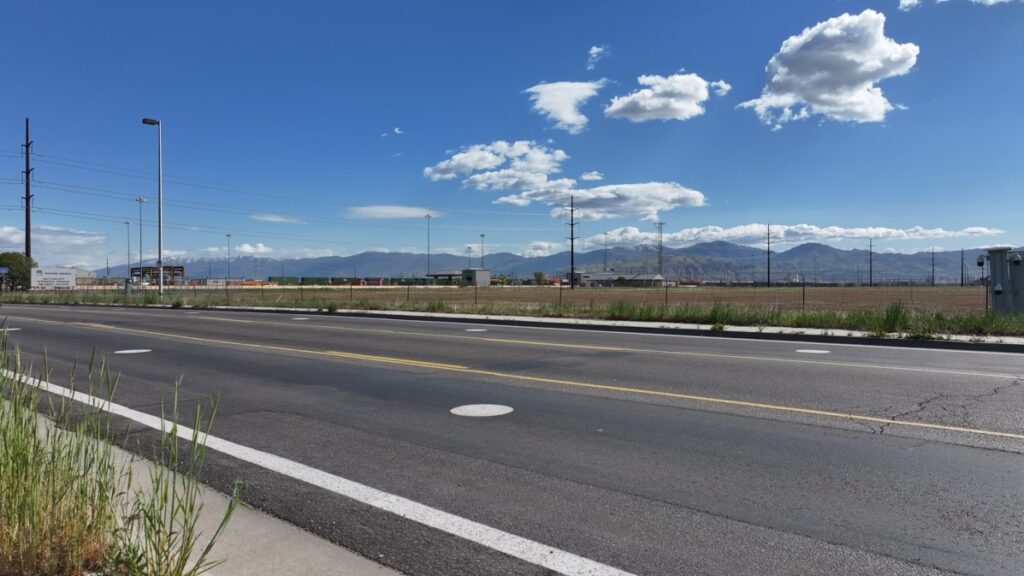
The project is not limited to academic exercises; it is being field-tested on a fully electrified road at Utah’s Inland Port in Salt Lake City. A quarter-mile stretch at the port’s entrance can charge any equipped vehicle on the go. “So this is just one part of the charging solutions that ASPIRE is bringing at this location,” said Mona Smith, the Environmental and Sustainability Director at the Utah Inland Port.
Students at Utah State are gaining invaluable hands-on experience working with this technology. “It complements the classroom so well. So I learned the theory in class, but then I get to apply it here,” shared Sally Vogel, a USU master’s student of electrical engineering. Mechanical Engineering student MacKay Baugh expressed excitement for being part of such an innovative project, saying, “Just look to that future and say, ‘Hey, I was a part of this when it started.’”
The collaborative effort involves 10 universities, including Purdue and Colorado, with the project headquartered at Utah State University. ASPIRE plans to launch the technology fully at the Utah Inland Port by late summer or early fall, with the potential for everyday drivers to experience it within the next decade or two.
Original Story at ksltv.com