In an exploration of the intersection between literature and environmental awareness, ten literary experts have shared their most influential climate-themed poems. Spanning over two centuries, these works evoke a spectrum of emotions from sorrow to hope, highlighting the enduring power of poetry to engage with pressing global issues.
This piece is part of Climate Storytelling, a series examining how the arts can foster understanding and inspire action alongside scientific discourse.
Death of a Field by Paula Meehan (2005)
Paula Meehan’s Death of a Field, written post-2008 financial crisis, critiques the environmental damage wrought by Ireland’s Celtic Tiger economy. The poem foretells the destruction of a field by developers, symbolizing a disregard for native ecosystems: “The end of the field as we know it is the start of the estate.”
This work offers a local lens on global climate issues, likening the displacement of wildlife to colonial violence. Meehan’s poem challenges imperialistic views on nature, maintaining its mysteries:
Who can know the yearning of yarrow
Or the plight of the scarlet pimpernel
Whose true colour is orange?
Jack Reid is a PhD Candidate in Irish literature
Darkness by Lord Byron (1816)
Lord Byron’s Darkness imagines a world ravaged by volcanic eruption, inspired by the “year without a summer” following Mount Tambora’s eruption in 1815. The resulting atmospheric sulfur caused widespread darkness and low temperatures.
Byron’s grim portrayal of climate disaster, with imagery akin to modern wildfire reports, culminates in a barren, lifeless Earth: “Seasonless, herbless, treeless, manless, lifeless– / A lump of death – a chaos of hard clay.” The poem serves as a cautionary tale for the Anthropocene epoch.
Katie MacLean is a PhD candidate in English Literature
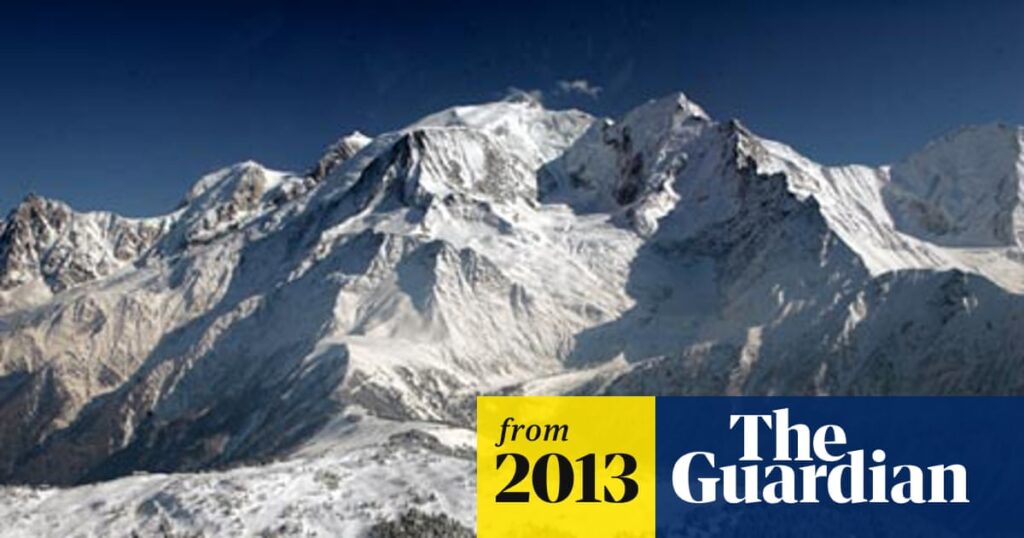
Mont Blanc by Percy Bysshe Shelley (1817)
Inspired by the same climatic anomaly as Byron, Percy Bysshe Shelley’s Mont Blanc reflects on global cooling through vivid natural imagery. The poem envisions glaciers encroaching on valleys, threatening life and humanity.
Shelley foresaw this glaciation as inevitable, yet his work resonates today as a meditation on catastrophic climate change.
Amy Wilcockson is a research fellow in Romantic literature
Characteristics of Life by Camille T. Dungy (2012)
Camille T. Dungy’s Characteristics of Life reflects on the fragility of invertebrates, prompted by a BBC report on their extinction risk. The poem invites readers to reconsider the vitality and complexity of often-overlooked creatures.
Dungy challenges perceptions of creatures deemed “mindless” or “wordless”, urging a shift in perspective on the natural world.
Janine Bradbury is a poet and a senior lecturer in contemporary writing and culture
Prayer at Seventy by Vicki Feaver (2019)
Vicki Feaver’s Prayer at Seventy explores themes of aging and the climate crisis, depicting a speaker transformed into vulnerable creatures, reflecting existential and environmental anxieties.
The imagery of precarious animals conveys the uncertainty of both personal and planetary futures.
Julie Gardner is a PhD candidate in literature
Read more: How poetry can sustain us through illness, bereavement and change
Walrus by Jessica Traynor (2022)
In her poem Walrus, Jessica Traynor intertwines a mother’s quiet climate anxiety with a mural discovery of Alice’s Adventures in Wonderland. Using Lewis Carroll’s imagery, Traynor reflects on the absurdity of a “boiling hot” sea now a reality.
This complex poem weaves children’s literature with the harsh realities of climate change.
Ellen Howley is an assistant professor of English
Ocean Forest, co-created by the We Are the Possible programme
Ocean Forest was collaboratively created through workshops for the 2025 UN Climate Conference. The poem highlights the vulnerability of ocean ecosystems and emphasizes the urgent need for conservation efforts.
In the shallows, alert to change,
the minuscule, overlooked creatures
weave between seagrass, and weed –
live their shortened lives.
Despite the threats, it hints at hope for the survival of undiscovered marine species.
Sally Flint is a lecturer in creative writing and programme lead on the We Are the Possible programme
Di Baladna (Our Land) by Emi Mahmoud (2021)
Sudanese poet Emi Mahmoud’s Di Baladna (Our Land), performed at the 2021 UN Climate Change Conference, embodies the human impact of climate-induced displacement. Through spoken word, Mahmoud bridges the emotional gap often created by technical climate discourse.
The poem calls for empathy and recognition of the personal stories behind climate statistics.
Clodagh Philippa Guerin is a PhD candidate in refugee world literature
Flowers by Jay Bernard (2019)
Jay Bernard’s circular poem Flowers explores the theme of unspoken truths through the lens of nature and impending environmental threats. Influenced by folk songs like Pete Seeger’s Where Have All the Flowers Gone?, it captures the relentless march of time and change.
Will anybody speak of this
the way the flowers do,
the way the common speaks
of the fearless dying leaves?
Kate McLoughlin is a professor of English literature
Place by W.S. Merwin (1987)
W.S. Merwin’s poem Place offers a hopeful perspective amidst the climate discourse. Merwin’s simple, meditative lines suggest that even in the face of global uncertainty, actions like planting a tree hold significant meaning: “On the last day of the world / I would want to plant a tree.”
Steve Waters is a playwright and professor of scriptwriting at the University of East Anglia
This article includes references to books for editorial purposes. Purchasing through the provided links may earn The Conversation UK a commission.
Original Story at theconversation.com