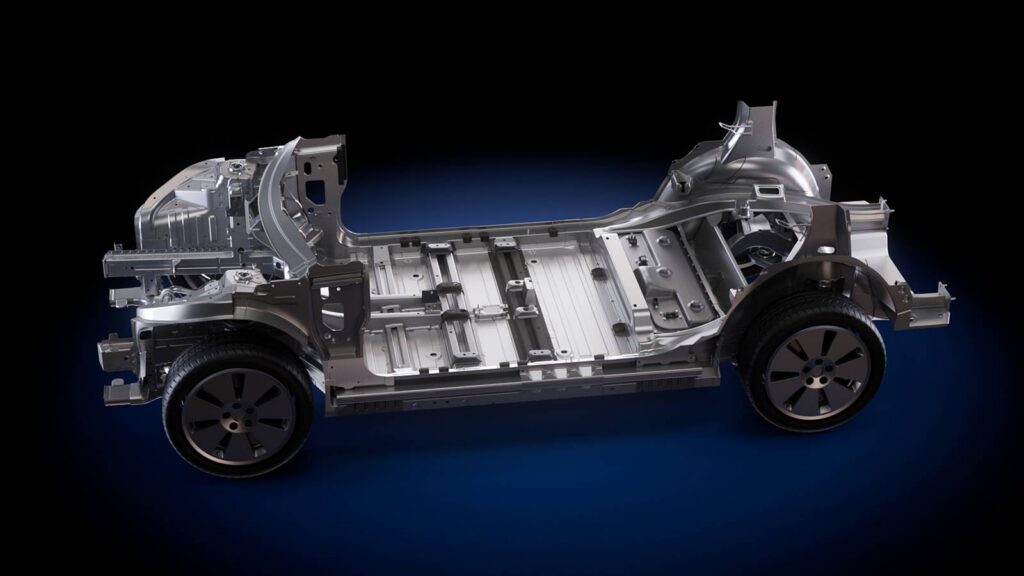
In an ambitious move to reshape the automotive landscape, General Motors has announced a revolutionary battery-electric vehicle platform. This initiative promises to accelerate vehicle development times and introduce a powerful mega-controller to enhance vehicle computing capabilities. The announcement, made at the GM Forward event in New York City, marks a significant step toward GM’s future technological advancements.
General Motors recently unveiled its aggressive technology plans at the GM Forward event, highlighting the company’s commitment to innovation and efficiency.
Advanced Technology for Rapid Development
GM is utilizing advanced artificial intelligence and virtualization to significantly reduce the traditional vehicle development cycle. These technologies allow design, engineering, and manufacturing teams to work concurrently, effectively halving the usual four-to-five-year timeframe. This advancement is crucial as car technology rapidly evolves, leaving older systems outdated.
By adopting digital tools, GM can transition from initial concept to production more swiftly than ever before. For example, the automaker tested over 300,000 battery designs virtually, enabling them to move from concept to formal approval in just one month, a process that traditionally took much longer.
Cost Efficiency in Future EVs
GM’s choice of lithium manganese-rich (LMR) battery chemistry for its future electric vehicles is a strategic one. Manganese is more abundant than nickel and cobalt, which are typically used in current battery technologies. Despite not offering the longest range, LMR provides a “range-to-cost ratio, improved performance, and enhanced durability,” according to GM, making electric vehicles more affordable.
Although it’s too early to determine exact pricing for these fourth-generation EVs, the redesigned drive units are expected to reduce parts count by 40%, optimizing space and reducing vehicle weight.
Centralized Electrical Architecture
GM’s future vehicles will feature a new centralized computing architecture, debuting in 2028 with the all-electric Cadillac Escalade IQ. This architecture will consolidate multiple controllers into a single high-speed Central Compute Unit, capable of handling both in-cabin AI and autonomous driving. This setup will facilitate quick and easy software updates.
This new architecture will not be limited to electric vehicles; it will also be integrated into high-volume gas-powered SUVs, trucks, and crossovers. GM asserts that this system will offer “massive headroom for future growth,” delivering 40 times more computing power and up to 50% faster cellular connectivity than previous systems.
Strategic Insights and Future Prospects
Sterling Anderson, Chief Product Officer, emphasizes the potential for large companies like GM to leverage vast amounts of data collected over decades. “All that data ‘is a huge opportunity for us right now, unique from any other time in human history,'” Anderson states. This strategic use of data positions GM to innovate rapidly and effectively in the evolving mobility landscape.
Source: General Motors
Original Story at carbuzz.com