BYD’s Rapid Expansion of Flash Charging Stations Aims to Transform EV Charging Landscape
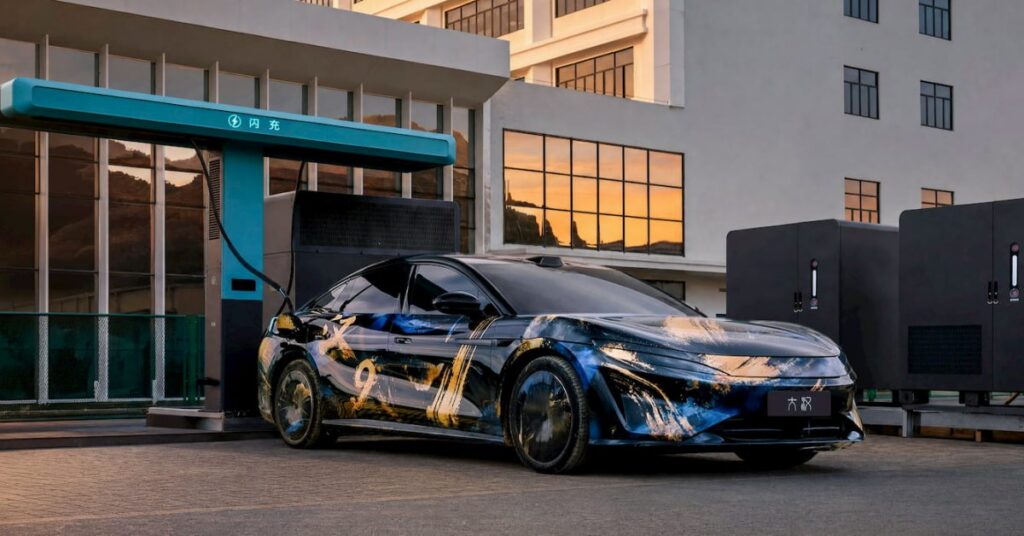
The race to revolutionize electric vehicle (EV) charging is heating up, with China’s BYD making significant strides. As part of its ambitious plan to lead the fast-charging movement, BYD has already deployed 10,000 of its advanced 1.5 megawatt “flash charging” stations, positioning itself to meet its target of 20,000 installations by year-end.
China’s electric vehicle sector is progressing at an unprecedented rate, with fast charging as a key focus. While international manufacturers like Hyundai and Mercedes have introduced vehicles capable of charging in under 20 minutes, Chinese innovation is pushing these times down to mere seconds. Brands such as Geely and CATL are developing technologies that promise even faster charging times.
BYD is at the forefront of this push, utilizing its Blade 2.0 battery technology which boasts a 10-70% charge in just five minutes. This is facilitated by BYD’s “flash charging” system, which was introduced in March and offers an impressive 1.5MW charging capacity.
BYD’s Ambitious Growth Plan
In March, BYD announced a goal to install 20,000 chargers by the end of 2026, a target that seemed ambitious given the novelty of the technology. Yet, by April 1st, the company had already reached 5,000 installations, dismissing any skepticism about its rapid deployment capabilities.
Currently, BYD’s charging network spans 325 cities across China, with plans to extend to 18,000 urban and 2,000 highway chargers by year-end. The partnership with Sinopec, China’s state-owned oil company, aids in this expansion, with joint installations at select gas stations, such as the new Shanghai location.
Looking beyond China, BYD aims to install 3,000 chargers in Europe and another 3,000 globally, marking its first steps in the international market with stations launched as early as June.
Challenges and Opportunities for the US
While BYD speeds ahead, the US lags in adopting similar fast-charging technologies. This is partly due to policies that limit American access to cutting-edge EV advancements. Tesla, the leader in US fast charging, has installed about 38,000 charging ports since starting its network 14 years ago, with a recent upgrade to 500kW V4 Superchargers.
Federal efforts to enhance the US charging infrastructure have been slow, despite significant funding allocated in 2021. Regulatory hurdles and political interference have impeded progress, leaving the US trailing behind China and Europe in this critical area.
As the global EV landscape evolves, the US faces pressure to accelerate its efforts or risk falling further behind in the race to sustainable transportation.
Original Story at electrek.co