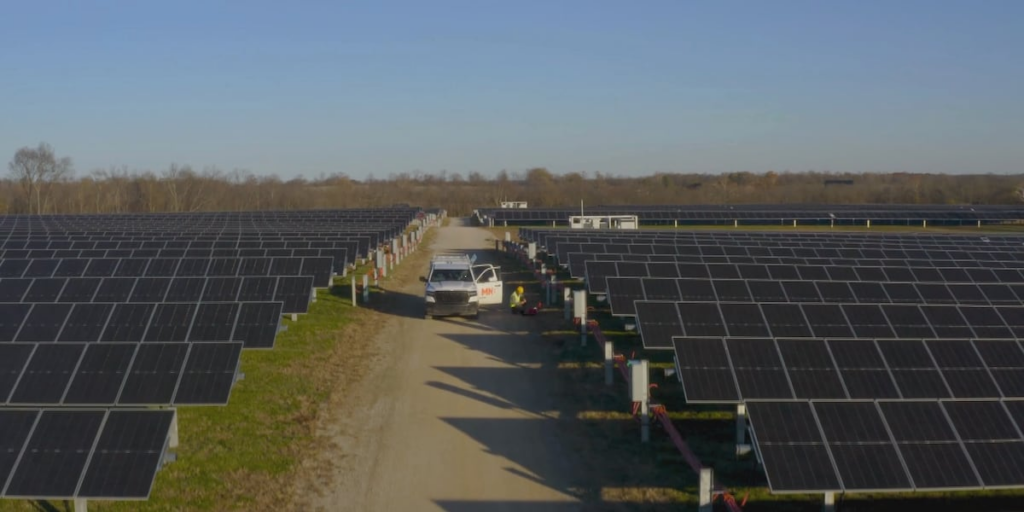
Barron County, Wisconsin, is at the center of a debate over the proposed Sandhill Solar Project, as residents express concerns about its effects on the community and environment.
MN8 Energy, a U.S.-based company specializing in clean energy, is planning an $180 million solar farm that would span approximately 600 acres of private land in the town of Dallas.
Community Raises Concerns
Longtime resident Julie Amundson is puzzled by the selection of this area for the solar farm. “We just don’t understand why they’re choosing this area,” Amundson remarked. “It’s productive farmland, and we don’t get it. We don’t understand why the public, the people in the community, were not aware of it.”
At a town hall meeting, Jillian Lentz, who grew up on a Barron County farm, voiced her concerns about the development’s proximity to her family’s rented land. “It’s just kind of sickening to think about how there is no regard for the land and future generations,” Lentz stated, adding that the project might force her to relocate due to a lack of opportunities in the area.
MN8 Energy’s Perspective
Charlie Hooley, MN8 Energy’s project development manager for the western region, explained that the solar farm is part of an effort to close an energy gap in Wisconsin. “Wisconsin uses more power each year than it produces,” Hooley said. “So, what that means is that we’re reliant on energy imports from nearby states to help meet our power demand. We’re trying to create some of that power production more locally.”
The project aims to generate clean energy capable of powering about 17,000 homes, offering both solar and battery storage solutions.
Economic Impacts and Benefits
Financially, the town of Dallas and Barron County stand to gain up to $550,000 annually through utility aid payments, which can be allocated to public services like roads and hospitals. Additionally, MN8 Energy plans to contribute $20,000 yearly to the Barron area school district.
MN8 Energy assures that taxpayers and landowners will not bear the costs of decommissioning once the project ends. The solar farm’s operational footprint will cover 600 acres, with an additional 300 acres reserved for future considerations.
Environmental and Future Plans
Concerns about the project’s environmental impact persist, particularly regarding soil and water quality. In response, MN8 Energy plans to open a local office in Dallas, Wisconsin, to engage with residents and address their questions.
“We’re a clean energy company with an environmental mission,” Hooley stated. “And it is in our best interest to protect the land that we are working with and the communities that we’re working within.”
With a planned operational lifespan of 35 years, the project’s equipment will be recycled or repurposed, and the land will be restored to its original state once the solar farm is decommissioned.
Next Steps
The company aims to have the solar farm operational by 2029. Before that, MN8 Energy must submit a permit application to the Wisconsin Public Service Commission (PSC) before the year’s end. The PSC will evaluate the project’s economic, environmental, and safety aspects to determine its public interest.
For further details, visit the Sandhill Solar Project’s website.
Original Story at www.weau.com