Electrifying the Future: How Electric Vehicles are Shaping Job Markets
The shift towards a low-carbon economy is not only about saving the planet; it also has the potential to revolutionize job markets worldwide. By embracing climate action, millions of new jobs in various sectors could be created, enhancing job security and economic growth.
According to research by the World Resources Institute (WRI), transitioning to a low-carbon future could generate nearly 375 million jobs globally over the next decade. This growth is anticipated across four major sectors: energy, construction, manufacturing, and agriculture.
In the United States, the rise of electric vehicles (EVs) is a key player in this transition, leading to substantial job creation. The increasing investment in transportation electrification opens up various opportunities within manufacturing, supply chains, maintenance, research and development, and more.
From 2000 to 2024, the private sector invested $208 billion in U.S. electric vehicle and battery manufacturing, with more than half of these investments occurring after the Inflation Reduction Act (IRA) of 2022. This surge in investment contributed to the addition of nearly 150,000 new jobs since 2021, with the EV job market experiencing a 10% growth between 2022 and 2023 (source).
Despite initial setbacks during the second Trump presidency, when significant investment cancellations occurred due to policy changes, clean energy and transportation investments reached a record $278 billion in 2025. This upward trend highlights the importance of continuing to prioritize a low-carbon economy, especially as 62% of EV investments since 2021 have targeted economically distressed areas (source).
The electric transportation revolution spans various vehicle types, including the common yellow school bus. By 2026, over 800 U.S. school districts will have transitioned to electric school buses, offering communities both health and financial benefits along with emissions-free transportation for students.
This shift translates into job opportunities within the electric school bus sector, which includes at least 18 manufacturing facilities spread across 13 states such as Georgia, Indiana, North Carolina, New York, California, and Oklahoma. These facilities engage in diverse activities, from OEMs and bus body builders to electric powertrain suppliers.
In Fort Valley, Georgia, an $80 million grant from the IRA is transforming a closed diesel motorhome plant into an electric vehicle manufacturing facility. This initiative, spearheaded by longtime school bus manufacturer Blue Bird, aims to retain 2,000 jobs and create 428 new manufacturing positions by 2028, offering significant economic benefits to the small Peach County.
Blue Bird’s current facilities produce about 40 buses daily, with a quarter being electric. Workers have seen a pay increase of up to 40% after joining the United Steelworkers union.
This demand surge affects third-party suppliers, including fabricators, wiring assemblers, and bus seat manufacturers. The emerging battery recycling market is expected to generate additional American jobs.
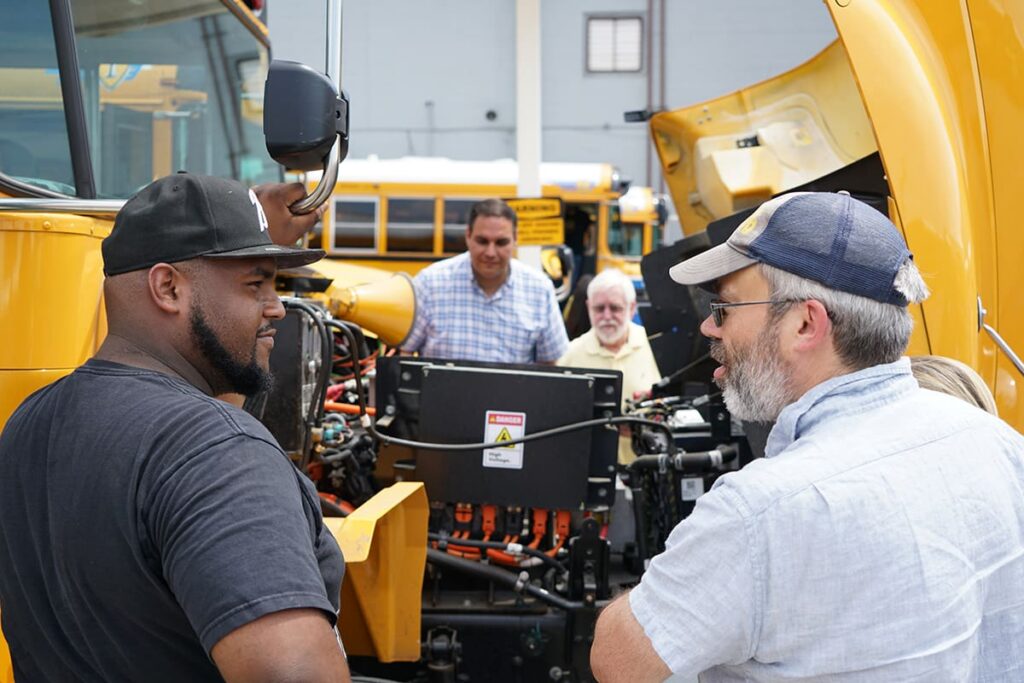
Beyond manufacturing, the electric school bus transition is an opportunity to train maintenance technicians for EVs and charging infrastructure. Although EVs have fewer parts and require less powertrain maintenance, they necessitate specialized skills for computerized systems and new charging equipment. Upskilling and training are crucial for securing well-paying jobs in this evolving industry.
Educational initiatives are also key. Programs like those at Cherokee Central High School in North Carolina introduce students to EV technology and safety, while Bronx Community College’s Automotive Technology program trains students for hybrid and electric vehicle roles. Their collaboration with Waymo for autonomous vehicle training exemplifies the growing need for skilled workers in this sector.
As electric school buses continue to gain traction, the transition offers more than environmental benefits. It is paving the way for a robust job market, supporting diverse roles across the U.S., and fostering economic growth through well-paid EV jobs. The people driving and maintaining these vehicles are integral to this transformative journey.
Original Story at www.act-news.com