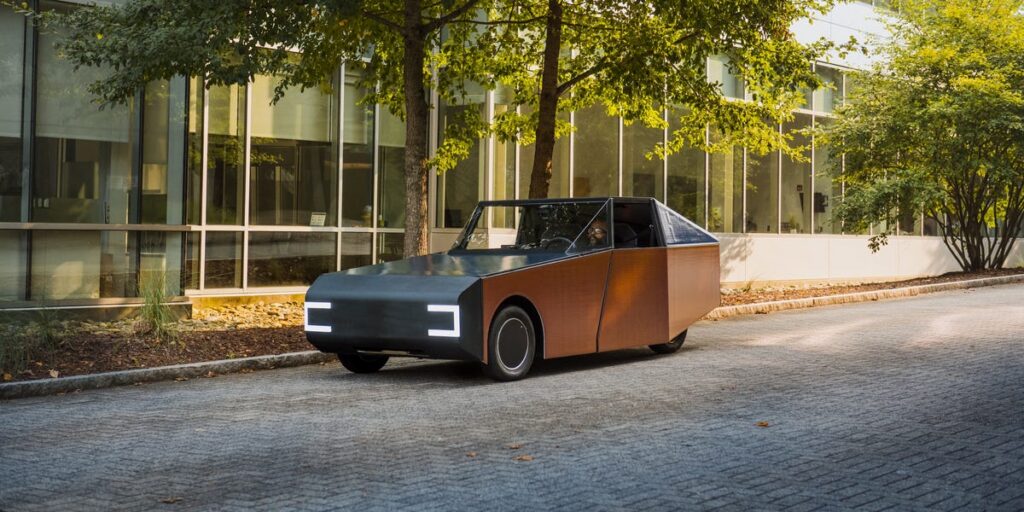
In a groundbreaking fusion of renewable energy and automotive engineering, Clemson University students have unveiled the “Deep Orange 17,” a concept vehicle that promises to redefine energy efficiency in electric transportation. Developed in collaboration with BMW, this innovative solar-powered prototype is designed to generate more energy than it consumes during a typical day of use.
The Deep Orange 17 is the latest creation from Clemson’s industry-supported Deep Orange program, which tasks graduate students with designing and building functional concept vehicles from scratch. This year’s challenge, set by BMW, pushed students to explore whether an electric vehicle could generate more energy than it uses during daily commutes, rather than just focusing on extending range or speeding up charging.
The result of this ambitious endeavor is the “Luminetta,” a compact, two-seat electric coupe adorned with over 1,700 photovoltaic cells integrated into its bodywork. Unlike traditional solar panels added as an afterthought, these cells are integral to the vehicle’s propulsion, generating electricity both when stationary and on the move.
The student team collaborated with the Fraunhofer Institute for Solar Energy Systems in Germany to create solar panels that can continue to generate electricity even when partially shaded. Simulations conducted in various global locations, including Greenville, South Carolina, demonstrated that a daily commute of about 12 miles could yield a surplus of around 31 miles in driving range, thanks to the solar energy captured.
Achieving such efficiency required more than just innovative solar technology. The Deep Orange 17 weighs a mere 1,212 pounds—approximately one-quarter the weight of many existing electric vehicles. This was achieved through a lightweight chassis made from steel, aluminum, carbon fiber, and 3D-printed metal parts, inspired by the aerodynamic shape of the boxfish to reduce drag while preserving interior space.
Additional efficiency features include regenerative braking, smart torque management, and optimized drivetrain controls, making the vehicle an exemplar of energy-efficient design.

While solar-assisted electric vehicles have been explored by other automakers such as Mercedes-Benz, Hyundai, and Lightyear, they primarily used solar panels for auxiliary power or minor range enhancements. In contrast, Deep Orange 17 advances this concept by making solar energy generation a central aspect of its energy balance.
BMW, a longstanding partner of Clemson’s Deep Orange program, emphasizes that this project highlights the potential of combining lightweight engineering, renewable energy, and intelligent vehicle controls to transform personal transportation. The research on this prototype will carry on at Clemson, with plans for a showcase at CES 2027 in Las Vegas. Meanwhile, the 16 students who dedicated two years to this project will soon graduate with invaluable experience in automotive engineering.
Original Story at www.autoweek.com