Andy Barr’s Political Maneuvers and the Coal Industry: A Complex Tale
In the political landscape of Kentucky, Rep. Andy Barr has emerged as a significant figure, recently securing the Republican nomination to succeed retiring Sen. Mitch McConnell. Given that Donald Trump won Kentucky by a substantial margin in 2024, Barr stands a strong chance of winning the general election. His involvement in a notable exchange with Alexandria Ocasio-Cortez in 2019 highlights the ongoing debate over coal and energy policy in the U.S.
During a House Financial Services Committee meeting in 2019, Barr challenged Ocasio-Cortez’s Green New Deal, a proposal advocating for a shift from fossil fuels to renewable energy. He invited Ocasio-Cortez to visit his district and meet local coal miners, stating, “I invite her to go underground with me and meet the men and women who do heroic work to power the American economy.” Ocasio-Cortez accepted the invitation, adding that her plan included funding coal miners’ pensions to support a just transition. However, Barr later retracted the invitation, citing a need for an apology to Rep. Dan Crenshaw from Ocasio-Cortez for a previous tweet.
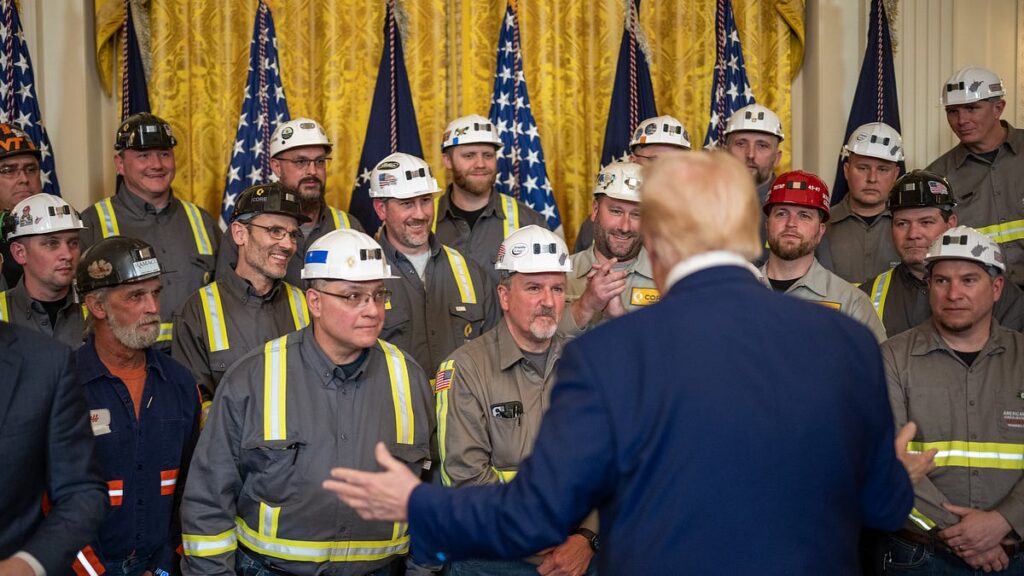
The irony of Barr’s challenge was highlighted by the fact that there were no active coal mines in his district at the time. Despite this, his campaign continues to promise the revival of coal jobs, a pledge echoed by Donald Trump since 2016. However, the reality of coal employment presents a different picture.
Under Trump’s administration, efforts to revive coal were substantial, including policies to keep coal plants operational. Yet, coal jobs have declined due to automation and competition from cheaper energy sources like natural gas and renewables. When Trump assumed office in 2017, the U.S. had 51,000 coal jobs, a number that fell to 38,000 by the end of his term.
Kentucky, often seen as the heart of coal country, mirrors the national trend with a steady decline in coal employment. In recent data, only 3,843 individuals were employed in the coal sector within the state, a fraction of its population. Despite this, Barr’s campaign talks of revitalizing coal jobs, echoing Trump’s unfulfilled promises.
The narrative of coal’s decline is not new. Historically, coal communities have faced exploitation, with profits benefiting owners rather than workers. The promise of returning to past glories resonates with these communities, despite the improbability of such a revival. Politicians like Barr and Trump capitalize on this sentiment, offering hope where there is little basis for it.
This complex interplay between political promises and economic reality raises questions about voter perception and political accountability. As Barr moves closer to a Senate seat, the impact of these dynamics on Kentucky’s future remains uncertain.
For more detailed insights, visit the original discussions on Paul Waldman’s Substack and explore the broader implications of these political strategies.
Original Story at paulwaldman.substack.com