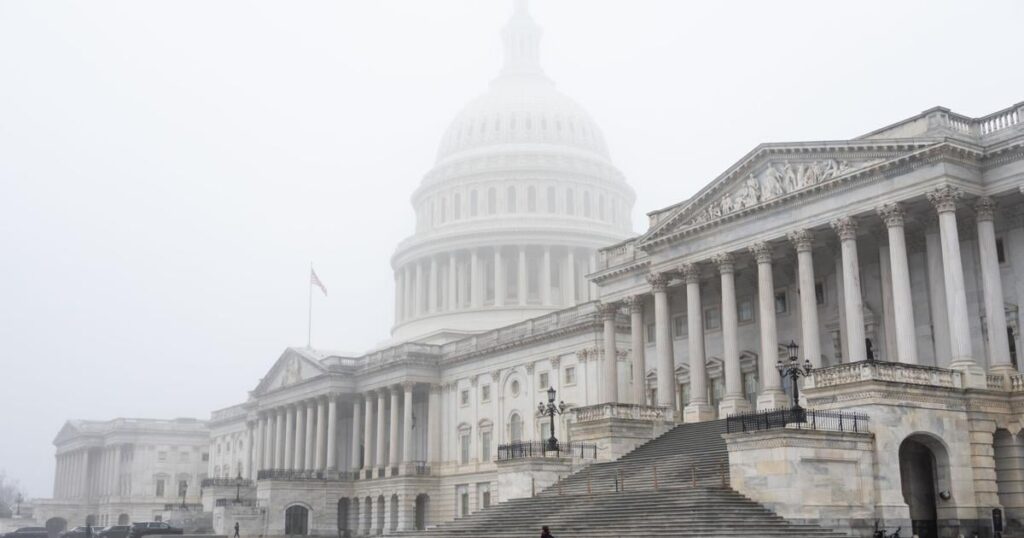
In a political climate where budget cuts threaten a range of federal programs, the pushback from Congress has been both unexpected and robust. Despite President Donald Trump’s efforts to slash funding for climate-related initiatives, bipartisan support has helped preserve key programs.
This year, congressional action ensured the survival of the Energy Star program, known for its energy efficiency ratings, and protected NOAA’s climate research and international environmental aid. As the new budget proposal looms, advocates remain vigilant against potential cuts.
President Trump’s upcoming budget is anticipated to propose significant reductions to environmental programs. While the White House has remained silent on the specifics, it emphasized past eliminations of renewable energy supports. However, climate advocates are cautiously optimistic, given previous successes in maintaining popular programs.
“They didn’t save a whole lot,” commented Patrick Dunn, director of climate policy at the Sierra Club. Yet, he noted, “In the midst of an affordability crisis, it didn’t make sense to just eliminate programs that directly impact people’s everyday lives.”
Key Programs Rescued by Congress
Energy Assistance
Energy Star, a program initially slated for elimination by Trump and EPA administrator Lee Zeldin, was spared by congressional intervention. The program, known for guiding consumers on energy-efficient appliances, received a dedicated $33 million in funding, a historic move by Congress which also prohibited any reduction in this allocation. Todd Sims of the National Electrical Manufacturers Association remarked, “It was a no-brainer to keep it going.”
Questions remain about the program’s future under the Department of Energy, which now manages it. Neither the EPA nor the Energy Department provided clarity on the program’s operational changes.
The Low Income Home Energy Assistance Program (LIHEAP) also survived proposed budget cuts. Despite an initial layoff of its staff by the Trump administration, bipartisan efforts led to a $4.05 billion allocation for the program in fiscal year 2026. A bill introduced by Rep. Mike Lawler and Rep. Josh Gottheimer aims to ensure its continued operation.
Additionally, the Weatherization Assistance Program received a slight funding boost to support energy-efficiency projects for lower-income households.
Oceans and Atmosphere
Trump’s proposal to dismantle NOAA’s scientific research division and cut $1.5 billion from its budget faced significant resistance. Congress restored the agency’s funding to $6.1 billion, rejecting cuts to the National Marine Fisheries Service and allocating $224 million for climate research.
Despite this, the administration has reduced the workforce focused on climate change and removed several key reports and assessments from public access.
Global Climate Finance
Proposed cuts to international development assistance, including the Green Climate Fund, were mitigated as Congress allocated $50 billion for foreign aid, exceeding Trump’s proposed budget. While this was a reduction from previous years, it included $150 million for the Global Environment Facility, which addresses broader environmental issues and has garnered bipartisan support.
This article originally appeared in The New York Times.
Original Story at www.journal-news.com