World Health Summit in Berlin: WHO Director-General Candidates Discuss Reform Amid Global Health Challenges
The 2026 World Health Summit in Berlin serves as a pivotal platform where the discussion on reforming global health institutions takes center stage. With the theme “From Crisis to Resilience,” the summit attracts over 4,000 attendees in person and many more online, as global health experts and leaders gather in Germany’s capital to address pressing issues, including the upcoming WHO Director-General election.
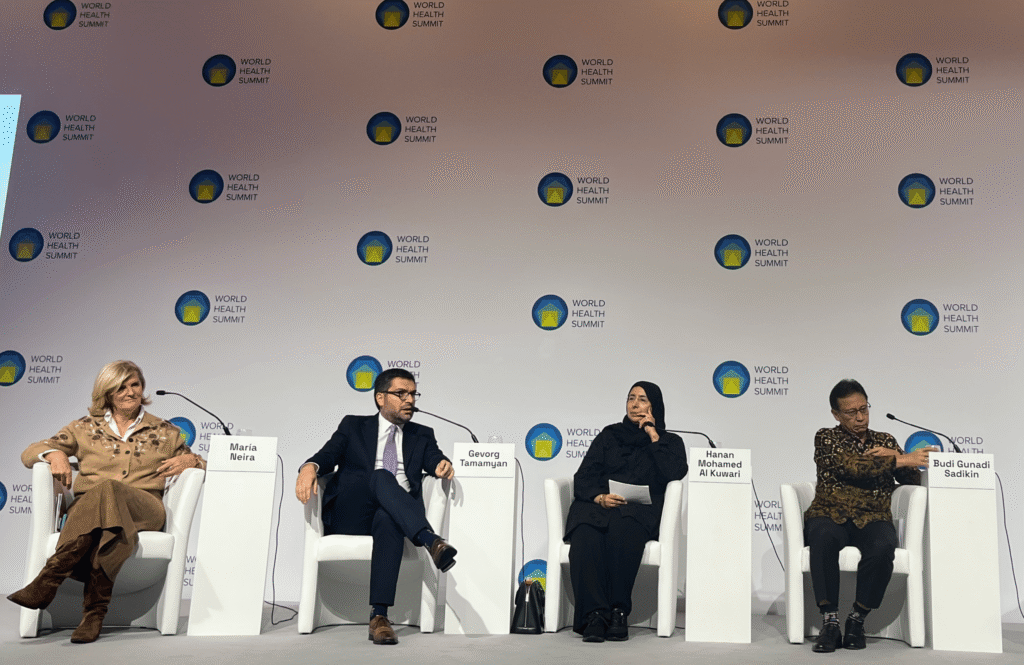
As the first public candidate conversation kicks off, four out of seven declared contenders for the WHO Director-General position engage in a significant discussion. The panel, which includes Hanan Al-Kuwari, Budi Gunadi Sadikin, María Neira, and Gevorg Tamamyan, confronts the challenge of making global health institutions more effective.
Key Issues in WHO Director-General Election
The opening session on ‘global health architecture reform’ fills the auditorium to capacity, highlighting its importance within the summit. World Health Summit President Dr. Axel Pries emphasizes the critical timing of the election, stating, “The election of the next Director-General will take place at a pivotal moment for the World Health Organization and for global health more broadly.”
Despite the presence of four candidates, three notable absentees include Saudi Arabia’s Dr. Hanan Balkhy, Belgium’s Dr. Hans Kluge, and China’s Dr. Song Li, the latter of whom was only recently confirmed as a nominee.
Spotlight on Candidates’ Reform Proposals
Each candidate presents unique strategies for steering the WHO during their first 100 days in office. Dr. Hanan Al-Kuwari proposes an executive review and functional reform to eliminate administrative duplication, while Dr. María Neira emphasizes primary prevention and environmental threats. Budi Gunadi Sadikin focuses on unlocking financing for member state plans, and Dr. Gevorg Tamamyan prioritizes patient outcomes over diplomatic protocol.
Addressing Global Health Challenges
As the candidates discuss their visions, the looming challenges of budget cuts, workforce reductions, and geopolitical tensions are prominent topics. Tamamyan vows to personally engage with the United States and Argentina, aiming to reintegrate them into the WHO framework. Al-Kuwari takes a more measured approach, arguing for an inclusive organization where all member states have an equal voice.
Observers note the lack of deep specifics in the discussions, cautioning that the session served as a high-level warm-up rather than a detailed debate on institutional reforms. Michel Kazatchkine, former Global Fund Executive Director, highlights the absence of a focus on science and the structural issues within the organization.
Looking Forward
With the official WHO Candidates’ Forum in Geneva scheduled for November, the election process continues. The 34-member Executive Board will shortlist and nominate three finalists in January 2027, ahead of the decisive World Health Assembly vote in May.
As the conversation evolves, the global health community eagerly awaits further developments, hoping for a Director-General who can navigate the complexities of modern health challenges effectively.
Original Story at healthpolicy-watch.news