
RUTLAND, Vt.—Eighteen years after the initial “climate tort” lawsuit, no U.S. plaintiff has been awarded damages for global warming harms. Vermont’s unique legal strategy to hold fossil fuel companies accountable is now being challenged.
On Monday, Vermont defended its “climate superfund” law at the U.S. District Court of Vermont. The fossil fuel industry, 24 Republican state attorneys general, and the Trump administration oppose it.
The law mandates that major fossil fuel companies compensate Vermont for climate adaptation costs based on their fossil fuel production over the last 30 years. This is due to the fuels’ role in causing climate change. New York has enacted a similar superfund law, and at least 11 other states have considered similar legislation.
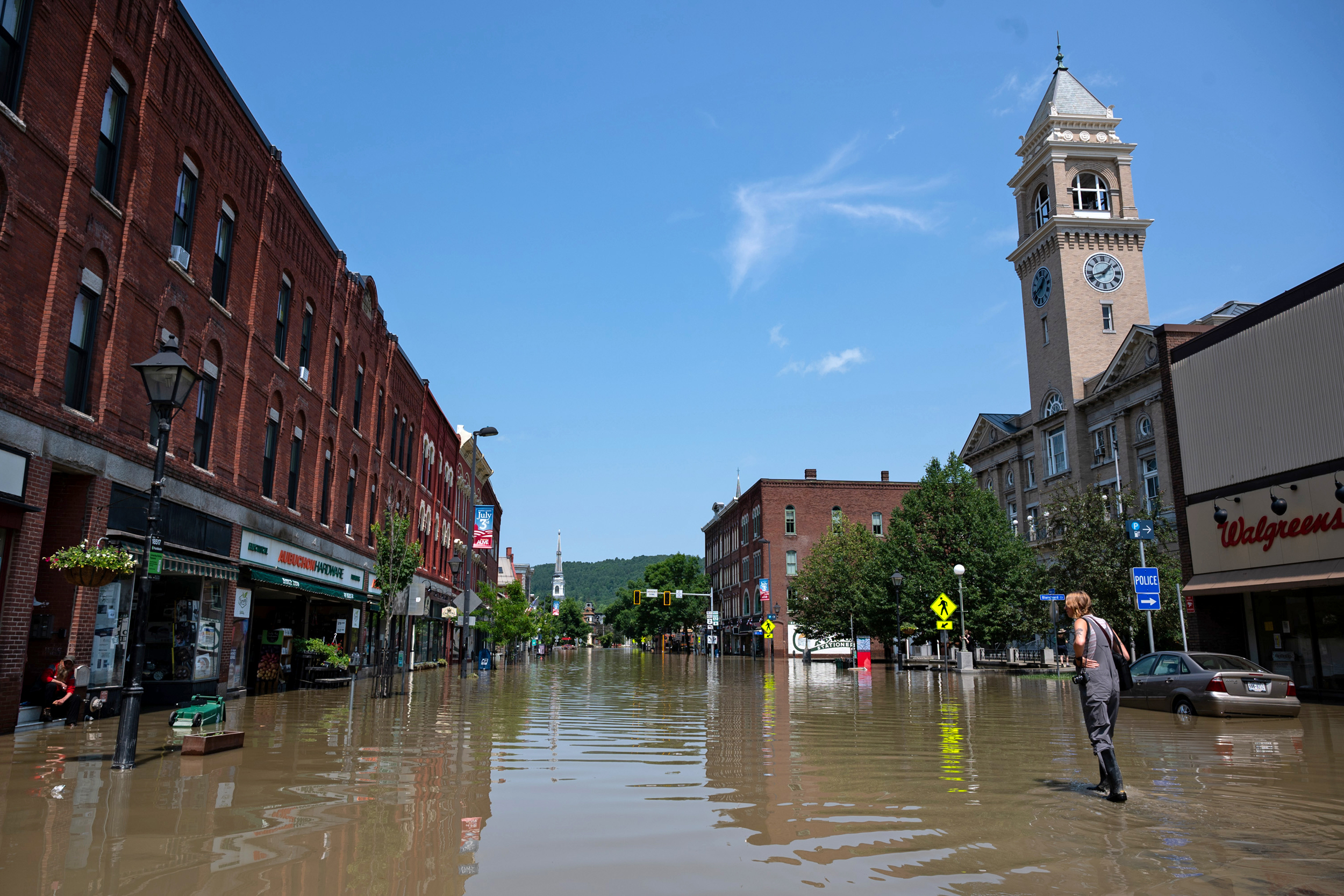
Vermont’s law was passed in 2024, following two severe flooding events a year apart. “Anyone who witnessed Vermont’s 2023 experiences understands why the legislature acted,” said Bridget Asay, defending Vermont’s law.
As legal debates over whether the superfund law is preempted by the federal Clean Air Act continue, Vermont’s towns face harsh realities. They need funds for infrastructure upgrades to survive future climate-related natural disasters without incurring overwhelming debt or raising taxes.
These issues are urgent in Johnson, 25 miles south of Canada. This community, with 3,500 residents, lies at the junction of the Gihon and Lamoille rivers and has faced increasing flooding: in 2019, 2023, and 2024.
The 2023 floods were devastating, affecting key infrastructure and private properties. Residents initiated discussions to transform Johnson, emphasizing fewer properties and more green spaces downtown.
Adrienne Parker, vice-chair of the town selectboard, highlighted the community’s strengths, such as recreational areas and local food growth.
In a notable move, the town relocated its century-old library away from the floodplain. However, moving the wastewater treatment plant, which flooded thrice in 21 years, is more complex. Johnson and FEMA are considering whether to relocate the plant or rebuild it at its current location.
Johnson Village Manager Erik Bailey noted the preference to keep the plant in place due to limited suitable land and FEMA’s funding capabilities. The cost difference between relocation and staying is about $15 million, which the village cannot afford.
This financial dilemma is why the climate superfund law was proposed. The law’s ability to provide funds for such projects now awaits a court decision.
Law, Interrupted
As Johnson embarked on its transformation in July 2024, the superfund law came into effect. By December, the U.S. Chamber of Commerce, American Petroleum Institute, and others sued on behalf of fossil fuel companies, later joined by Republican attorneys general. The Department of Justice filed a suit in May.
The lawsuits were filed prematurely, before Vermont could assess the financial requirements for climate adaptation and assign costs to fossil fuel companies. Defenders argue the suits are “unripe.”
The challengers argue Vermont’s early preparations suggest significant financial demands, reaching hundreds of millions, and that the companies liable can be inferred from the law’s criteria and a separate lawsuit against oil companies.
“Vermont’s climate superfund law unjustly penalizes companies for lawfully supplying energy,” said Ryan Meyers from the American Petroleum Institute. “We request the court to halt this activist-driven overreach and affirm federal control over national energy policy.”
The lawsuits have already impacted other states’ plans. For instance, Maine halted its climate superfund bill, opting to wait for the legal outcomes before proceeding, as reported by the Maine Morning Star. The state instead passed a bill to only assess climate costs.
Will States Be Allowed to Act?
Vermont’s legal standing may depend on how courts interpret the superfund statute.
The lawsuits argue Vermont oversteps into federal jurisdiction by essentially “regulating” emissions from past fossil fuel production. Vermont counters that it doesn’t regulate emissions but fairly apportions adaptation costs to companies based on past carbon emissions.
“This is an adaptation statute,” asserted Vermont Solicitor General Jonathan Rose. Vermont claims the law won’t affect fossil fuel production or prices, as it addresses only past actions. This claim is supported by economists, including Nobel laureate Joseph Stiglitz, in a court filing.
Critics argue potential future liability could influence company behavior, but Vermont calls such arguments speculative. The 2nd Circuit Court of Appeals’ 2021 decision against a similar New York City lawsuit might influence Vermont’s case. This decision treated damages as de facto emissions regulation, preempted by federal law.
Vermont argues its law doesn’t impose ongoing duties, unlike New York City’s tort claim. The Trump administration’s stance on greenhouse gases could favor Vermont, as it weakened the legal basis for federal climate regulations.
Legal experts suggest the administration’s position undermines its federal preemption argument against Vermont’s law. “The Trump administration wants it both ways,” said Ann Carlson from UCLA’s Emmett Institute. “Their repeal of the endangerment finding claims no federal or state can regulate greenhouse gases.”
The Justice Department asserts no inconsistency exists, maintaining some federal regulatory authority under the Clean Air Act, limiting state action.
Catastrophic Flooding and Questions of Fairness
While these issues are debated, Andy Jones is preparing for another season at the Intervale Community Farm, Burlington, situated in the Winooski River’s floodplain. Floods, previously spring or fall events, now disrupt summers more often, from Hurricane Irene in 2011 to recent floods in 2023 and 2024.
The July 2023 flood destroyed $200,000 in crops.
Jones advocated for the superfund bill, noting that after Hurricane Irene, the farm invested heavily in upgrades to address climate-driven extremes. He argues that the law holds accountable an industry that misrepresented its products’ effects, akin to tobacco companies.
“The fossil fuel industry knew the consequences of its actions for 50 years, covering it up while preventing climate legislation,” Jones said. “It’s only fair they contribute to the expenses for damages.” Vermont attorneys echoed this, saying companies should pay their share based on their emissions.
The plaintiffs argue it unfairly targets specific emitters and imposes severe penalties disrupting fossil fuel production.
“Imposing costs on our members will affect them,” said Steven Lehotsky, representing the Chamber of Commerce. Republican attorneys general and the Trump administration argue that the law will raise national energy costs.
Supporters disagree, citing current price surges due to other factors, like Trump’s Iran conflict raising oil prices and oil company profits.
A Long Road Ahead
Fred Messer, a Waitsfield selectboard member, believes the superfund law could raise consumer costs. “Fines on oil businesses will be passed to consumers,” Messer commented.
Messer monitors bridges and culverts during storms to predict which roads might flood. Upgrading these structures is a priority after Hurricane Irene flooded Waitsfield.
FEMA funding requires damage before improvements, which delays proactive efforts. Waitsfield has a reserve fund for infrastructure, but costs still outweigh resources.
The question remains whether states can hold fossil fuel companies accountable for climate damages. Kivalina, Alaska, the first U.S. community to sue for climate harms, continues seeking federal funding as erosion threatens their island.
The fate of the superfund laws likely rests with the Supreme Court. “Ultimately, the Supreme Court will decide on state compensation,” said Vermont Law and Graduate School Professor Patrick Parenteau.
The Court may soon signal its stance by reviewing Boulder, Colorado’s similar lawsuit. As Vermont’s hearing concluded, Judge Mary Kay Lanthier remarked on the potential implications of the Supreme Court’s review, noting Boulder’s distinction as a tort claim.
Judge Lanthier expects a prompt ruling on the motions, recognizing this is just the beginning of a lengthy legal battle. “Should Vermont win, it would be a temporary victory,” Parenteau noted. Meanwhile, Vermont grapples with climate change’s tangible impacts.
“Vermont faces real climate consequences,” said Grace Oedel from the Northeast Organic Farming Association of Vermont. “It’s unfair to exempt companies responsible for these costs.”
Original Story at insideclimatenews.org