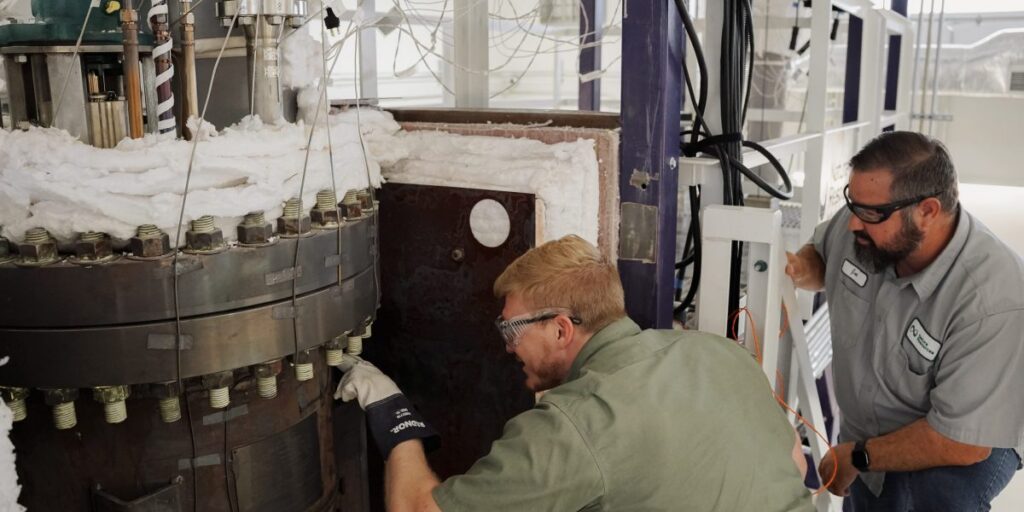
A planned retirement took an unexpected turn for Doug Robison, a third-generation oilman from Texas, when a visit to Abilene Christian University (ACU) sparked a new journey in nuclear energy. This shift was catalyzed by a presentation on molten-salt nuclear reactors, highlighting their potential to provide affordable power and combat global poverty.
Robison was captivated by Rusty Towell, director of ACU’s Nuclear Energy Experimental Testing lab, who presented the potential of next-gen reactors. Following a conversation, Robison committed $3.2 million to the project. This investment prompted significant interest, including a visit from a team sent by former U.S. Energy Secretary Rick Perry. By 2019, the Department of Energy (DOE) pledged support with fuel and salt, contingent on building a test reactor at ACU.
Despite not knowing how to proceed initially, Robison boldly pledged to fund the project. This led to the establishment of Natura Resources, a startup focused on advanced nuclear technology. The company, evolving from an old organic farming venture, now collaborates with over 150 researchers from ACU, the University of Texas at Austin, Texas A&M University, and Georgia Institute of Technology.
The team aims to launch their first reactor, MSR-1, in 2028, with a commercial reactor in West Texas or near Texas A&M by 2032. Although Natura is part of the Trump administration’s Nuclear Reactor Pilot Program, it did not achieve criticality alongside other leaders but remains committed to its goal.
Leading the Nuclear Race
Natura focuses on developing a comprehensive reactor system, differing from mere criticality tests, according to COO Jordan Robison. Though achieving criticality is crucial, Natura aims for a fully operational reactor. The company recently acquired Shepherd Power to bolster its efforts.
The nuclear landscape includes major players like Kairos Power, TerraPower, Oklo, and X-energy, all developing reactors for utility-scale power. Meanwhile, smaller microreactors from Antares Nuclear, Valar Atomics, and Deployable Energy have reached criticality.
Next-gen reactors, like those Natura is developing, employ non-water coolants such as liquid metals or molten salts, ensuring safety by preventing meltdowns. As AI data centers demand more power, the Trump administration is streamlining regulatory processes for Small Modular Reactors (SMRs). Natura’s plans include collaborating with Teledyne Brown Engineering and Zachry Nuclear to expedite reactor construction.
Molten salt reactors, unlike traditional ones, use a liquid salt mixture to dissolve nuclear fuel, eliminating the need for high-pressure systems and enhancing safety. “Molten salt reactors I believe are the most eloquent of the solutions,” said Doug Robison, emphasizing their contained radioactive material.
From Oil to Nuclear
Natura is working to prove the viability of their reactors to investors. Robison, drawing from his oil and gas background, emphasizes the importance of tangible results over theoretical plans. The Abilene test reactor’s success could distinguish Natura in the crowded next-gen nuclear market.
Robison envisions the Permian Basin as a future site for a commercial reactor, addressing both electricity demand and water pollution. Utilizing reactor-generated heat for desalination could tackle water scarcity, with efforts already underway in collaboration with NGL Energy Partners.
Addressing both power generation and environmental concerns, Robison plans to start in Texas, contributing to clean power, emissions reduction, and water solutions. “Check, check, check,” he states, summarizing the multi-faceted impact of their initiatives.
Original Story at fortune.com