The connection between global warming and El Niño, a powerful climate phenomenon, has puzzled scientists for years. The challenge has been to determine whether human activity is amplifying El Niño’s strength, as its natural variability complicates efforts to identify long-term changes. However, with this year’s “super” El Niño gaining momentum, researchers believe they are closer to understanding this intricate relationship.
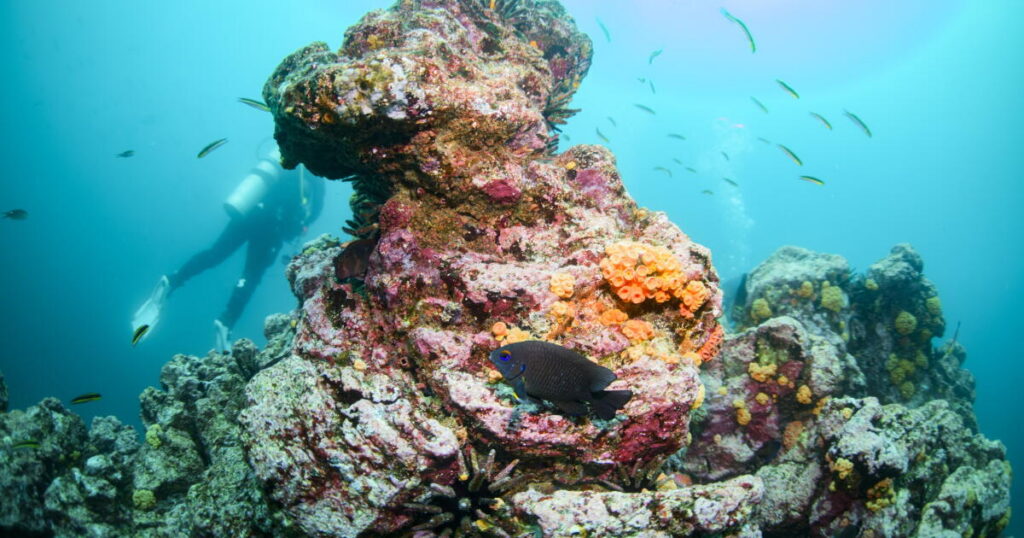
A recent study published in the journal Science explores temperature data from over 900 years of coral records in the Galápagos. The findings suggest an increase in El Niño’s intensity since the onset of industrialization and fossil fuel emissions, marking a significant shift in its behavior.
Julia Cole, a paleoclimatologist at the University of Michigan and the study’s lead author, stated, “Prior to the Industrial era, we don’t see evidence for periods where the El Niño system is as strong as it is in the most recent decades.” Her research indicates that the warm and cold swings defining El Niño have intensified over the past few decades.
This year’s El Niño, which commenced in June, is developing at an unprecedented rate, surpassing previous events in 1997-98 and 2015-16. The World Meteorological Society recently issued a forecast projecting that El Niño will persist through February, potentially leading to extreme weather conditions.
United Nations Secretary-General António Guterres noted, “El Niño is being supersized before our eyes,” and emphasized the global risk posed by rising sea surface temperatures and their impacts. El Niños happen every two to seven years, bringing significant weather changes such as heat waves, floods, and droughts globally, with warm and wet conditions typically affecting Southern California.
The study’s authors report that modern El Niños are approximately 36% stronger than those before the industrial era, with a notable 16% increase in the last 40 years. However, scientists have not definitively linked fossil fuel emissions to the intensification of El Niño.
Climate scientist Zeke Hausfather, who was not involved in the study, remarked, “This is another piece of evidence in an ongoing scientific debate on the role of climate change in El Niño events.” He added that it contributes to the argument for a detectable climate impact but does not resolve the debate.
If a direct link between climate change and El Niño is established, the implications could be profound, given El Niño’s role in driving climate-related challenges such as droughts, floods, and ecological and economic disruptions. The study, however, found no evidence that climate change is exacerbating La Niña, the cooler counterpart of El Niño.
Cole highlighted the difficulties in studying El Niño due to its formation in remote ocean regions and the historical lack of direct temperature measurements. The use of coral records, which reveal past ocean temperatures through chemical analysis, has provided insights into El Niño’s historical patterns.
Although the coral data does not cover every year over the past millennium, it presents a clear signal of increased El Niño variance in modern times, according to Art Miller, an oceanographer at Scripps Institution of Oceanography. These findings align with the occurrence of several large El Niño events in recent decades.
Michael Mann, a climate scientist at the University of Pennsylvania, expressed skepticism about the coral study, suggesting other factors might explain the observed patterns. Hausfather also cautioned about the uncertainties inherent in using indirect measurements like coral proxies for historical comparisons.
Despite these uncertainties, Cole emphasized that while not every future El Niño will be stronger, the likelihood of reverting to preindustrial levels is low. The study indicates that large El Niño events may become more frequent in a warming world.
Original Story at www.latimes.com