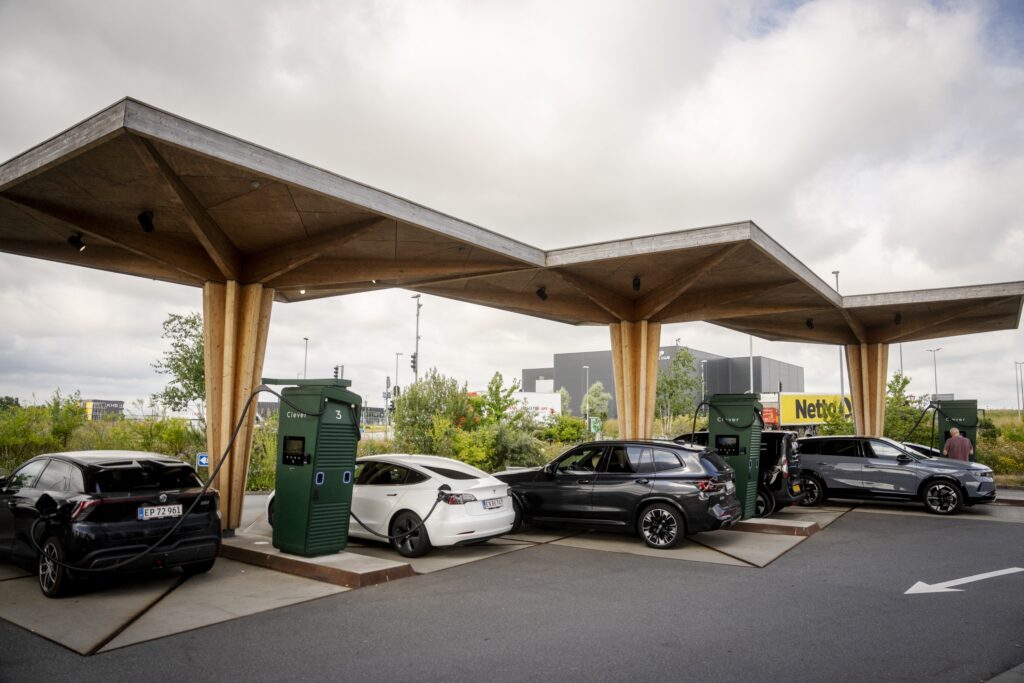
Photo by Mads Claus Rasmussen / Ritzau Scanpix / AFP via Getty Images / Denmark OUT
While cold weather’s effect on electric vehicles (EVs) is well-documented, the impact of summer temperatures is less understood. Recent studies, however, are shedding new light on how high temperatures affect EV performance, providing valuable insights for drivers. Although winter remains the tougher challenge, summer’s influence is becoming clearer.
Spring 2026 Testing: A New Chapter
In spring 2026, engineers from AAA and the Automobile Club of Southern California embarked on a rigorous study to evaluate how temperature affects the efficiency of both electric and hybrid vehicles. They tested six 2025-2026 models, including the Chevrolet Equinox EV, Ford Mustang Mach-E, Tesla Model Y, Toyota Prius, Honda CR-V, and Hyundai Tucson. Results showed a 10.4% reduction in efficiency and an 8.5% drop in range for EVs at 95 degrees Fahrenheit. Hybrids fared slightly worse, experiencing a 12% decrease in efficiency, as noted by Auto123.

Photo by KENA BETANCUR / AFP) (Photo by KENA BETANCUR/AFP via Getty Images
Winter testing remains a significant hurdle, with the chamber’s temperature dropped to 20 degrees, resulting in a 39% range reduction for EVs and a 23% decrease in hybrid fuel economy. According to AAA’s Greg Brannon, these figures have remained consistent since 2019.
Comparing Past and Present Results
The 2019 AAA study involved testing five EV models without hybrids. The findings showed a 17% range reduction at 95 degrees and a 41% loss at 20 degrees. Although new tests indicate some improvement, AAA cautions that differences in vehicle models and technologies between the two studies mean improvements should be interpreted carefully. Engineers have focused on optimizing heat pumps and cabin cooling systems, yet extracting heat in cold conditions remains a challenge.
Real-World Insights from Drivers
Laboratory tests are only part of the story. Recurrent, a company that collects live battery data from thousands of EVs, reports that at 90 degrees, EV range decreases by about 5%. However, vehicles with heat pumps show a 7% loss compared to 3% for those without. The range loss increases substantially to 17-18% when temperatures reach 100 degrees.
This contrasts with earlier Recurrent data that indicated losses could exceed 31%. The variation is attributed more to sample size differences than actual changes in vehicle performance under heat.

Photo by Marco Bello/Getty Images
Vehicle Performance Variability
Not all EVs handle heat equally. According to EV Engineering & Infrastructure, the Ford F-150 Lightning experiences minimal range loss in 90-degree heat, while the Nissan Leaf suffers a 22% range reduction due to its passive cooling system. AAA’s tests align with these findings, as the Mustang Mach-E shows only a 3% range drop at 95 degrees, whereas the Tesla Model Y loses more than 21%.
Beyond Air Conditioning
Factors like aerodynamics also impact EV range. Geotab found that a 65-kilowatt-hour electric cargo van’s range drops significantly at high speeds, beyond what air conditioning alone would cause. Geotab’s Charlotte Argue emphasized the role of driving speed, saying, “your right foot can make the biggest difference.”
Hardware Limits and Testing Constraints
The equipment used in testing, such as AAA’s rolling-road setup, limits the range of temperatures that can be simulated. This equipment can only test up to 95 degrees Fahrenheit, leaving out the impact of extreme heat experienced in regions like the Central Valley of California or southern Spain. Tests by What Car? in southern Spain found EVs fell short of their range ratings, with temperature and highway speeds both contributing to range reduction.
Scientific Principles at Play
Gas engines produce excess heat, which can be used to warm a cabin without affecting range. In contrast, electric motors produce less waste heat, so maintaining optimal battery and cabin temperatures relies on energy from the battery itself.
Practical Steps for EV Owners
There are small but effective strategies to mitigate heat effects on EVs. Pre-cooling the car while it’s still plugged in, parking in the shade, using sunshades, and setting the climate system to recirculate can all help reduce the energy demand on the battery during summer.
Overall Impact of Summer on EVs
While summer temperatures do affect EV range, their impact is less severe than that of winter. The disparity in attention given to cold versus hot weather effects may be due to the longer history and standardization of cold-weather testing compared to the limited data available for extreme heat scenarios.
© 2025 Latin Times. All rights reserved. Do not reproduce without permission.
Original Story at www.latintimes.com