Renault’s strategic moves towards electrification are taking shape with plans to expand its battery-electric vehicle production beyond France. Recent announcements indicate Spain as a potential new hub, stirring considerable interest in the automotive world.
Plans for the Palencia Plant
Josep María Recasens, President of Renault Group Spain, shared insights into the company’s industrial blueprint during wage negotiations with trade unions. According to Recasens, Renault is gearing up to introduce three new models at the Palencia facility: two fully electric and one range-extender variant. However, these ambitious plans hinge on successful negotiations with the unions.
Currently, the Palencia plant, operational since 1978, is focused on producing plug-in hybrid vehicles such as the Renault Austral, Espace, and Rafale. The shift to full electrification at this facility marks a significant development in Renault’s manufacturing strategy.
New Models and Platform Innovations
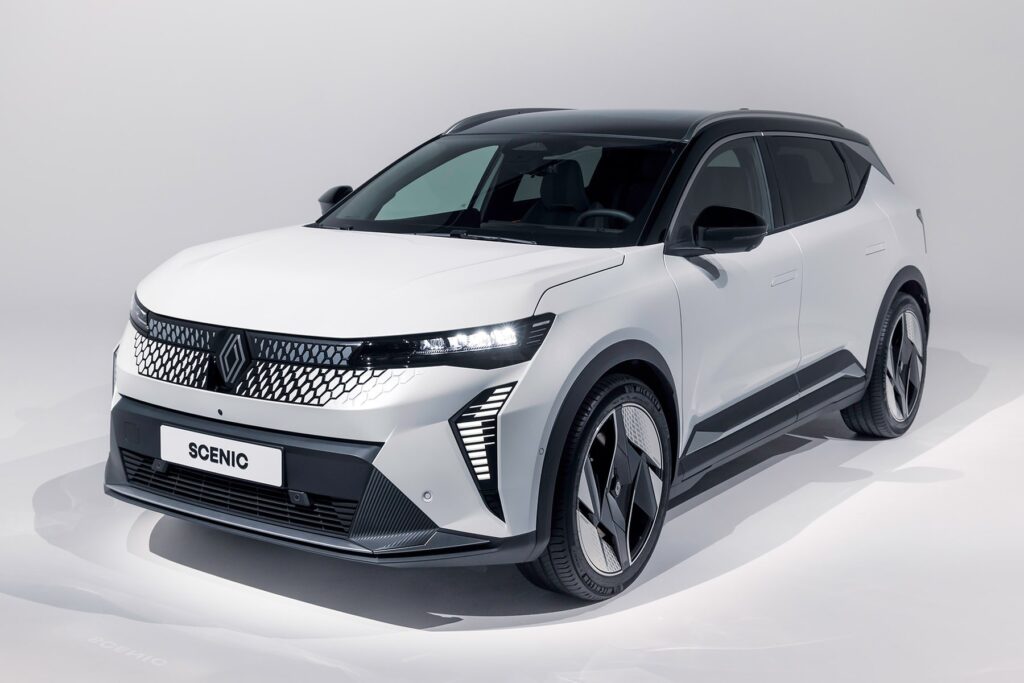
Renault intends to manufacture the next-generation Scenic E-Tech, an electric Rafale successor, and a Scénic range-extender at Palencia starting in 2028. These models will be built on the newly unveiled RGEV Medium 2.0 platform, as detailed in Renault’s FutuREady strategy plan.
The innovative RGEV Medium 2.0 platform stands out for its 800-volt architecture, accommodating vehicles across B+ to D segments. Its flexibility supports a variety of vehicle types, from sedans to SUVs. Additionally, Renault promises ‘ultra-fast charging in just ten minutes’ by 2030.
Technical Specifications and Production Timeline
The platform features a cell-to-body battery architecture with a 70% packing efficiency, reducing components by 20%. It is compatible with several cell types, including prismatic, blade, and pouch cells. While specific energy content details are pending, projections suggest a range of up to 750 kilometers for electric models under the WLTP cycle.
Range-extender versions are anticipated to reach 1,400 kilometers with emissions below 25 grams of CO₂ per kilometer. The first vehicles utilizing this platform are expected to roll out of Palencia by 2028, potentially leading to a quick succession for the current Scénic model introduced in 2024.
Shift in Renault’s Production Strategy
Renault’s current electric models are produced within the ElectriCity network in northern France. However, the upcoming production in Spain, along with plans for Slovenia to produce the Renault Twingo E-Tech, signals a broader geographical spread of Renault’s electric vehicle manufacturing.
Leadership and Strategic Realignment
Since François Provost became CEO, Renault has witnessed a strategic pivot. Provost has scaled back Alpine’s motorsport activities, reintegrated the Ampere electric vehicle division, and discontinued most Mobilize car-sharing projects. Additionally, there are indications of Renault aiming for full ownership of Flexis, a joint venture for connected electric vans.
For more information, visit forococheselectricos.com and latribunadeautomocion.es.
Original Story at www.electrive.com