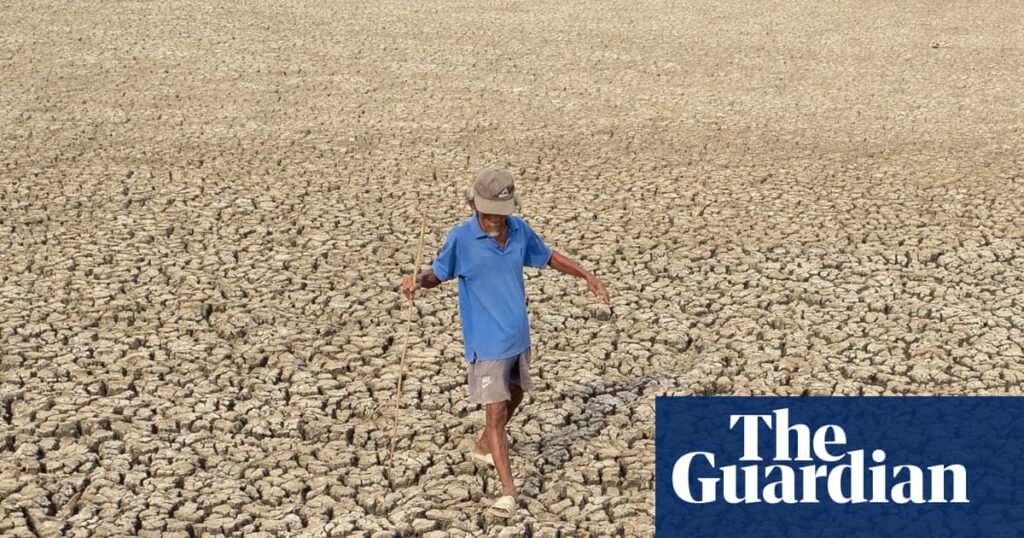
The anticipated return of El Niño, a significant climatic event known for intensifying global weather patterns, has prompted a call to action from the United Nations. The World Meteorological Organization (WMO) has projected an 80% likelihood of El Niño’s formation by September, increasing to 90% by November.
According to the WMO, the upcoming El Niño could range from moderate to strong in intensity, although scientists remain cautious due to the current uncertainty. “The spread is large,” commented Celeste Saulo, the WMO’s Secretary-General, noting the varied predictions regarding the event’s strength.
UN Secretary-General António Guterres emphasized the urgency of the situation, stating, “El Niño conditions will pour fuel on the fire of a warming world. Impacts will hit even harder, travel even farther, and cross borders with devastating speed.”
The last significant El Niño event, occurring in 2023-24, was among the top five strongest on record and contributed to record-breaking global temperatures in 2024. The WMO forecasts that the planet will experience above-average temperatures in most regions over the next three months, with increased chances of extreme rainfall and drought.
While each El Niño event is distinct, they typically bring heavier rains to South America, the southern US, the Horn of Africa, and central Asia, while causing drier conditions in Central America, northern South America, the Caribbean, Australia, Indonesia, and parts of south Asia. Additionally, warm waters associated with El Niño can enhance hurricane activity in the Pacific, but inhibit it in the Atlantic.
Torrential rains linked to El Niño in April 2024 caused flooding and landslides in Tanzania. Photograph: Diego Menjibar/EPA
Western Europe recently experienced an unusually warm May, breaking temperature records in the UK and Ireland. The WMO and the UK Met Office have warned that a record-breaking hot year is likely before the decade’s end, with El Niño potentially accelerating this timeline to as soon as 2027.
Gareth Redmond-King, from the Energy & Climate Intelligence Unit, highlighted concerns about the impact on food supplies, already strained by climate issues and geopolitical tensions. “The havoc El Niño will wreak as it likely delivers another hottest year, in 2027, will be devastating for many farmers, and a question of life or death for far too many people,” he stated.
El Niño events occur every few years, lasting around nine to twelve months, as warm Pacific waters shift due to changing wind patterns. The WMO reported that sea surface temperatures in the Pacific were nearing El Niño thresholds, supported by unusually warm subsurface conditions and atmospheric developments consistent with the phenomenon’s formation.
The WMO has dismissed the term “super El Niño,” avoiding unofficial classifications despite some scientists predicting an especially intense event. Early-warning systems have proven effective in mitigating disaster impacts, yet funding from major donors like the UK and US has been reduced recently.
Saulo noted, “Climate finance is not at its peak, I would say, but early-warning systems ha[ve] been and still [are] a priority. Of course, we still need more resource mobilisation, in terms of funding those countries that need the support. I would say we need to improve that, but that is not the only limit in this case. The implementation is also a challenge for the world.”
Guterres added, “The only effective response is climate action equal to the crisis – ending the addiction to fossil fuels, accelerating the shift to renewables, protecting the most vulnerable, and delivering early-warning systems for all.”
Original Story at www.theguardian.com