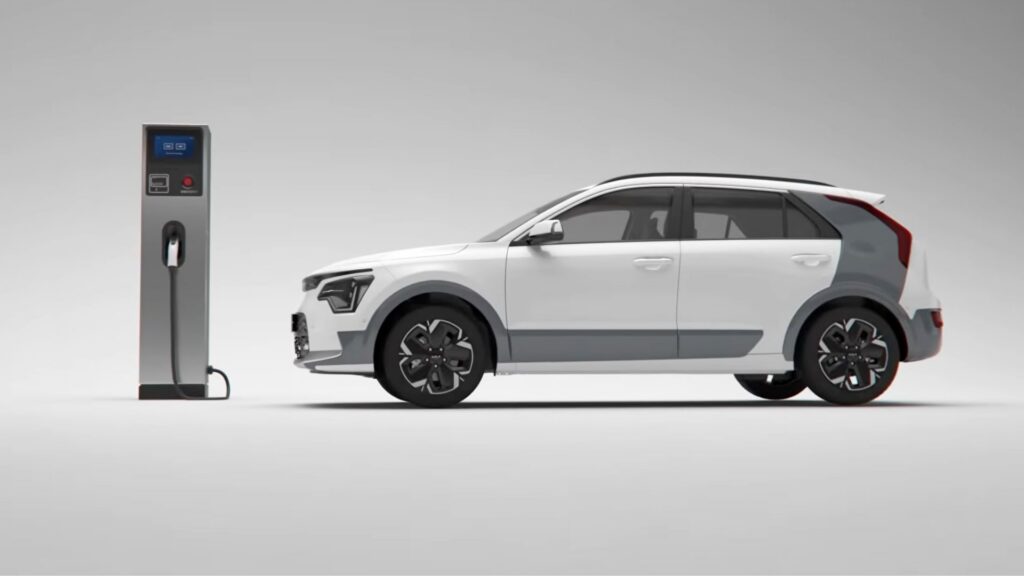
As electric vehicles (EVs) become increasingly popular, concerns about the longevity of their batteries remain a critical issue for potential buyers. A comprehensive Swedish study of nearly 10,000 EV battery health tests offers reassuring insights, revealing that several EV models retain most of their original battery capacity even after extensive use.
Conducted between 2022 and 2026, this study sheds light on the durability of EV batteries over time, a key consideration for those purchasing used electric cars. Korean automakers stood out, with some models showing minimal battery degradation after approximately 100,000 kilometers (62,000 miles) of driving.
EV Batteries Stand the Test of Time
According to the analysis, modern EV batteries maintain a significant portion of their original capacity even after 62,000 miles (100,000 kilometers), assuaging fears of rapid battery decline among second-hand car buyers. This study, published by Swedish used EV retailer Carla, evaluated 9,954 battery health tests executed using diagnostic tools from Austrian battery testing firm AVILOO. Covering a broad spectrum of EVs available in Sweden’s pre-owned market, it represents one of the largest real-world evaluations of battery endurance, as reported by Helsinki Times.
The research indicated that several widely used EV models preserved over 95% of their initial battery capacity after 62,000 miles. Korean brands dominated the leaderboard, with the Kia e-Niro, equipped with a 64 kWh battery, achieving the highest average battery health score of 97.25%, signifying less than 3% degradation. The Hyundai Kona Electric, also with a 64 kWh battery, followed closely with 97.18%, and the Kia EV6 with a 77.4 kWh battery came in third at 95.95%.
Other notable mentions include the Volvo XC40 Recharge with a 69 kWh CATL battery at 94.70%, the Polestar 2 with a 78 kWh CATL battery at 94.35%, and the BMW i3 with a 120 Ah battery at 93.77%. Among Tesla’s offerings, the Model 3 with a 60.5 kWh CATL LFP battery retained 93.34% of its original capacity, with other models like the Model S, Model X, and Model Y also ranking in the top 20. Audi’s e-tron 50 and e-tron 55, Volkswagen’s ID.4 and ID.3, and the Skoda Enyaq iV were among the top-performing models.
The Role of Battery Cells in Longevity
The study also emphasized the impact of battery chemistry and cell suppliers on long-term battery health, even within the same vehicle model. Notable differences were found among Tesla Model 3 variants. Vehicles equipped with CATL LFP batteries retained 93.3% capacity after 62,000 miles, compared to 91.5% for those using LG Chem batteries. Meanwhile, Model 3 variants with Panasonic batteries displayed lower average health scores, ranging from 89.8% to 88.2%, depending on battery size, as noted by HT.
Carla suggested these findings underscore the importance of battery technology in determining longevity, alongside vehicle design. Factors such as driving conditions, charging habits, and climate also affect battery aging, meaning two identical cars could experience different degradation rates.
Ultimately, the study concluded that contemporary EV batteries tend to degrade slowly rather than experience drastic capacity declines. Even the lowest-ranked vehicle among the top 20—the Volkswagen ID.3—maintained 91.79% of its original capacity after 62,000 miles. Carla highlighted that battery health testing offers valuable insights for used EV buyers, complementing considerations like vehicle age, mileage, and equipment, with findings suggesting that today’s electric cars are capable of sustaining high battery performance over many years of use, as reported by HT.
Original Story at interestingengineering.com