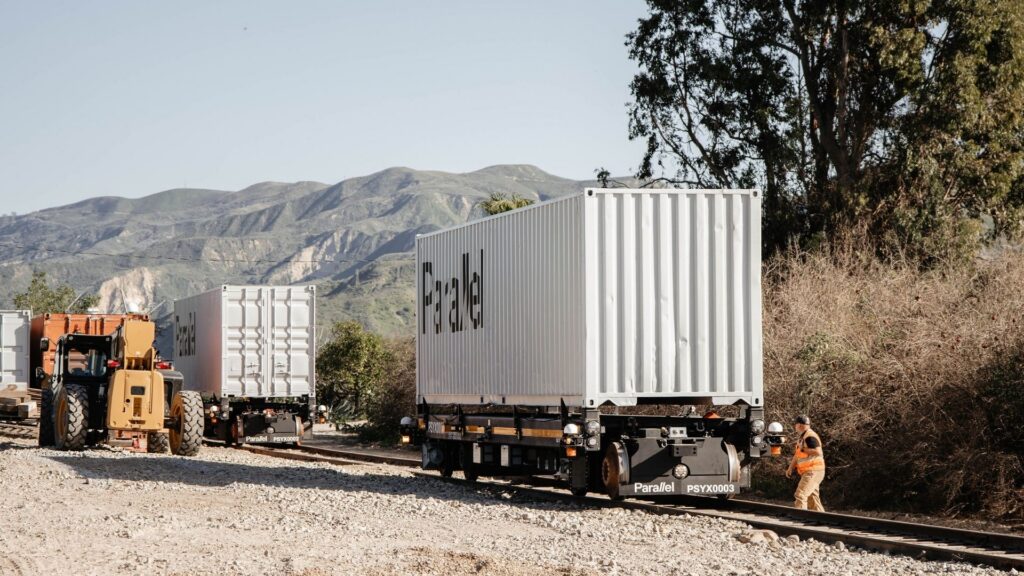
A transformative shift in freight transportation is on the horizon as Parallel Systems secures a $100 million investment to advance its cutting-edge autonomous, battery-electric freight rail vehicles. The company envisions these self-propelled railcars as a competitive alternative to trucking for shorter shipping routes.
This Los Angeles-based startup, founded by former SpaceX engineer Matt Soule in 2020, recently announced its successful Series C funding round closure. The investment will be directed towards the production of Parallel’s third-generation Panther vehicle, as well as its plans for commercial and international expansion.
Parallel Systems’ innovative freight rail approach integrates electric propulsion with autonomous technology and software-managed railcars. The goal is to provide a more versatile rail solution for shipments typically reliant on trucks, given the limitations of conventional freight trains on short routes.
Railcars that move without a locomotive
Traditional freight trains are powered by locomotives pulling long chains of railcars, optimizing for bulk shipments over long distances. However, this model is less efficient for shorter hauls due to the complexities of train assembly and terminal operations.
Parallel Systems introduces a radical departure with its battery-electric vehicles, which are self-propelled and can operate independently or form organized groups, known as platoons. This flexibility allows for dynamic routing and separation without the need for traditional coupling.
The system is tailored to transport standard shipping containers, integrating seamlessly with current freight infrastructure. Equipped with onboard sensors and sophisticated software, these vehicles can monitor positions and conditions while interacting with existing railroad logistics and control systems.
The primary challenge lies not just in electrifying or automating a railcar but in synchronizing multiple autonomous vehicles to comply with railway standards and safety, all while preserving the inherent energy efficiency of rail transport.
Testing moves beyond the laboratory
Parallel Systems is actively testing its technology in Georgia in collaboration with short-line railroad operator Genesee & Wyoming, under a program sanctioned by the Federal Railroad Administration.
The pilot program has extended beyond controlled environments. As of September 2026, FreightWaves reported that testing had expanded to a 30-mile route between Vidalia and a region east of Helena, Georgia, aiming to assess the vehicles’ real-world performance.
According to the company, several major railroads are now contracted to implement this system commercially. Nonetheless, the Georgia program remains pivotal in demonstrating the technology’s integration into actual railway operations.
Making short-haul rail more competitive
Parallel Systems posits that its technology could unlock underutilized routes for rail services, especially those under 500 miles, which conventional rail finds challenging. The initiative seeks to merge rail’s cost-effectiveness and energy benefits with increased flexibility and departure frequency.
The company’s official website claims the vehicles can cover up to 500 miles per charge, though this figure remains company-stated rather than independently verified.
With the new funding, Parallel aims to scale up Panther vehicle production and explore international markets. However, details on production timelines or vehicle quantities funded by the Series C round have not been disclosed.
If successful, this system could offer railroads a viable option for moving containerized freight, potentially reducing reliance on short-haul trucking. The ultimate test will be whether these autonomous electric railcars can transition from pilot projects to reliable commercial operations on existing rail networks.
Original Story at interestingengineering.com