Nissan and Chery’s Potential Partnership Could Transform UK Car Manufacturing
Nissan may soon become a key player in the rise of Chinese car manufacturing in the UK. The Japanese automotive giant has entered into discussions to possibly manufacture vehicles for Chery, a company partially owned by the Chinese state, at its Sunderland plant.
On Wednesday, Nissan revealed it had signed a non-binding agreement with Chery. If finalized, this deal would mark the beginning of large-scale Chinese car production in Britain. The plan is to start manufacturing Chery vehicles at Sunderland’s production line 1 by the 2027 financial year.
Chery, along with its sub-brands Omoda and Jaecoo, has made significant inroads in the UK market. Notably, the Jaecoo 7, a plug-in hybrid electric vehicle (PHEV), became the top-selling model in the UK in March.
Massimiliano Messina, Chery’s regional chair for Europe, expressed optimism, stating, “This is an important step forward for our operations. We are looking forward to working with Chery International UK in the coming months to finalize a position that is optimal for both companies.”
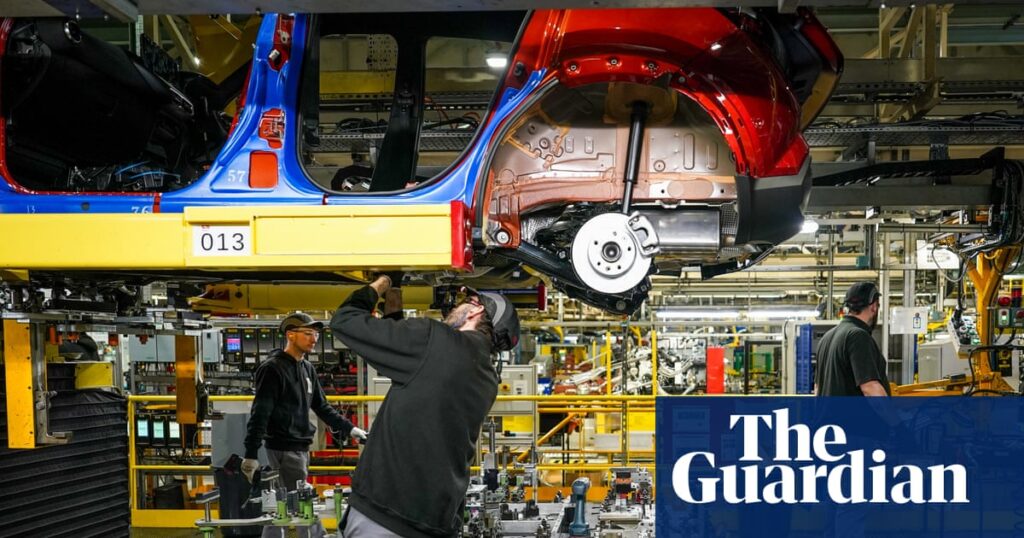
The Sunderland factory is one of Europe’s most efficient plants, producing models such as the Qashqai SUV, Juke crossover SUV, and the electric Leaf. However, it has faced challenges due to issues at Nissan’s Japanese headquarters and sluggish European car sales post-pandemic.
As part of a global restructuring, Nissan has shut down several plants in Japan and consolidated production at Sunderland, a move that surprisingly did not lead to job losses. This restructuring has paved the way for potential collaboration with a Chinese manufacturer. Although 900 jobs across Europe were cut, the Sunderland plant remained unaffected in terms of staffing.
Should the Chery deal proceed, it would secure employment for approximately 6,000 workers at a site that is currently underutilized, producing 273,000 cars in 2025 against a capacity of 600,000.
Steve Bush, national officer at Unite, the union for Nissan workers, remarked, “This is very good news for Nissan’s Sunderland workers and the UK’s automotive industry in general at a time of uncertainty for the sector. Chinese vehicles are increasingly visible on British roads, so it makes sense for UK workers to build them here as well.”
Chinese carmakers, benefiting from state subsidies, lower labor costs, and a stronghold in the battery industry, are exerting pressure on European rivals. David Bailey, a business economics professor at the University of Birmingham, commented on the potential deal, calling it “a historic deal” and noting China’s evolving role in global automotive manufacturing.
In recent years, Nissan has sold two plants to Chery, with production beginning at a site near Barcelona and another plant in South Africa. Other European car manufacturers, including Stellantis and Ford, have opted to collaborate with Chinese companies like Leapmotor and Geely, respectively.
While Volkswagen has expressed willingness to work with Chinese partners, potential collaborations have faced hurdles, with Xiaopeng deeming some German factories outdated.
Gary Lan, UK chief executive of Omoda and Jaecoo, recently stated Chery’s ambition to be a leading manufacturer in the UK, with plans to produce vehicles locally. Chery’s establishment of a research and development hub in Liverpool underscores this commitment.
While details remain undisclosed, the potential production of hybrid or electric cars for Chery at Sunderland remains a possibility. Despite the British government’s interest in Jaguar Land Rover building cars for Chery, the idea is not being seriously pursued.
Original Story at www.theguardian.com