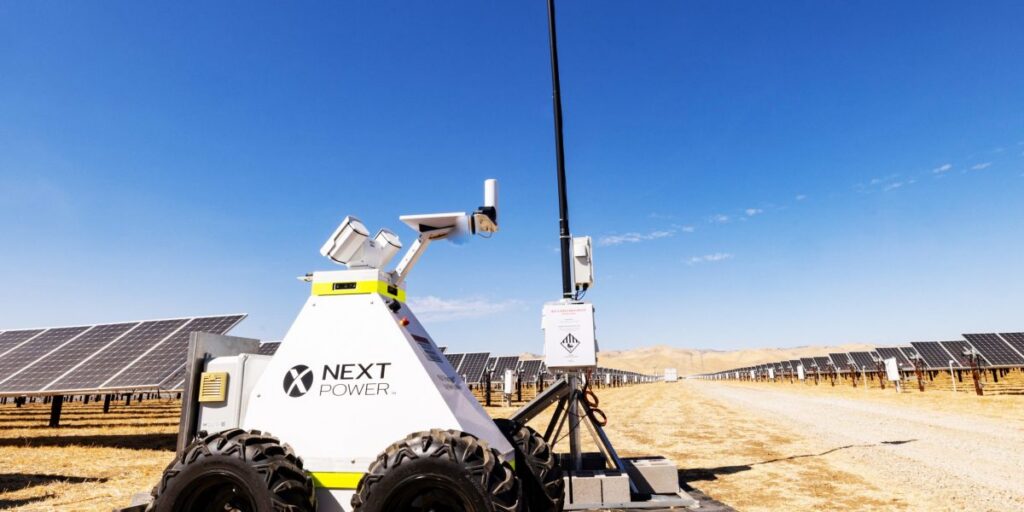
As solar energy continues its ascent as a primary power source in the United States, one company stands at the forefront of this transformation. Nextpower, led by cofounder and CEO Dan Shugar, is not just leading the charge; it’s redefining the scope of solar technology by expanding into new territories and diversifying its offerings.
Nextpower is renowned for its innovative solar trackers—technologies that adjust solar panels to follow the sun’s path, optimizing energy capture. “The trackers do what sunflowers have been doing for millions of years,” Shugar told Fortune. “They basically follow the sun during the day, and they can produce almost 30% more energy. It depends on the location and the project design.”
The company’s influence is substantial, with control over 55% of the U.S. solar tracker market and a notable presence internationally, holding about 30% of the global market. Recently, Nextpower has ventured into the battery storage arena, acquiring companies to broaden its renewable energy capabilities, though it steers clear of producing solar and battery cells themselves. “We moved from a pure-play tracker company, and we developed a platform strategy to do everything in solar except make the solar cells,” Shugar explained. “And we’re doing everything in batteries except make the battery cells.”
Nextpower’s diversification strategy has not gone unnoticed. Its stock has risen by 12% this year, achieving a market capitalization of $15 billion. The company also secured the 24th spot on Fortune’s list of Fastest-Growing Companies. Jefferies energy analyst Julien Dumoulin-Smith praised Nextpower as the firm’s “franchise pick” in the power and utilities sector, citing its diversification into battery energy storage as a key advantage.
Expansion Mode
Despite challenges from the Trump administration against renewable energy initiatives, solar power continues to be the fastest-growing energy source in the country. Shugar emphasized its prominence, stating, “It’s the dominant form of new power being installed.”
States like Texas and California are leading the way with over 15 gigawatts of solar capacity each, enough to power millions of homes. Moreover, about 80% of new solar projects in the U.S. incorporate battery storage, allowing solar power to function more like traditional baseload power by providing energy at night.
This year, Nextpower made significant acquisitions to enhance its energy portfolio, including the purchase of Prevalon Energy for up to $365 million and Spain’s Zigor, along with its U.S. subsidiary, Apex Power, for $80.5 million. October saw the completion of a $378 million acquisition of Germany’s Zimmermann PV-Steel Group, further strengthening its European operations.
Nextpower’s moves into the battery sector aim to attract industries reliant on data centers, such as AI and robotics, by offering energy solutions for their power-intensive operations. The company has persisted in expanding domestically, mitigating tariff impacts by onshoring its manufacturing processes.
Looking forward, Nextpower faces challenges like the potential loss of solar and wind tax credits, which were eliminated last year under the Trump administration. However, ongoing projects have until 2030 to take advantage of existing tax benefits. Shugar remains optimistic about future legislative changes that could restore these incentives.
Shugar also highlighted the need for fair energy policies. “If more power is a national imperative, then everything should be incentivized to come online,” he said, advocating for equal treatment of renewable and traditional energy sources.
Original Story at fortune.com