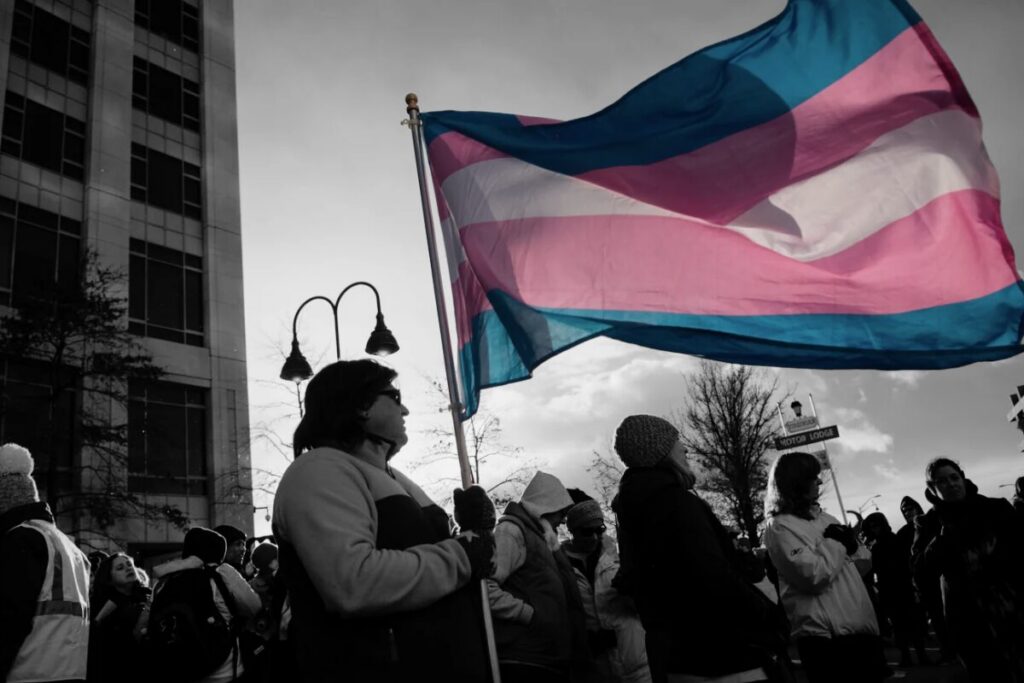
Nevada consistently earns top marks as one of the most welcoming states for LGBTQ+ residents — but for transgender people who need medical care, that reputation can feel like false advertising. Behind the progressive image lies a stark reality: a shrinking pool of willing doctors, absent legal protections, and families left scrambling to find basic healthcare.
According to a 2026 SafeHome.org study analyzing legal protections, healthcare access, and hate crime data, Nevada earned the top spot as the safest state for LGBTQ+ individuals. Yet transgender patients — including children — are increasingly finding that good ratings on paper don’t translate into doctors available to treat them.
The core problem is a collision between legal uncertainty and an already-strained healthcare system. Nevada is home to an overall shortage of medical providers, and within that shortage, the number of physicians willing to offer gender-affirming care has dropped sharply. Aggressive legal actions from out-of-state officials, federal pressure, and the absence of state shield laws have made providers increasingly reluctant to treat transgender patients — especially minors.
What the Law Does — and Doesn’t — Protect
In 2023, Nevada passed SB163, which requires certain medical insurance policies, including Medicaid, to cover gender-affirming care for the treatment of gender dysphoria. That was a meaningful step toward ensuring families aren’t turned away at the insurance level.
But coverage means little if there are no doctors willing to provide the care. That’s where Nevada’s legal framework has fallen short.
State Sen. James Ohrenschall introduced SB302 during the 2023 session, a bill designed to protect medical providers from out-of-state legal retaliation for offering gender-affirming care in Nevada. It passed both chambers of the legislature. Gov. Joe Lombardo vetoed it, saying it
“inhibits the executive branch’s ability to be certain that all gender-affirming care related to minors comports with state law.”
Ohrenschall tried again with SB171 in 2025. It passed both chambers once more — and was once again vetoed by Lombardo.
Notably, Nevada did pass SB131 in the same 2023 session, a shield law protecting reproductive healthcare providers from out-of-state legal interference. That law preserves local accountability while blocking extraterritorial retaliation — the very balance Lombardo claimed was missing from the gender-affirming care bills.
Doctors Are Pulling Back — and Patients Are Feeling It
The legal uncertainty has real consequences for families trying to access care. Attorney General Ken Paxton of Texas launched investigations into Seattle Children’s Hospital and a QueerMed clinic in Georgia over gender-transition treatments — legal overreach that sent shockwaves through provider communities across the country, including Nevada.
Dr. Michael Uzmann is one of the few Nevada medical professionals still offering care to transgender patients and, by his account, the last locally practicing endocrinologist willing to treat parentally consented minors. He opened his own practice in July 2025 after spending five years in Las Vegas medical settings where gender-affirming care was broadly avoided — and in one case, a provider charged a predatory subscription fee for hormone therapy rather than offering it as standard care.
Uzmann is direct about what providers need to feel safe treating patients:
“To safely practice without fear of out-of-state retaliation, practitioners need policy protections that bar Nevada state agencies from assisting with out-of-state subpoenas, medical record requests, criminal investigations or extradition related to legally provided care.”
When the temporary closure of Huntridge Family Clinic — a Las Vegas leader in gender-affirming care — left patients without a provider, Uzmann absorbed roughly 300 new transgender patients almost immediately. That surge offers a window into just how many people in the community depend on a very small number of doctors.
Dr. Julpohng Vilai, a Las Vegas-based pediatrician, has heard from his patients how hard it has become to find pediatricians who offer gender-affirming care to transgender youth. Many families simply give up. And even when minors do find a willing provider, that provider may not have the clinical training to deliver appropriate care.
Families Are Relocating — Only to Hit the Same Wall
Some transgender residents and their families have moved to Nevada specifically because of its reputation as a sanctuary for the LGBTQ+ community. A 57-year-old transgender man who relocated with his spouse from the Midwest told the Las Vegas Weekly he was drawn by Nevada’s LGBTQ+ safety rankings — only to discover that insurance coverage for gender-affirming care didn’t solve the problem of finding a doctor who knew how to provide it.
Gwendolyn Schwarz, a trans woman from Springfield, Missouri, left her home state for Carson City hoping to access surgery and build a stable life. Stories like hers are becoming more common as transgender individuals and their families flee their home states in search of safer ground — only to find that Nevada’s legal protections for providers remain incomplete.
For adults, Nevada does offer meaningful day-to-day protections. A Southern Nevada medical student, a transgender man who moved to Las Vegas four years ago, noted that compared to states like Texas or Florida, Nevada provides vital baseline safety. But he was candid about the limits:
“Without enshrined protections, there will always remain a risk of rights and access to care being lost.”
The Provider Shortage Has a Policy Solution
Dr. Terence McAllister, president of the Nevada Chapter of the American Academy of Pediatrics, is one of only 300 pediatricians serving more than half a million minors statewide. He has emphasized the necessity of implementing laws protecting providers as part of addressing Nevada’s broader healthcare shortage — and has backed SB171. McAllister also notes that restricting gender-affirming care and social transition doesn’t protect youth; it worsens depression, anxiety, and self-harm.
Silver State Equality State Director André Wade has described Nevada as “poised to welcome providers and seekers of gender-affirming care.” But research consistently shows that providers willing to offer those services are few and far between — and without legal protection, that number is only likely to shrink further.
For transgender Nevadans and their families, the ask is straightforward: laws that allow doctors to treat patients without fear of prosecution from another state’s attorney general. That kind of statutory protection isn’t a partisan demand — it’s the basic infrastructure that determines whether a family can find a doctor, fill a prescription, or get a child the mental health support they need. Without it, insurance coverage and safety rankings are promises the system can’t keep.