
Recent years have seen some of the hottest periods on record, with severe wildfires in Canada, Europe, and South America, along with deadly floods and heatwaves worldwide. Despite these alarming climate events, major fossil fuel producers are expanding production plans, exacerbating global warming concerns.
The latest report indicates governments plan to produce over twice the coal, oil, and gas by 2030 than is compatible with the Paris Agreement’s goals. This projection is an increase from the 2023 levels reported in the biennial Production Gap report.
The report attributes this rise to a slower coal phaseout and increased gas production expectations, notably in China and the United States.
“The Production Gap Report highlights the widening chasm between fossil fuel production plans and global climate objectives,” stated Christiana Figueres, former UNFCCC executive secretary. Despite growing calls for renewable energy, governments are still prioritizing fossil fuel expansion, she added.
Compiled by researchers from the Stockholm Environment Institute, Climate Analytics, and the International Institute for Sustainable Development, the report underscores government policies that influence fossil fuel output.
Neil Grant, a Climate Analytics expert involved in the study, remarked that governments largely misuse their regulatory power, contributing to the issue.
The report criticizes subsidies, tax incentives, and permits that fail to align with climate goals. While nations pledge to reduce emissions, their fossil fuel production plans remain inconsistent with these targets.
The United States is highlighted as a prominent example of recommitting to fossil fuels. This is reflected in U.S. Energy Information Administration forecasts, excluding recent policies under the Trump administration that bolster fossil fuel interests. Since January, Congress allocated billions in subsidies for oil and gas, and the administration has delayed coal plant retirements, increased fossil fuel access on public lands, and set up hurdles for renewable projects.
In response, a White House spokesperson stated that President Trump has prioritized American energy production, asserting it supports economic and national security.
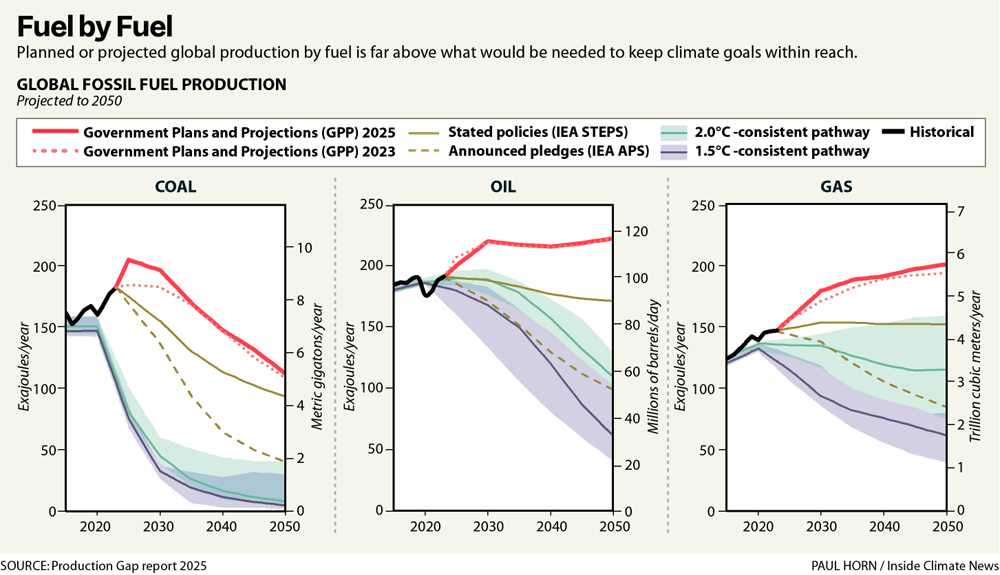
The report analyzed plans from 20 top fossil fuel producers, accounting for over 80% of global output. Most of these nations foresee increased production by 2030, contrary to climate targets.
Global fossil fuel production is projected to exceed levels consistent with limiting warming to 1.5 or 2 degrees Celsius. This discrepancy could intensify severe weather and rising sea levels.
Though previous reports were under the UN Environment Program, this edition was published independently.
The report notes that updated models now show deeper cuts are needed to meet climate goals, as consumption trends worsen.
China, the United States, and Russia alone were responsible for over half of 2022’s extraction-based emissions. Ira Joseph from Columbia University noted that supply-side policies affect market dynamics, lowering costs and increasing demand.
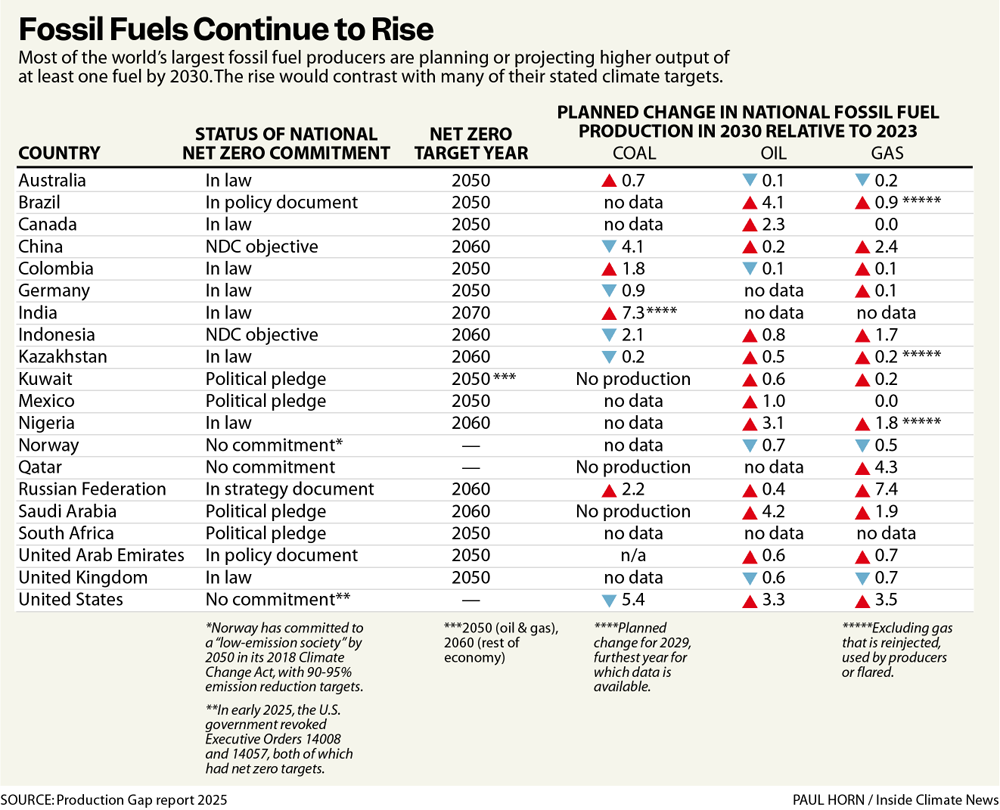
Notable changes include China’s slower coal decline and the U.S.’s rapid gas production growth. Some smaller producers also plan significant increases in gas output.
Positive developments include Brazil and Colombia working towards climate-aligned production plans, and Germany accelerating coal phaseout. However, these efforts are insufficient, the report warns.
The authors urge governments to coordinate strategies to reduce production sustainably, suggesting Just Energy Transition Partnerships as a model for phasing out coal in developing nations, though these initiatives face funding challenges.
Grant emphasized the need for adaptive policies to mitigate potential economic and environmental impacts, advocating for alignment between production plans and climate targets.
Original Story at insideclimatenews.org