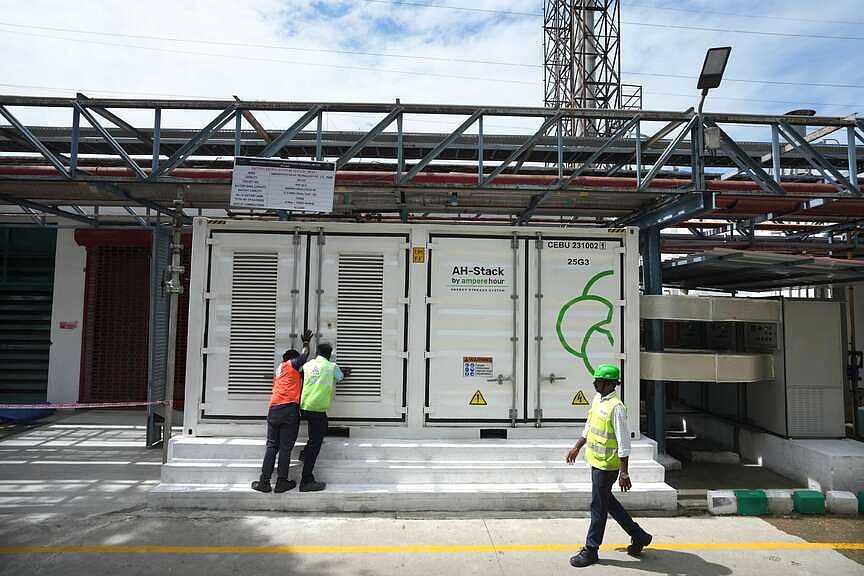
India is facing a paradox in its energy sector: despite a robust increase in renewable energy capacity, the country is struggling to utilize it effectively. During peak summer months, when air conditioning demands soar, renewable sources were underutilized due to grid limitations, causing some providers to limit their output.
According to government data and the energy think tank Ember, India curtailed nearly 11 terawatt-hours of solar power in the last 15 months, sufficient to supply power to approximately 10 million homes. This occurred even as extreme weather conditions heightened the demand for electricity across the nation.
As one of the world’s largest emitters of greenhouse gases, India is rapidly expanding its clean energy infrastructure, focusing primarily on solar. However, the country faces challenges such as inadequate transmission and storage capacities, and the technical difficulties in managing the transition between fossil fuels and renewable energy.
Neshwin Rodrigues, an energy analyst at Ember, noted, “We’re in a stage where some of the biggest hurdles in renewables are starting to hit us.” Despite having a clean power capacity of over 300 gigawatts, which accounts for more than half of India’s total installed electricity capacity, coal remains the dominant source of electricity generation.
The primary issue cited by experts is curtailment, where renewable plants are instructed to reduce or halt their output due to the grid’s inability to accommodate the power. This problem is exacerbated by the inflexibility of coal-fired plants, which struggle to adjust their output quickly without incurring higher costs or operational risks.
Vinay Pabba, CEO of Vibrant Energy, described the challenge of making thermal power plants adapt to clean energy inputs as “like asking an elephant to dance.” He emphasized that curtailment leads to financial losses for clean energy developers who are paid solely for the electricity they supply to the grid.
In western India, states like Gujarat and Rajasthan contribute to nearly half of the country’s solar capacity, leading to congested transmission lines. “When solar peaks, usually in the afternoon, there is a limited pipe to evacuate it,” Pabba explained.
The lack of sufficient storage solutions further complicates matters, as it forces reliance on coal even when renewable energy is available. Vibhuti Garg from the Institute for Energy Economics and Financial Analysis warned, “Without enough storage, India risks keeping coal plants running even when cheap renewable power is available.”
Although solar and wind projects can be completed relatively quickly, building new transmission lines can take at least three years. Over the past five years, India has achieved only 80% of its annual transmission construction targets, according to Ember’s research.
Energy analysts like Disha Agarwal from the Council on Energy, Environment and Water suggest that diversifying renewable developments and integrating smaller local solar projects could alleviate pressure on current infrastructure, balancing electricity supply throughout the day.
India’s ambitious target is to reach 500 gigawatts of clean electricity capacity by 2030, with 70% of its installed power capacity derived from nonfossil sources by 2036. A recent study from the University of California, Berkeley, indicates that renewable power, augmented by battery storage, can achieve reliability comparable to conventional power plants at lower costs than new coal-fired facilities.
Despite the potential of battery storage, India’s current storage capacity is insufficient. Ankit Mittal, CEO of Ingro Energy, emphasized, “If we try to increase the solar installations without solving for energy storage, it is only going to lead to curtailment.” The government projects storage needs to rise significantly, from the current 3 gigawatts of battery capacity and 7.4 gigawatts of pumped-storage to about 74 gigawatts by 2032.
Avinash Rao, CEO of Mahindra Susten, cautioned, “If high-quality energy storage projects are not built, we could be adding an additional layer of risk to grid operations while also decelerating our nation’s ability to achieve our energy transition targets.” Rodrigues added that batteries offer a faster solution to address immediate constraints compared to large-scale transmission infrastructure.
As India electrifies its transportation and other sectors, demand continues to rise rapidly, a trend few industry players anticipated. “None of us saw it coming. If we had seen it coming, we would have probably planned our way around it,” Pabba conceded.
Original Story at www.arkansasonline.com