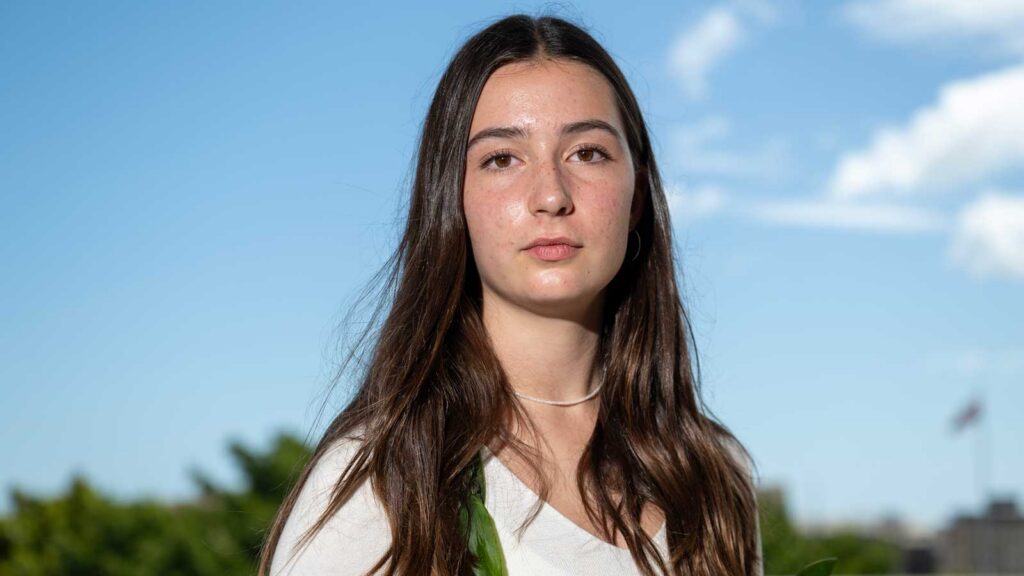
Young Hawaiians Drive Change in State’s Transportation Policies
In a groundbreaking collaboration, Hawaii’s youth are now actively engaging with the state’s Department of Transportation (DOT) to shape the future of public transit, bike lanes, and other sustainable transport initiatives. This partnership marks a pivotal moment following a historic legal settlement.
The Hawai‘i Youth Transportation Council emerged from the notable 2024 settlement of the Navahine v. Hawai‘i DOT lawsuit. Initiated by 13 young plaintiffs, the lawsuit claimed that the DOT’s lack of progress towards state climate goals infringed on their constitutional right to a clean and healthful environment.
The case concluded in 2024 with a settlement that committed the DOT to achieving decarbonization of transportation by 2045. Additionally, the youth council was established to ensure that the voices and priorities of Hawaii’s younger generation are heard and integrated into planning.
Yale Climate Connections recently interviewed Charlotte Madin, one of the plaintiffs, and Joanna Zeigler, a staff attorney at Our Children’s Trust, who spearheaded the case.
The interview has been edited for clarity and brevity.
Understanding the Roots of Concern
Yale Climate Connections: Charlotte, what first sparked your concern about climate change?
Charlotte Madin: Growing up in Sydney, Australia, my family frequently faced severe heat waves, which led us to seek refuge in air-conditioned locations to avoid health risks. I’ve also witnessed the degradation of Hawaii’s ocean and coral reefs over the past eight years, which is alarming given my parents’ background as marine biologists. In 2021, a major fire on the Big Island further highlighted the immediate impacts of climate change, as it prevented my grandmother from accessing medical care.
The Journey to Legal Action
YCC: What led you to become involved in the lawsuit?
Madin: When I was 12, a friend introduced me to the lawsuit, which promised a cleaner environment. Encouraged by my community, I joined the effort, seeing it as an opportunity to effect change while still young. I’ve always been passionate about climate issues and saw this as a significant starting point.
Challenges and Learning Experiences
YCC: What was it like being a plaintiff?
Madin: Initially, I didn’t know what to expect, but I soon realized the importance of community support. One defining experience was being deposed by DOT lawyers at a young age, which was intense but ultimately empowering.
Legal Allegations and Settlement Requirements
YCC: Joanna, what were the main allegations in the lawsuit?
Joanna Zeigler: The lawsuit invoked two constitutional provisions: the public trust doctrine, mandating the conservation of Hawaii’s natural resources, and the right to a clean and healthful environment as per state statutes.
YCC: How reliant was the DOT on fossil fuels, and what were the existing mandates?
Zeigler: The transportation sector, being the largest greenhouse gas emitter in Hawaii, was heavily car-centric, prioritizing road projects over emissions-reducing initiatives. This “business-as-usual” approach was unsustainable.
YCC: What does the settlement require from the government?
Zeigler: The settlement mandates HDOT to fully decarbonize by 2045, with benchmarks set for the coming decades. It outlines a comprehensive greenhouse gas reduction plan and emphasizes expanding pedestrian, bicycle, and transit networks. The agreement also formalizes the youth council’s role in providing feedback on transportation projects.
Broader Implications and Future Prospects
YCC: What makes this case significant?
Zeigler: This is the first settlement of its kind, showcasing the impact of youth advocacy in climate change litigation. It exemplifies successful cooperation between youth and government, setting a precedent for other states.
YCC: Are youth lawsuits effective in climate action?
Zeigler: Courts are crucial in climate justice, ensuring government actions align with constitutional rights, including the right to a stable climate. Youth-led lawsuits play an essential role in holding entities accountable.
YCC: Charlotte, what excites you most about the plan?
Madin: The youth council is particularly exciting, as it connects me with other passionate young individuals across Hawaii. It provides a platform to influence DOT planning and gain insights into legislative processes.
YCC: Any final thoughts?
Madin: My message to young people is to use their voice and engage in democracy. You can achieve great things, so never let your voice be silenced.
Original Story at yaleclimateconnections.org