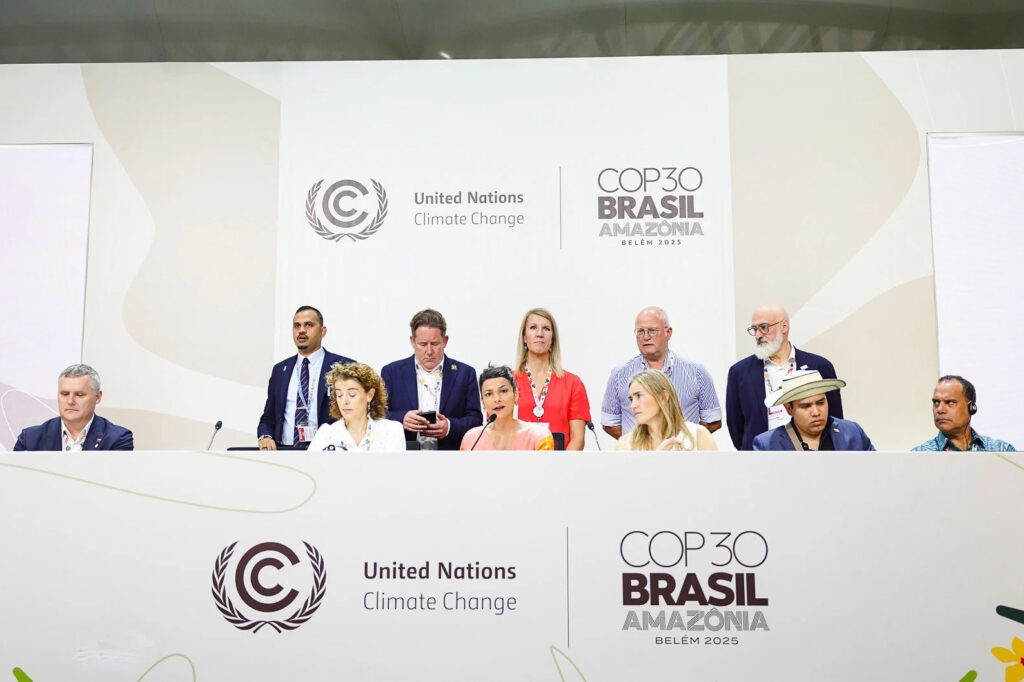
In a world beset by crises driven by dependence on oil and gas, a global energy transition might seem improbable. Yet, over 50 nations are convening in Santa Marta, Colombia, to draft detailed plans to phase out fossil fuels. This move goes beyond the conditional consensus on fossil fuel transition established at COP28 in Dubai. The slow progress toward this goal prompted Colombia and the Netherlands to form a coalition of countries eager for faster action.
The conference attendees range from major fossil fuel producers such as Australia, Norway, and Nigeria to vulnerable island nations like Fiji and the Maldives, as well as Denmark, Spain, France, and the European Union. Notably missing are the United States, Russia, China, and key Gulf states like Saudi Arabia.
Mary Robinson, former President of Ireland and a member of The Elders, described the event as “a multilateral space for proactive collaboration to phase out fossil fuels.”
During a recent webinar, Robinson emphasized the urgency of the conference, linking it to current geopolitical tensions and arguing that a shift to renewable energy is now a “security imperative.” She cited global economic disruptions and legal breaches as indicators of the need for structural change in energy systems.
Rather than compelling every reluctant petro-state to act, Colombia and the Netherlands aim to establish a coalition of nations to create practical action plans for electrifying transport and industry while enhancing efficiency and conservation.
Spain, benefiting from solar and wind power, maintains lower energy prices than fossil fuel-dependent nations. Similarly, Pakistan’s solar initiatives have saved over $12 billion in fossil fuel imports.
The conference is designed to be more accessible than large UN climate summits, featuring open sessions and livestreaming. It will incorporate a People’s Summit, including community groups, unions, and Indigenous leaders, to invigorate climate activism and expedite the fossil fuel transition.
Despite political opposition, hosting the conference during challenging times demonstrates a global desire to accelerate the transition from fossil fuels. Last year’s advisory opinion from the International Court of Justice clarified that ending fossil fuel reliance is a legal obligation, urging states to take significant action.
The Santa Marta meeting marks the beginning of an ongoing process rather than a definitive conclusion. Natalie Jones from the International Institute of Sustainable Development notes that its outcomes will influence future climate discussions, potentially driving momentum for upcoming COP meetings.
Progress toward fossil fuel transition supports not only climate objectives but also energy security and affordability. A stable policy environment is essential for a faster transition, guiding governments, investors, and communities towards a clear future.
Original Story at insideclimatenews.org