Tesla (TSLA +0.70%) is navigating a challenging landscape as competition in the electric vehicle (EV) market intensifies. To counteract the slowdown in sales, CEO Elon Musk is steering the company towards innovative ventures like the Cybercab autonomous robotaxi and the Optimus humanoid robot, aiming to rejuvenate Tesla’s growth trajectory.
In a recent investor call discussing Tesla’s first-quarter results for 2026, Musk shared promising updates on these new initiatives. Despite this, Tesla’s stock has declined by 23% since its peak in December, highlighting market concerns about the company’s valuation and future prospects.
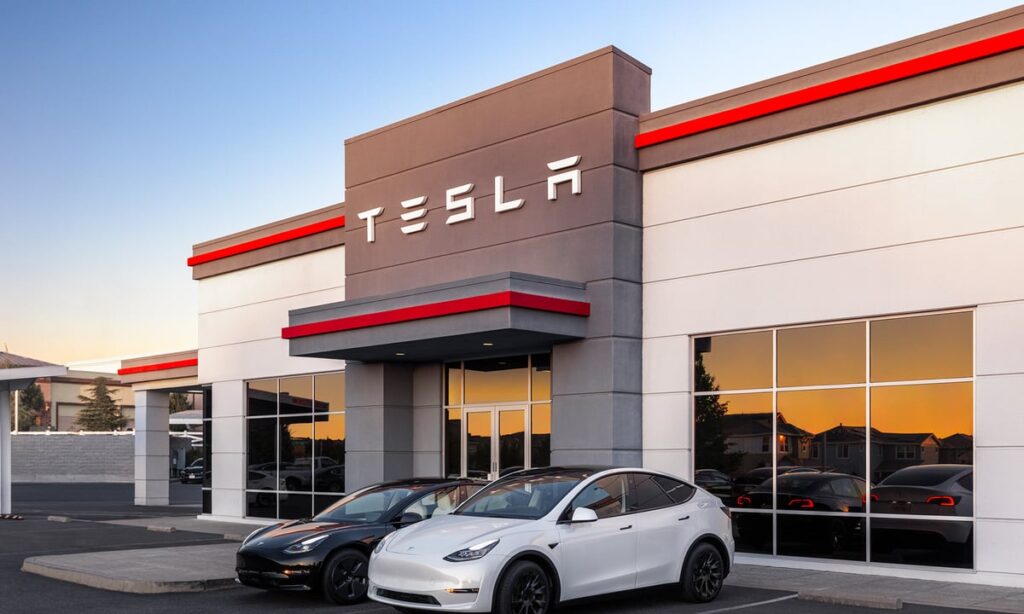
Image source: Tesla.
Advancements in Cybercab and Optimus Projects
Elon Musk envisions a future dominated by autonomous vehicles, and Tesla’s Cybercab robotaxi is central to this vision. This vehicle, devoid of traditional driving controls, will use Tesla’s Full Self-Driving (FSD) software to operate independently, offering a lucrative new business avenue amidst declining EV sales.
The Cybercab has now entered production, and Musk anticipates substantial scaling by the close of 2026. However, the deployment is currently limited due to regulatory constraints, with unsupervised FSD software approved solely in Austin, Texas. Musk is optimistic about expanding regulatory approval to additional states by the year’s end, though significant revenue from this venture may not materialize until 2027.
Beyond the Cybercab, Tesla’s Optimus robot represents another ambitious project. Musk foresees widespread applications for Optimus in both residential and commercial settings, suggesting a vast potential market. An unveiling of Optimus V3 is expected mid-year, with preparations underway at Tesla’s Fremont factory for future mass production. Initial production volumes are projected to be light in 2026, with significant growth anticipated in 2027.
Challenges in the Passenger EV Segment
Despite its innovative efforts, Tesla’s core passenger EV business has faced hurdles. Deliveries fell by 1% to 1.79 million vehicles in 2024 and dropped further by 9% to 1.63 million in 2025, impacting revenue and earnings. However, the first quarter of 2026 showed promise with a 6% increase in deliveries, boosting revenue by 16% and earnings per share by 8%. Nevertheless, competition remains fierce.
Particularly from Chinese automaker BYD (BYDDY +4.62%), which surpassed Tesla in global sales with its budget-friendly EVs. BYD’s success is evident in markets like Australia, where it outsold Tesla 10-to-1 in January.
Tesla’s potential release of a low-cost EV, the Model 2, remains uncertain as the company prioritizes the Cybercab and Optimus projects. While these ventures promise long-term benefits, the delay could affect Tesla’s financial results if it doesn’t enhance competitiveness in the EV market soon.
Tesla’s Stock Valuation Concerns
Despite advancements in new projects, Tesla’s stock valuation remains a point of contention. The stock’s price-to-earnings (P/E) ratio of 341, based on trailing-12-month earnings, is significantly higher than the Nasdaq-100 technology index’s average. This stark difference suggests an overvaluation relative to other tech giants.
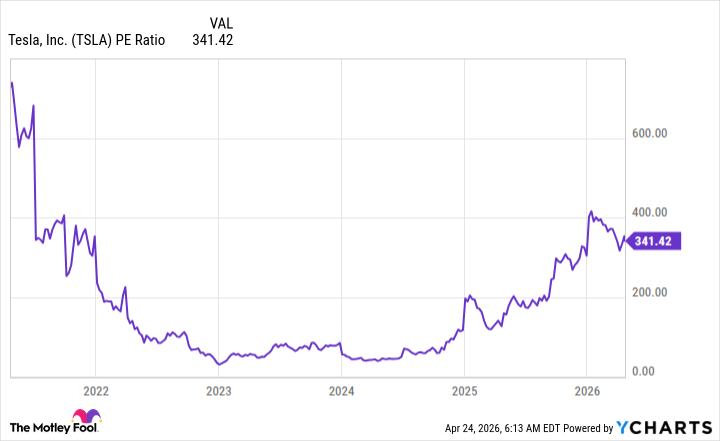
Data by YCharts.
For value investors, Tesla’s current P/E ratio is a red flag, particularly given the potential for continued struggles in its EV segment, which still constitutes over 70% of its revenue. Unless the Cybercab and Optimus projects gain momentum, Tesla’s stock might face further declines.
Original Story at www.fool.com