Following the U.S. Environmental Protection Agency’s proposal to revoke its authority to regulate climate pollutants, a leading scientific organization expedited a review of evidence on greenhouse gas emissions’ impact on public health.
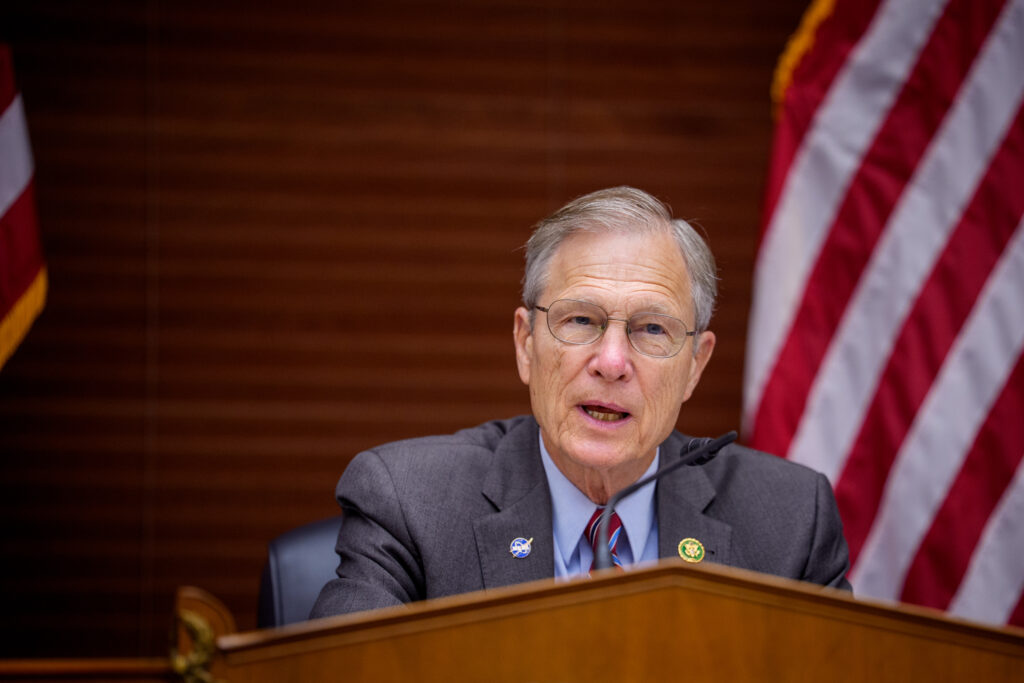
Republican leaders of the House science committee, who have received significant campaign donations from the fossil-fuel industry, are scrutinizing the “formation, funding and expedited timeline” of the expert committee’s review of climate pollution’s harms for the National Academies of Sciences, Engineering, and Medicine.
The Trump administration justified its proposed repeal by claiming that the EPA unreasonably analyzed the scientific record when making its 2009 endangerment finding, a legal basis for emissions regulation. They asserted that recent developments “cast significant doubt” on the findings’ reliability.
The National Academies pursued a thorough review due to the substantial claims against the scientific record. Climate science has significantly progressed since the Obama administration established the endangerment finding.
To best inform the EPA’s decision-making, the National Academies engaged experts from the Intergovernmental Panel on Climate Change and the National Climate Assessment for a swift review. Their consensus study report determined that the evidence for greenhouse gas-related harm to public health is indisputable.
The report aligns with major climate assessments indicating greenhouse gases are warming the planet, harming health, and threatening tipping points. Despite this, GOP leaders question the credibility of the nation’s premier science organization and its findings.
“The United States faces a future in which climate-induced harm continues to worsen and today’s extremes become tomorrow’s norms.”
— National Academies consensus study report
Recently, SST committee leaders sent two letters to Marcia McNutt, president of the National Academy of Sciences, questioning the study’s objectivity and demanding extensive documentation to investigate potential conflicts of interest.
The National Academies’ panel consisted of experts in climate science from both industry and academia, said physicist Drew Shindell, a Duke University earth science professor. “There was no disagreement about the overall conclusions,” noted Shindell, who also contributed to IPCC and NCA reports.
Republicans on the SST committee, questioning the report’s objectivity, have collectively received nearly $550,000 from the oil and gas industry, according to campaign finance records.
After finalizing its decision to repeal climate pollution regulations, SST committee Chair Brian Babin, R-Texas, described the move as a step toward restoring limits on federal regulatory authority.
The committee’s communications director, Sarah Reese, did not address questions regarding donations from fossil fuel interests or potential conflicts of interest among panel members.
Regarding the EPA’s claims of doubt on the 2009 findings’ reliability, Shindell argued, “the complete opposite is true,” pointing to developments clarifying the damages from climate change.
“Never in Question”
Scientists have long understood the causes of climate change and human influence on Earth’s climate. Recent advancements have further detailed the impacts on human health and welfare.
Shindell noted that while science usually progresses slowly, the ability to quantify climate change impacts has expanded significantly over the last decade.
Initial models describing the economic effects of a warming planet, developed by William Nordhaus in the 1990s, have now evolved as climate impacts become more apparent.
“We can now map heat exposure, storm damage, and agricultural responses to climate change across the nation,” said Shindell.
As Republicans continue casting doubt on climate science, researchers document its toll on ecosystems, food supplies, and public health. “The harms Americans face from greenhouse-gas-induced warming are much clearer now,” Shindell stated.
Original Story at insideclimatenews.org