Exploring Tesla’s Full Self-Driving Capabilities: A Lifeline for Some Drivers
Tesla’s Full Self-Driving (FSD) technology is at the forefront of autonomous vehicle innovation, promising enhanced mobility for drivers with physical limitations. While it’s a remarkable step towards driverless navigation, it’s crucial to be an unimpaired, licensed driver ready to supervise and intervene at any moment.
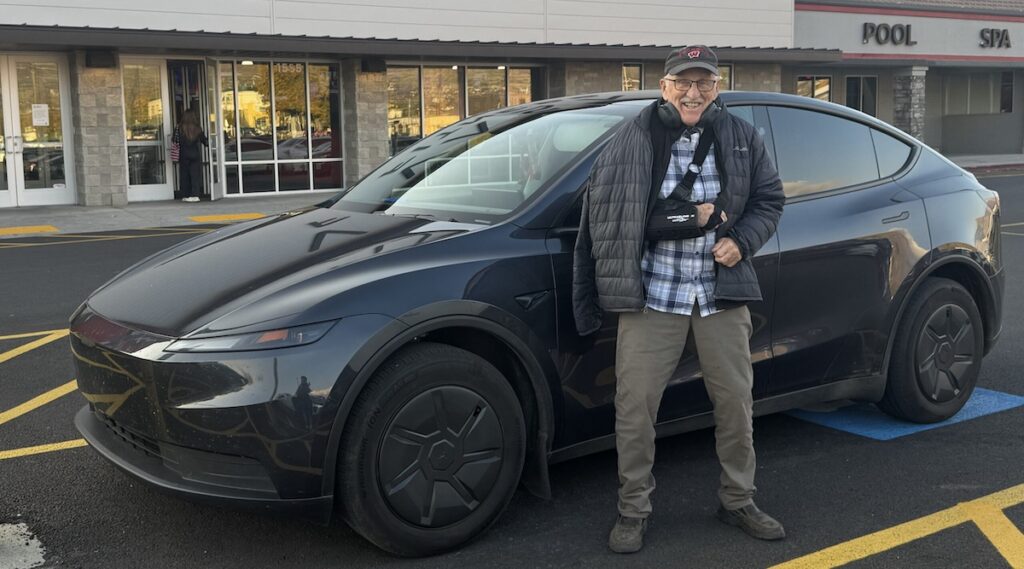
Fritz Hasler, who recently underwent shoulder replacement surgery, shared how FSD enabled him to drive without assistance. Two days post-surgery, Hasler, with his right arm in a sling, relied on his Tesla Model Y to autonomously navigate to Vasa Fitness in Orem, Utah. This experience highlights the potential of FSD to assist those who find conventional driving challenging due to physical constraints.
There are numerous scenarios where FSD has proven beneficial:
- Individuals with conditions like Parkinson’s disease, such as Hasler’s daughter’s ex-husband, find FSD invaluable. He can maintain his driving independence despite serious tremors.
- FSD can extend the driving years of the elderly, delaying the inevitable moment when they must relinquish their keys due to age-related cognitive decline.
- Following an accident that left her with a fractured wrist, Hasler’s daughter could have leveraged FSD to remain mobile during her recovery.
- FSD also offers a lifeline for drivers with congenital disabilities or those who have suffered strokes or injuries, providing greater freedom in areas lacking public transport.
- Additionally, FSD’s camera system can compensate for drivers with impaired vision, offering a safer alternative.
- Hasler, at 86, found FSD particularly helpful during a long drive from Wisconsin to Utah, reducing the physical strain of driving.
While Tesla’s FSD remains unmatched in its capabilities, Rivian is emerging as a potential competitor with its own suite of features. Rivian’s vehicles are equipped with an extensive array of sensors, including 11 cameras and five radars, designed to eventually handle 0% visibility conditions, although their current automation level doesn’t yet match Tesla’s full point-to-point navigation.
Rivian’s technology, branded as Autonomy+, offers hands-free driving across millions of miles of designated roads. It includes features like lane change on command and customizable driving styles, available as a subscription service priced at $49.99 per month or a one-time fee of $2,500.
Despite the competition, Tesla’s advancements in hardware and software keep it at the forefront of autonomous driving technology. However, Rivian’s progress with its comprehensive sensor suite suggests promising developments in the future.
For those considering alternatives, Rivian’s models provide a viable option, though they currently lack the seamless city-to-highway automation Tesla offers. As Rivian continues to enhance its technology, it may emerge as a strong contender in the autonomous vehicle market.
For more insights into these technologies, visit the following resources:
- Read about Tesla’s technological updates here.
- Explore Rivian’s capabilities in more detail.
For further engagement, consider joining CleanTechnica’s community through Substack, Patreon, or Stripe.
Original Story at cleantechnica.com