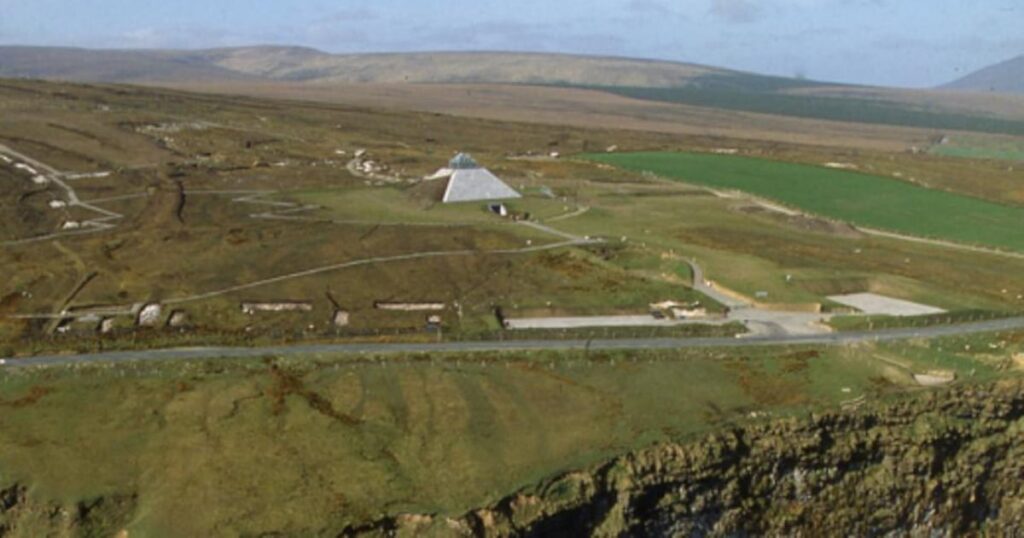
As much of Europe grapples with weather extremes, including wildfires and droughts, a visit to the Céide Fields in north Mayo offers a striking contrast. Here, gentle rain falls and temperatures hover at a modest 16 degrees. Yet, this serene scene is intrinsically linked to the broader narrative of climate change. The Céide Fields, with their ancient landscapes, serve as a poignant reminder of climate’s enduring impact.
The Neolithic fields, once teeming with life, invite reflection. The late Manchán Magan once remarked on their significance: “The very fact that beneath the wild heathery bogs of north Mayo lies this extensive monument is both humbling and hard to grasp. The idea that we can walk in the steps of our ancestors from 5,000 years ago, following along old barley ridges where they would once have cast their seeds and knelt to weed their precious crops is a cause of wonder.”
While these fields were once vibrant with agriculture, several factors, including intensive farming and climate shifts, contributed to their decline. Disagreements among archaeologists persist regarding the exact timeline and reasons for the land’s abandonment.
Met Éireann’s records, dating back to 1880, highlight Ireland’s climatic history. Notably, in June 1887, Kilkenny Castle recorded Ireland’s highest temperature at 33.3 degrees. That summer, The Irish Times noted the “Extraordinary Heat” that led to mountain fires, crop failures, and even fatalities among soldiers.
Modern discussions often focus on specific weather events, like the catastrophic Big Wind of January 1839, which claimed over 300 lives. However, a broader view is essential to understand the climatic patterns over time.
A 2021 Royal Irish Academy publication, Climate and Society in Ireland from Prehistory to the Present, explores climate change’s impact on early human settlements in Ireland, medieval food shortages, and the portrayal of weather in Irish poetry from the 1600s to 1820s.
The study of Ireland’s climate dates back to the 17th century with Gerard Boate’s A Natural History of Ireland (1652), while the 19th-century scientist John Tyndall was among the first to describe greenhouse gases’ warming effects.
Despite seeming distant, climate change’s impact on ancient communities is relevant today. UCD archaeologist Graeme Warren highlights that “contemporary hunting and gathering communities are among the most vulnerable to the effects of climate change.”
Environmental historians note the 16th-century Irish climate, marked by wet springs and summers, harsh winters, and references in Gaelic annals to environmental challenges like woodland destruction and coastal erosion.
Irish bees ‘stressed’ and ‘hungry’ from heat as lack of rainfall hits pollen supplies
Climate migration is a longstanding issue, intensified by modern warming trends. The UN’s 1985 publication, Environmental Refugees, defined those forced to leave due to environmental disruptions. By 1990, the first UN climate report warned of mass displacement due to climate-induced events. British scientist Norman Myers later estimated up to 150 million environmental refugees by century’s end.
This summer’s climate extremes underscore the urgency of these issues. The 2021 RIA volume emphasizes the importance of historical adaptation strategies, stating, “As the challenge of climate change compels us to alter our behaviour in the present, it is essential that we equip ourselves with a full and detailed appreciation of how our forbears did so in the past.”
Original Story at www.irishtimes.com