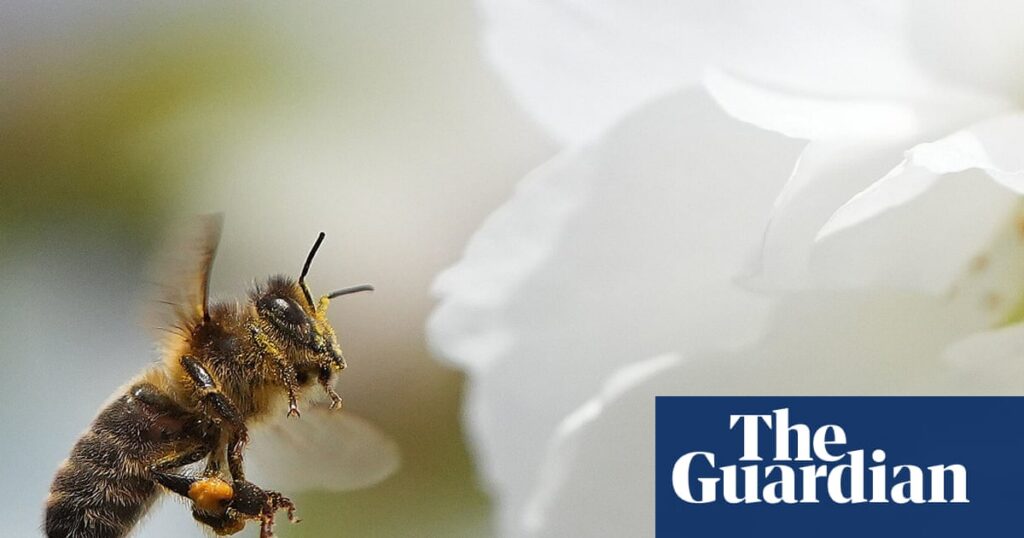
As the UN biodiversity summit convenes in Armenia, new research has revealed concerning trends in Europe’s pollinator populations. A study indicates substantial declines in many of the continent’s wild bee and hover fly species over the past century, underscoring the urgency of addressing biodiversity loss.
Since 1921, records have shown a downward trend for more bee species than those increasing across Europe, with the exception of the Alpine region. The study highlighted a persistent decline in species richness in the Atlantic and Continental regions, while other areas exhibited varied or even positive trends.
Covering 88% of bee and hover fly species across Europe, the data suggests a restructuring of pollinator communities, characterized by the “gradual loss of sensitive species and the rise of a resilient few,” as noted by the scientists involved. They caution that if these trends persist, “deeper functional disruptions” could occur.
Pollinators play a crucial role in the ecosystem, with nearly 90% of wild flowering plants and over 75% of vital food crops relying on animal pollination. The UN’s Food and Agriculture Organization has warned that the decline in pollinator populations could trigger a cascade of negative effects, threatening wildlife and diminishing ecosystems’ resilience to climate change.
Carlos Martínez-Núñez, an ecologist at the Spanish National Research Council and lead author of the study, emphasized the importance of recognizing biodiversity loss that may be hidden by seemingly stable species numbers, stating this provides “a crucial opportunity to act before further declines occur.” He also noted, “The fact that some species are increasing today does not mean they will remain winners as climate change and habitat loss intensify.”
The release of these findings coincides with the 17th UN biodiversity conference in Yerevan, known as Cop17, which aims to address the conservation and sustainable use of natural resources and the equitable sharing of their genetic benefits.
The study revealed that 91% of species documented in the past century have been observed at least once between 2001 and 2020. Although this implies that up to 9% of species might have disappeared from Europe, researchers believe widespread extinctions have not yet occurred.
Ainhoa Magrach, an environmental researcher at the Basque Centre for Climate Change, not involved in the study, remarked that the research “confirms what has long been suspected: many pollinator species are losing populations, and the decline is not affecting all of them equally.” She added that previous evidence was largely from north-western European countries like the UK, Belgium, and the Netherlands, but “this work shows that the pattern extends across the continent, although some regional differences exist.”
The rapid decline in wildlife, driven by habitat destruction, pesticide use, and climate change, poses significant risks to humanity, including threats to food systems. Despite these challenges, no UN biodiversity targets set since 1992 have been fully achieved by governments. The Cop17 summit will focus on advancing this decade’s goals, such as safeguarding 30% of land and sea, reforming environmentally harmful subsidies worth $500 billion, and restoring 30% of the planet’s degraded ecosystems.
Original Story at www.theguardian.com