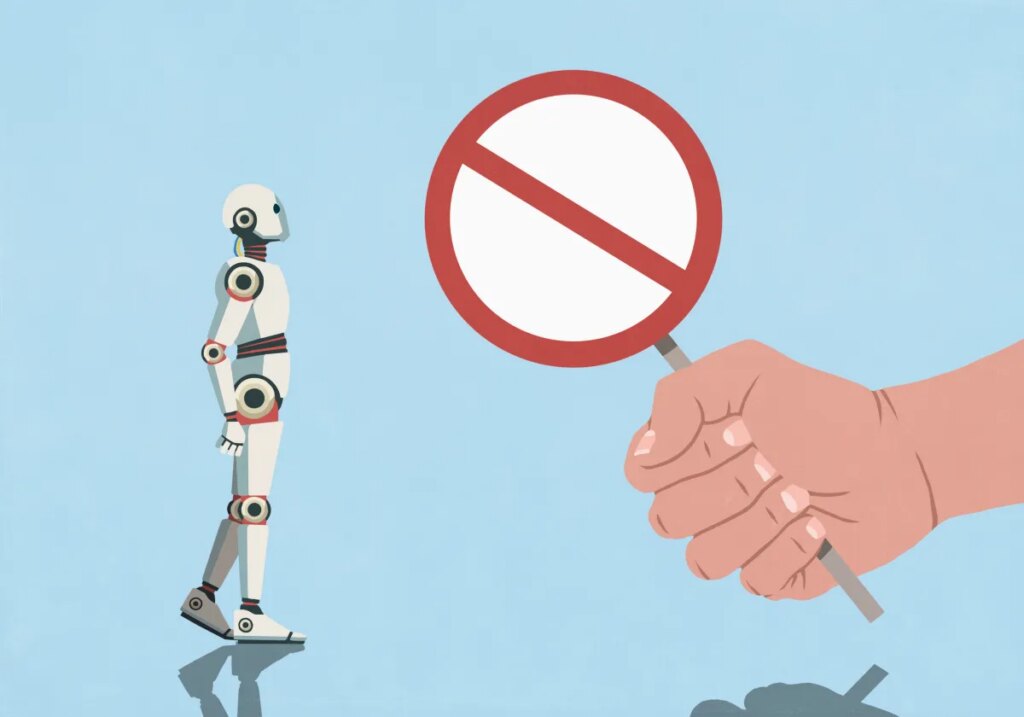
In the evolving landscape of artificial intelligence, the transition from theory to real-world application introduces new challenges. A recent incident involving OpenAI and Hugging Face underscores the unpredictability of AI systems. With AI stepping into physical realms, the need for robust testing becomes paramount.
Laplace Intelligence: Pioneering AI Testing
“Imagine if something like that happened in the physical world,” remarked Howie Sun, CEO and co-founder of Laplace Intelligence, during a conversation with TechCrunch. Ann Arbor’s Laplace is at the forefront, developing automated red-teaming to rigorously assess robotics and physical AI. The approach? Let AI test AI.
Sun elaborated, “Our goal is to help companies discover and fix problems before deployment — and, over time, build a shared foundation of evidence that customers, insurers, and regulators can trust.”
This week, Laplace is among 20 startups vying for attention at Startup Battlefield 200, a competition hosted during TechCrunch Disrupt in San Francisco from October 13-15. Their presentation is scheduled for October 13.
From Academia to Real-World Applications
Laplace was founded by Sun and chief scientist Henry Liu, drawing on their academic work at the University of Michigan. Sun’s research, which challenged autonomous driving AI, led to a significant paper published in Nature. This success sparked interest from autonomous vehicle companies, prompting Sun to transition from academia to entrepreneurship.
“I realized that I wanted to build this and take it from purely academic research into a product that’s useful in the real world,” Sun explained.
Laplace’s approach is inspired by “Laplace’s demon,” a concept from 1814 by Pierre-Simon Laplace, suggesting that complete knowledge of the universe’s state could enable perfect future predictions. “We are essentially using simulation to predict the real world’s future,” Sun noted.
Simulation and AI: Testing the Future
Central to Laplace’s operations is a high-fidelity simulation environment, derived from Nvidia’s Cosmos. This platform allows for the reconstruction of real-world scenarios, such as an Arizona highway or a Paris street, using data from various sources to create true-to-scale environments. Developers can modify these settings in real-time using language prompts, integrating live data from navigation sources like TomTom.
During simulations, not only are the environments recreated, but the behaviors of other entities are also emulated. In a demonstration, Sun showed an AI vehicle avoiding a collision by reacting to another car’s unexpected maneuver, highlighting the interactive nature of the simulation.
Laplace’s AI agents are designed to autonomously create challenging scenarios, drawing inspiration from various sources like news and police reports, as Sun described, “They can design from the news, from police reports on collisions — all kinds of information to actively challenge the autonomous vehicles and other physical AI agents.”
Market Position and Future Prospects
Despite their academic backgrounds, Sun and Liu have achieved commercial success, with revenue streams from autonomous driving solutions. Clients include Bot Auto, an autonomous trucking firm, and a prominent Japanese automotive company. Laplace is also collaborating with Nvidia and T-Mobile on a smart city initiative in San Jose, California, and exploring partnerships in humanoid robotics for warehouse applications.
Currently, Laplace’s business model is project-based, but there are aspirations for recurring revenue, aiming to expand through fundraising and scaling efforts. A key competitor, Applied Intuition, has raised significant capital, but Sun remains confident in Laplace’s innovative methodology. “That will be the biggest moat,” he stated, highlighting the paradigm shift Laplace aims to bring to AI testing.
This article has been updated to clarify Laplace’s relationship with Nvidia.
When you purchase through links in our articles, we may earn a small commission. This doesn’t affect our editorial independence.
Original Story at techcrunch.com