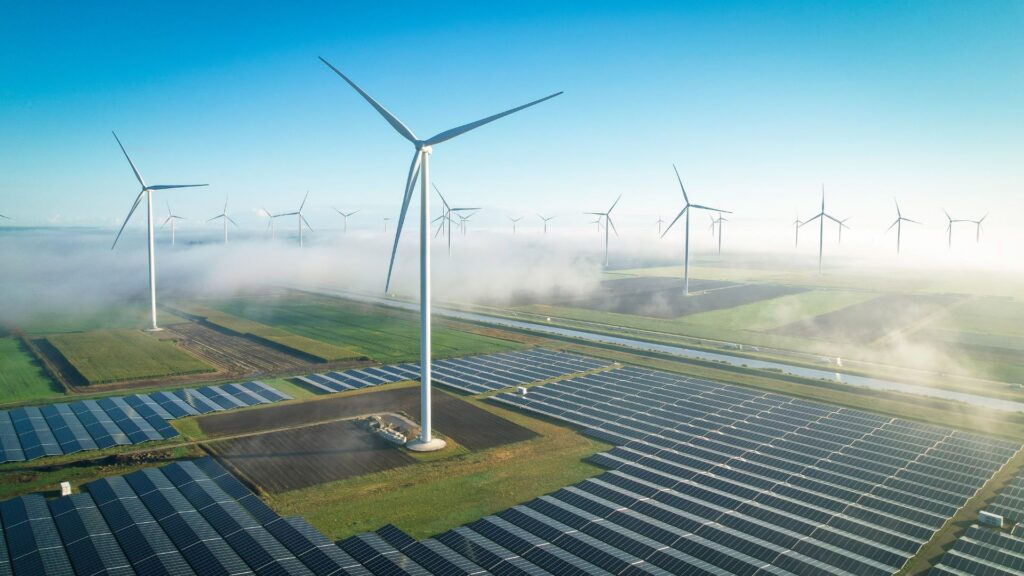
Global energy dynamics are shifting, with countries that import energy rapidly advancing their clean energy initiatives faster than their exporting counterparts. This trend is underscored by recent disruptions in the Strait of Hormuz, pushing nations to rethink their dependence on imported fossil fuels, as detailed in DNV’s latest Energy Transition Outlook.
Accelerated Adoption of Clean Energy
Importing nations have notably increased their share of non-fossil energy within their primary energy mix by 2.2 percentage points over the last five years. In stark contrast, exporting regions have only seen a 0.7 percentage point increase. This rapid transition is evident in regions like China, India, and Europe, which are advancing towards clean energy over three times faster than the Middle East, North America, and Russia, according to the report.
“Energy security is redrawing the map of the energy transition,” stated Ditlev Engel, CEO – Energy Systems at DNV. “Importing regions are accelerating electrification, renewables and storage to reduce their exposure to the most insecure fossil-fuel markets. Exporters, meanwhile, are responding to today’s shortages by increasing investments and production. The result is a widening divide in the speed and direction of the transition.”
The ongoing geopolitical tensions have amplified importing countries’ determination to diversify their energy sources, thereby reducing reliance on oil and gas. This is highlighted by DNV’s projections, which now estimate that the Middle East will contribute approximately 40% to global oil production by 2050, a decrease from last year’s 50% forecast.
A continuation of the Middle East conflict until 2030 could result in sustained elevated oil and gas prices. DNV’s sensitivity analysis suggests a potential 4–6% decrease in global oil and gas demand during the conflict, with demand remaining 2–5% lower than the main forecast thereafter. This scenario indicates a lasting shift towards alternative energy sources.
“While the geopolitical landscape is becoming more complex, there should be no doubt that the energy transition is happening, and that it is already large in scale. However, we must continue to embrace and accelerate it, as everyone is starting to recognize that energy is now part of our critical infrastructure and must be prioritized accordingly,” added Engel.
The report also highlights a growing divide between established competitive technologies and emerging ones that depend on limited policy backing. The decreasing costs of solar power, onshore wind, and battery storage are driving their adoption, while newer, more expensive technologies struggle to gain a foothold. Over the past five years, solar PV and onshore wind have increasingly supplanted fossil fuels in power generation, and battery capacity has surged 14-fold.
Challenges in Decarbonizing Difficult Sectors
Technologies crucial for decarbonizing sectors that are hard to electrify are facing hurdles due to high costs and competitiveness concerns. DNV’s long-term forecast shows a 29% reduction in hydrogen and a 15% decrease in carbon capture and storage compared to last year’s outlook. Although these technologies are anticipated to grow from a low base, enhanced policy support is crucial to bridge the cost gap and speed up their deployment.
Nuclear power is an exception among costly technologies. Despite its high cost and supply-chain risks, DNV predicts nuclear energy will retain its share in global power generation. Nuclear capacity is expected to expand by 30% over the next decade and by 170% by 2060.
“Driven by solar, wind and increasingly battery storage, electricity is emerging as the clear winner of the energy transition,” said Sverre Alvik, Director of Energy Transition Research at DNV.
“The pace of electrification over the next two decades will be more than twice that of the past two decades. Although importing countries are leading the shift, fossil-fuel exporters are also embracing electrification because it delivers greater efficiency and lower costs.”
Original Story at interestingengineering.com