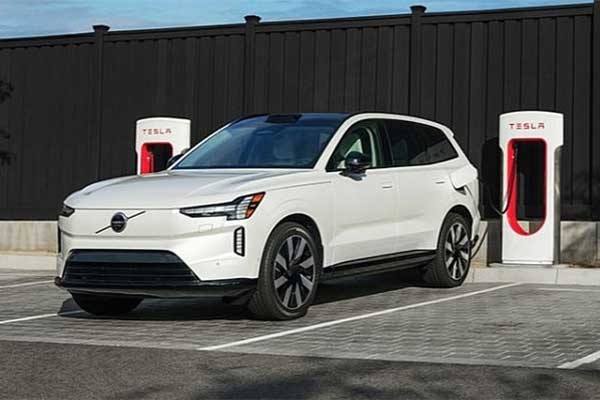
Electric Vehicles Gain Ground in Europe Amid Falling Battery Costs and High Fuel Prices
As Europe faces persistently high fuel prices, a new study by the International Council for Clean Transportation (ICCT) reveals that electric vehicles (EVs) are becoming the more economical option for European drivers. This shift is reshaping the automotive industry and reducing the European Union’s reliance on fossil fuel imports.
According to the ICCT report, drivers of electric cars in Europe enjoy about a 33% reduction in operating costs compared to gasoline car drivers. Marie Rayon Bernard, senior researcher at ICCT and lead author of the report, states, “We expect the share of battery electric cars across Europe to increase in the coming years if current policies are maintained.”
Battery electric vehicles (BEVs), which utilize both private and public charging stations, were found to be 33% less expensive to operate than gasoline cars in the EU by 2025. The oil crisis that emerged in February 2026 has further widened this gap. By early 2026, energy costs for internal combustion engine vehicles rose by 12 to 36%, whereas the costs for BEVs remained stable. In addition, BEV prices in major segments matched those of gasoline cars by 2025, based on data from Germany’s significant car market. The study predicts that the variety of electric vehicle models available will quadruple between 2020 and 2025.
Battery technology, a major cost factor in EVs, has seen prices drop by 35% from 2020 to 2025 globally. Consequently, when adjusting for inflation and vehicle features like range, the cost of BEVs in Germany fell by 18% during this period. In contrast, gasoline car prices increased by 2%.
Peter Mock, ICCT’s Director for Europe, comments, “We observed that car prices have not fallen as fast as battery costs, which tells us that there is still room for electric cars to become cheaper in the coming years. This is a crucial moment for car manufacturers around the world. Instead of abandoning the current direction, European manufacturers will have to continue and deepen their investments in electrification. Competition in this market will be increasingly strong.”
The study also highlights the cost parity between electric and diesel trucks, suggesting that long-haul trucks could achieve this by 2030. In Germany, regional and long-haul trucks have already reached this milestone, supported by toll exemptions for zero-emission vehicles. An electric long-haul truck now has 11% lower ownership and operational costs than its diesel counterpart.
In the first half of 2026, fully electric cars comprised 22% of all new car sales, with electric truck sales increasing by 40% year-over-year. This transition is notably beneficial for Europe’s economy, as electric vehicles reduce the EU’s fossil fuel import costs by approximately €4.5 billion annually. Moreover, the automotive manufacturing landscape is shifting, with the production share of internal combustion engine vehicles dropping from 91% in 2020 to 72% in 2025, while BEVs accounted for 19% of total production.
The report provides a thorough, data-driven analysis of the transition to electric vehicles, assessing progress in emissions reductions, vehicle affordability, climate and health impacts, charging infrastructure, and industrial competitiveness.


Original Story at autojosh.com