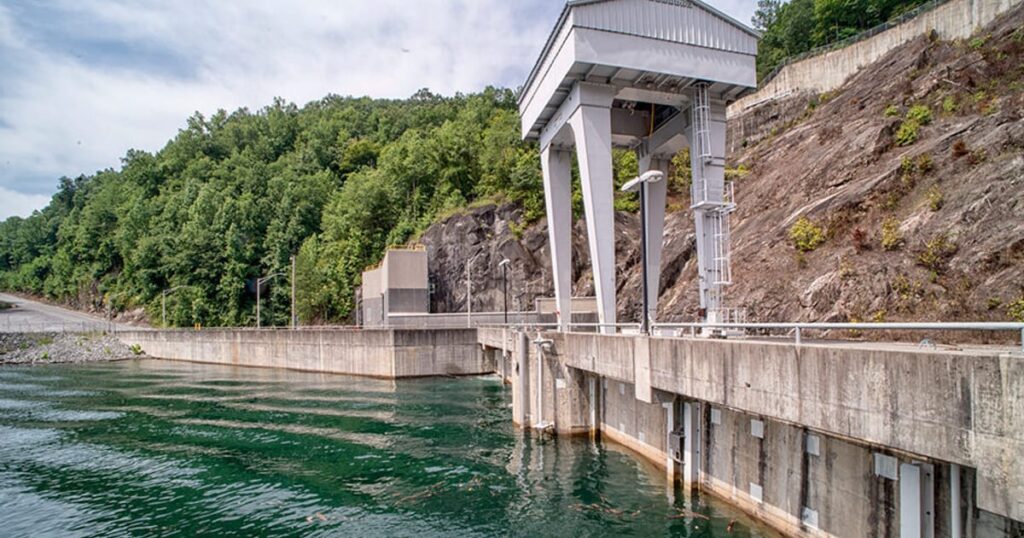
In a surprising shift, North Carolina’s main utility provider is reconsidering its ambitious plans to expand its largest pumped storage hydropower facility. This change comes at a critical time when energy demands are increasing, particularly from sectors such as data centers that require substantial power resources.
Duke Energy’s recent long-term energy proposal, submitted in October, includes this unexpected change and is awaiting review and approval from regulatory bodies this year. While clean energy advocates were gearing up to challenge the proposal over issues like the introduction of new gas-fired power plants and the absence of immediate wind energy projects, they were caught off guard by the decision to halt the expansion of the Bad Creek storage facility, situated just across the state line in South Carolina.
“Duke put this forward as something they were going to do, and everybody agreed,” remarked David Neal, a senior attorney with the Southern Environmental Law Center. “To take out the one thing that everybody agreed on, without any announcement, without any fanfare, is just baffling to me.”
Pumped storage hydropower is a crucial component of carbon-free electricity generation, valued for its ability to provide power on demand and for durations longer than what lithium-ion batteries can offer. However, the development of new facilities in the U.S. has been stagnant for years.
Duke Energy’s initial plan to expand the Bad Creek facility would have positioned the company as a leader in pumped hydro energy in the country. Now, there is concern that stepping back from this plan may hinder the state’s zero-carbon goals by potentially leading to the construction of new gas plants.
A Massive Natural Battery
Hydropower, one of the earliest methods of generating electricity, has been integral to Duke Energy’s history since its inception as the Catawba Power Company in the early 1900s. Initiated by James B. Duke and associates, the construction of dams and lakes along the Catawba River spurred regional economic growth through the establishment of mills and other industries.
Pumped storage hydropower facilities, like the one at Bad Creek, operate differently. They utilize two water bodies at varying elevations connected by reversible turbines, which can either generate or store electricity based on grid requirements.
“Let’s say it’s a spring day, a sunny day, a lot of solar on the grid, but not a lot of demand. You just bring that water uphill,” Neal explained. “When you’re in a peak period, you run the water back downhill to generate electricity. It’s a very efficient, clean way of having storage.”
Duke’s journey with pumped storage began in 1975 with a dam linking Lake Jocassee and Lake Keowee in South Carolina, featuring four reversible turbines expected to remain operational for at least another 20 years.
The Bad Creek facility, operational since 1991, features an upper reservoir at 2,310 feet elevation and a lower reservoir more than 1,000 feet below, connected by an underground tunnel and a powerhouse equipped with four turbines, delivering electricity to power 1 million homes.
Duke Energy recently enhanced the existing Bad Creek setup, boosting its capacity to nearly 1.7 gigawatts. The long-term vision involved creating a new tunnel and adding another powerhouse with four turbines, which would contribute an additional 1.8 gigawatts and assist the company in achieving zero carbon emissions by mid-century, aligning with state legislation.
In 2022, Duke Energy proposed four strategies to reduce its emissions, all incorporating the expansion, known as Bad Creek II, slated for completion by 2034. This additional capacity was a key element of a compromise reached with stakeholders to secure approval for its last carbon reduction plan. The North Carolina Utilities Commission endorsed the agreement, instructing the company to pursue “all reasonable development activities” to realize Bad Creek II.
Original Story at www.canarymedia.com