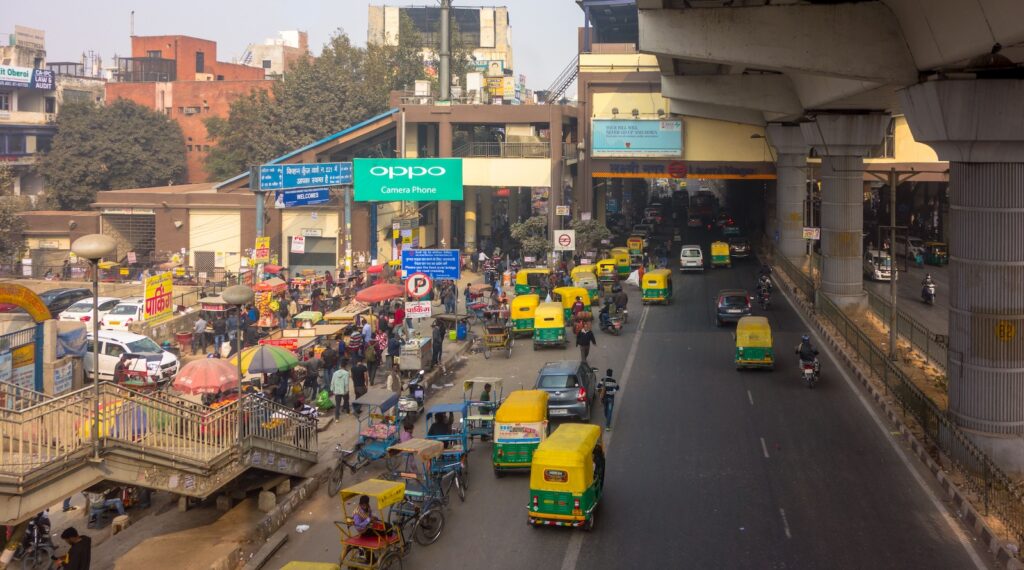
Amid rising concerns over air quality, India’s capital has unveiled a robust initiative to boost electric vehicle (EV) adoption. This move is part of a broader strategy to mitigate one of the city’s most pressing health issues: persistent air pollution.
Delhi’s Comprehensive EV Initiative
The Delhi government has introduced a significant policy offering over US$1,000 to owners of older vehicles for transitioning to electric models. This comes as a response to the severe air quality challenges in the capital, a city frequently enveloped in smog.
Winter Smog: A Recurring Challenge
Delhi’s air pollution peaks during winter when pollution is trapped close to the ground due to cooler temperatures. This situation is exacerbated by agricultural burning, industrial emissions, construction dust, and vehicular exhaust. According to Reuters, these factors significantly influence the city’s push for electric vehicles.
Monitoring and Strategy: CPCB and PRANA
The Central Pollution Control Board (CPCB) monitors Delhi’s air quality as part of the National Clean Air Programme (NCAP). Through the PRANA portal, air quality trends and clean-air initiatives in over 130 cities are tracked, highlighting the severe pollution issues in Delhi, especially from transport emissions.
Key Features of Delhi’s EV Policy 2026
Delhi’s EV Policy 2026 commits ₹15,000 crore (US$1.75 billion) over four years to enhance electrification. It mandates that by 2028, new gasoline two-wheelers will be banned, and auto rickshaws will transition to electric. The policy also includes plans for 30,000 public charging points.
With two- and three-wheelers being major pollution contributors, the policy offers incentives of ₹100,000 (US$1,060) for replacing older vehicles with electric ones. Additionally, electric cars and two-wheelers benefit from tax exemptions and purchase incentives.
Addressing Implementation and Expert Opinions
Environmental groups have welcomed the policy, with the International Council on Clean Transportation (ICCT) praising the phaseout of gasoline two- and three-wheelers. However, the success of the initiative hinges on expanding charging infrastructure and ensuring EV affordability.
Nationally, the PM Electric Drive Revolution in Innovative Vehicle Enhancement (PM E-DRIVE) Scheme supports affordability through incentives and infrastructure development. This initiative has facilitated the adoption of over 2.8 million electric vehicles, including 14,000 buses.
These efforts represent India’s coordinated approach to integrate clean transportation solutions into public health and urban planning strategies, underscoring the urgency of transitioning to electric mobility.
Image credit: Ricardo Santanna via Pexels
Original Story at cleantechnica.com