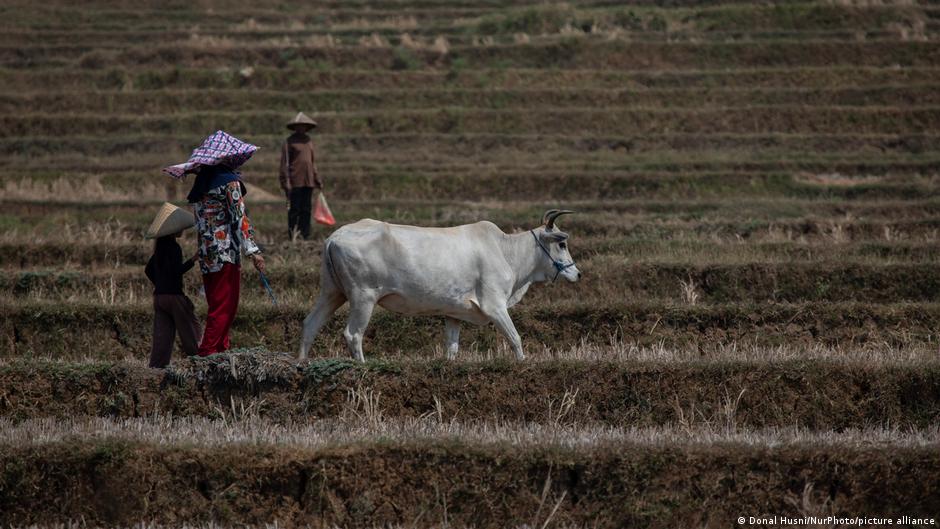
Global food systems are facing unprecedented challenges, with new insights revealing potential flashpoints for future conflicts. This growing concern is driven by a combination of climate change, geopolitical tensions, and resource scarcity, which together are reshaping agricultural productivity worldwide.
Regions are grappling with severe droughts and extreme weather events, which threaten to exacerbate food shortages, particularly with the looming impact of a developing El Niño. Simultaneously, ongoing conflicts and geopolitical disputes are disrupting essential supply chains, affecting the movement of food and agricultural inputs.
The conflict in Ukraine has notably impacted grain markets, while tensions in the Iran region have led to increased fuel and fertilizer costs, further straining farmers globally.
Experts caution that rising food insecurity may lead to instability, as scarcity often results in disputes over land and resources. In regions already on the brink, these pressures could escalate into social unrest or even armed conflict.
Recent research using the Climate-Driven Agricultural Decline Index (CADI) highlights the regions most at risk from climate-induced agricultural changes. According to Hannes Mueller from the Institute for Economic Analysis and the Barcelona School of Economics, “The heaviest losses are in the tropical regions.”
Climate change is already impacting food production, with millions living in areas where yields have diminished over the past three decades. Countries like Cambodia, Bangladesh, and Burundi are experiencing significant agricultural losses.
Mueller emphasizes the dire situation in Northern Africa, stating, “If you look at the map, it just looks terrible. It really looks horrible.”
However, climate change is only one factor. Wars, trade barriers, and rising input costs amplify food insecurity. In the coming decades, nearly half of the world’s population may reside in areas where agricultural outputs are declining.
New winners, losers, and conflicts
These challenges can destabilize governments, prompt migration, and facilitate recruitment for armed groups. In precarious societies, such pressures can lead to crises.
Interestingly, CADI’s findings reveal that increased agricultural productivity can also heighten the risk of violence. Mueller notes, “The key issue is not just scarcity, but change.” As regions become more productive, competition for valuable land intensifies, potentially leading to disputes.
In areas like Sudan, climate change may boost food production, yet disparities within the country could ignite conflict.
Mueller warns that even anticipated changes in productivity can spark tension. “If we know that your land is going to become more productive, maybe I want to grab it from you today,” he explains, highlighting the potential for preemptive disputes.
The climate crisis is also reshaping agriculture in stable regions. For instance, changes in grape-growing conditions in Europe are prompting major wine producers to acquire mountainous land, causing local displacement and future conflicts.
“Big agricultural companies are buying land. This is happening all over the world,” Mueller remarks, underscoring the global scope of these issues.
Furthermore, CADI indicates that non-democratic nations are more prone to conflict due to agricultural changes. Democracies, despite their slow processes, have mechanisms that facilitate negotiation and prevent violence.
Mueller explains, “Democracies may look annoying and cumbersome. But this is a great thing because it makes people talk to each other.” Institutions in democracies provide platforms for negotiation, reducing the likelihood of conflict.
South Asia as a warning sign
Abdullah Fahimi from the German Council on Foreign Relations (DGAP) stresses the importance of addressing threats to livelihoods. “These threats can trigger major crises and displace millions and millions of people,” he warns, emphasizing the vulnerabilities in South Asia and the Sahel.
Fahimi highlights South Asia’s reliance on vulnerable water resources and global food markets. Rising food prices and dependence on imports from countries like Russia and Ukraine exacerbate these challenges.
Local agriculture faces threats from heat waves, floods, and declining land productivity. Events like the Nepal floods in August 2026 illustrate the potential for long-term crises.
Fahimi notes, “The Himalayas and the Hindu Kush mountain ranges supply most of the water for agriculture and drinking water in the region.” Rapid glacier melt due to climate change could lead to a significant humanitarian crisis affecting billions.
As food insecurity grows, the social and political repercussions could escalate. Fahimi warns that resource scarcity may drive individuals toward extremist groups, citing examples from Nigeria and Afghanistan.
Governments failing to address these issues risk losing legitimacy, potentially leading to conflict. Mueller concludes that while climate change and geopolitical tensions do not directly cause conflict, adapting to these changes requires comprehensive societal adjustments.
Effective management of these transitions, through strong institutions and negotiation, can mitigate potential conflicts arising from food system pressures.
Edited by: Hannah Cleaver
Graphics: Olof Pock
Original Story at www.dw.com