Climate Change Poses New Threats to Cacti, Study Finds
Renowned for their resilience, cacti face a new challenge as climate change threatens their survival. A recent study highlights the unexpected vulnerability of these hardy plants, revealing the potential impacts of increasingly severe weather patterns.
A group of scientists has raised alarms about the effect of rising global temperatures on cacti, which inhabit diverse ecosystems ranging from tropical rainforests to arid deserts. Yet, the increasing frequency of extreme droughts, a lesser-explored aspect of climate change, amplifies the threat significantly.
Published in Nature, the research integrates spatial data on droughts with climate models to assess the future of nearly 1,000 cactus species’ habitats. The findings indicate that over a quarter of these species might lose the majority of their suitable environments by century’s end, with more than 80% affected when considering both temperature rise and drought.
The study warns of significant biodiversity losses among cacti in certain regions. This challenges the perception that “in a warming world, they’ll likely be winners,” according to Brian Enquist, a University of Arizona professor and study co-author. He noted that even climates traditionally supporting cacti are shifting beyond what these species have historically adapted to.
Analysis involved nearly 650,000 cactus records globally, enhanced by data from the app iNaturalist. The models predict severe impacts from droughts and heat in cactus-rich areas like Chile, Argentina, Peru, Ecuador, and Central America, despite modest diversity gains in some regions like Mexico’s Pacific coast.
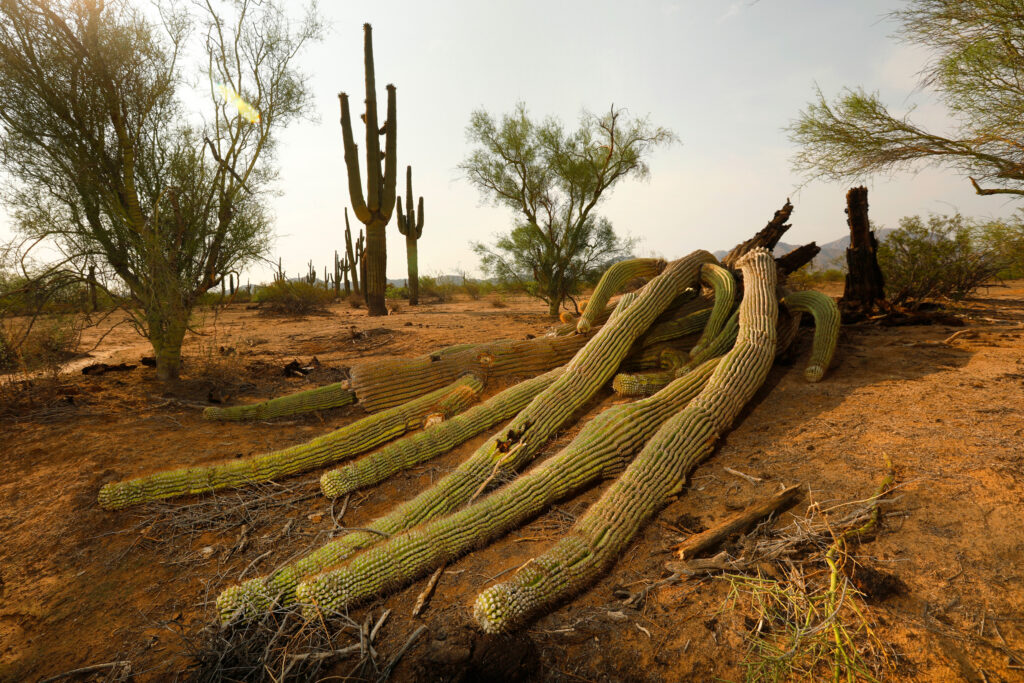
Cacti are already among the most endangered plants, with habitat loss and illegal trade contributing to over 30% of species being threatened. Moreover, recent severe droughts have caused widespread die-offs, such as the Copiapoa in Chile’s Atacama Desert and saguaros near Phoenix and Tucson, foreshadowing potential future impacts.
Michiel Pillet, a postdoctoral researcher at the University of South Florida, expressed surprise at the study’s alarming results, which might even underestimate the threat due to scarce data on rare species. He illustrated the risks with examples like a storm potentially wiping out a localized cactus population.
The study’s methodology could extend beyond cacti to other plant conservation efforts. David Williams, a botany professor at the University of Wyoming, emphasized its broader implications, stating, “The findings extend well beyond our understanding of the climate vulnerability of cacti,” in an email discussion.
Researchers suggest proactive measures such as “assisted migration,” where seeds are introduced to new, suitable environments, to help stabilize vulnerable cactus populations. Raising awareness about at-risk species and prioritizing data collection can also aid in efficiently using limited conservation resources, according to Pillet.
Enquist noted the significant public interest in cacti, which has fueled valuable citizen-science contributions. “There are a lot of people that care about these plants,” he remarked. “What’s wonderful then about that is that there’s a lot of opportunity for intervention.”
Original Story at insideclimatenews.org