Understanding California’s Climate Credit Initiative
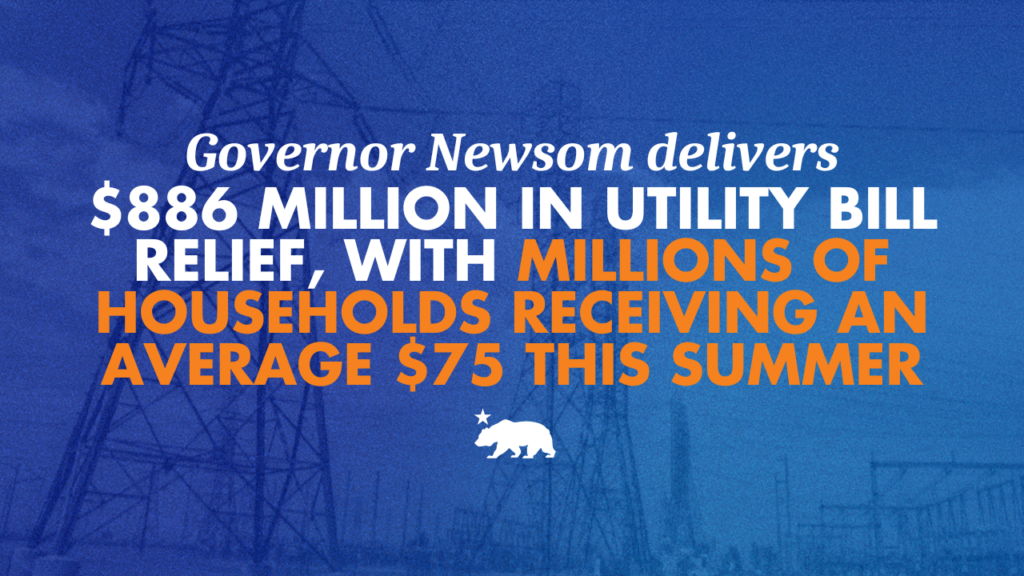
The state of California is taking significant strides in its climate action efforts through the Climate Credit initiative, which is part of the broader Cap-and-Invest Program managed by the California Air Resources Board. This program requires companies with high emissions to purchase allowances, and a portion of these funds is returned to residents as credits on their utility bills.
Beyond providing refunds on electric bills, the Cap-and-Invest Program has facilitated $37 billion in climate-focused investments. These investments have supported over 143,000 jobs and significantly reduced carbon emissions by funding projects like affordable housing near job centers, wildfire prevention, conservation, and enhancing zero-emission transport options in underserved areas. Since its launch 12 years ago, over $21 billion has been allocated to more than 600,000 projects, with nearly $15 billion already utilized for completed or ongoing initiatives.
The program is an integral part of Governor Newsom’s build more, faster agenda, promoting infrastructure development and job creation statewide.
Timed Relief for High Energy Costs
The California Public Utilities Commission (CPUC) has adjusted the timing of the electric Climate Credit, moving it from spring and fall to the peak usage months of August and September. This change ensures that residents of PG&E, Southern California Edison, and San Diego Gas & Electric receive financial relief when they need it most, while smaller utilities maintain a different schedule. This adjustment follows legislation signed by Governor Newsom, aiming to maximize benefits from the Cap-and-Invest Program, potentially generating $10 billion in Climate Credits for electric bills through 2030. More details can be found here.
Advancements in California’s Clean Energy Sector
Since 2019, under Governor Newsom’s leadership, California has significantly expanded its clean energy infrastructure. Over 37,000 megawatts of utility-scale renewable energy have been added to the state’s grid, and battery storage capacity has surged from under 700 MW to more than 21,000 MW. This progress plays a crucial role in the state’s goal to source all electricity from clean energy by 2045.
Recent data shows that 67% of California’s retail electricity sales are from clean energy sources. In 2025, the state achieved 100% clean energy usage at least part of the day on 279 days, and this trend has continued into 2026, with over 90% of days meeting this benchmark in the first half of the year.
California is also prioritizing safety in its clean energy expansion. In 2024, the State Battery Storage Safety Collaborative was launched, updating fire codes and enhancing safety standards for battery facilities. The CPUC ensures ongoing compliance with safety standards for power plants and energy storage systems.
The clean energy sector is not only environmentally beneficial but also economically advantageous. California leads the nation with 552,300 clean energy jobs, nearly double that of Texas, the second-ranked state. In 2024 alone, the state’s clean energy workforce expanded by nearly 7,300 jobs, growing at a rate surpassing the overall state economy by over three times, as detailed in a 2025 report from E2.
Original Story at www.gov.ca.gov